"I wanted to be a doctor. I ended up building the technologies they use."

How Professor Benjamin Tee's journey with A*STAR shaped a career in science, entrepreneurship, and impact.

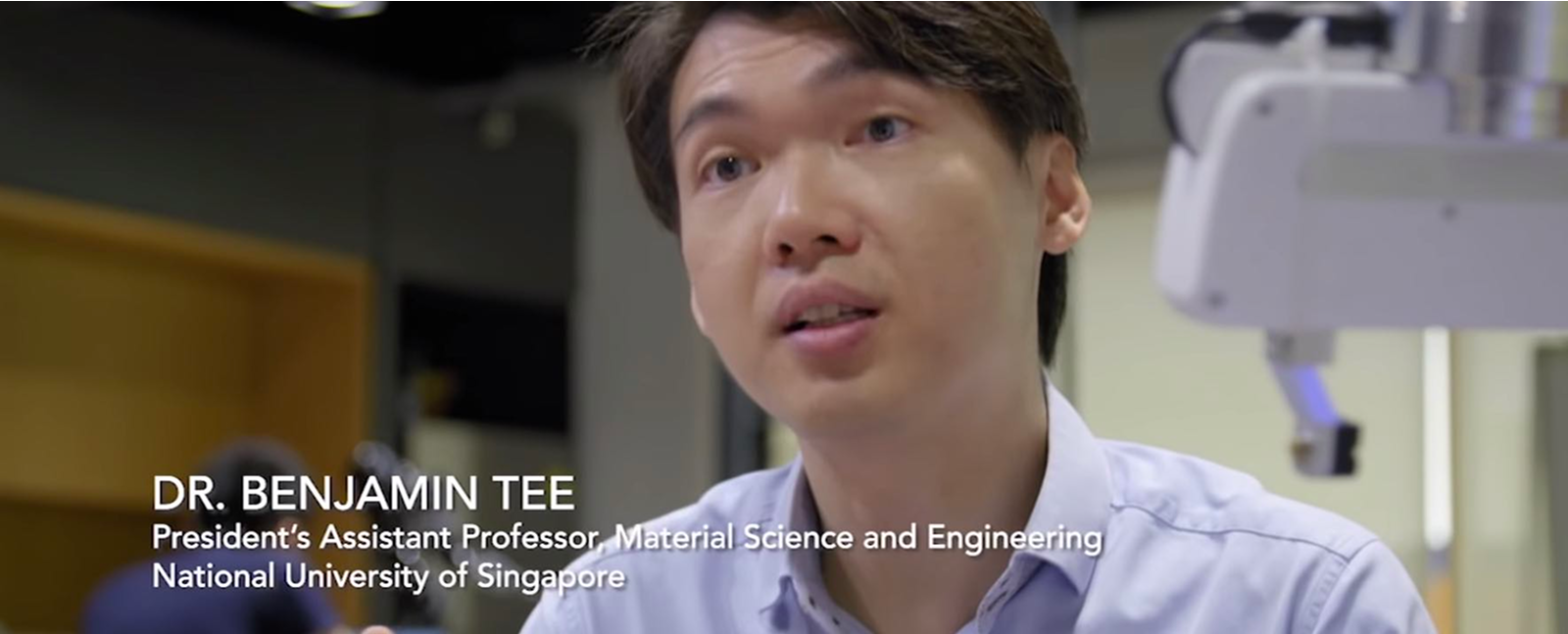
Professor Benjamin Tee is a scientist, entrepreneur and educator. He wears many hats and holds many accomplishments, but above all, he is a builder of ideas, technologies and impact.

In this conversation, he shares how early exposure to research, a pivotal A*STAR scholarship and a natural curiosity shaped his path. His journey takes us from Stanford to Singapore, from electronic skin to AI sensors. It shows what becomes possible when talent is supported, and reminds us that success is most meaningful when it is shared.

We asked Ben to look back on the moments, decisions and lessons that shaped his journey. Here’s what he shared.
What’s the first thing that comes to mind when you hear A*STAR?
Gratitude. A*STAR gave me the chance to pursue a PhD at Stanford. That opened so many doors. I’ve worked with some of the best minds in AI and robotics. It all started there. The second thing is collaboration. I’ve had fantastic colleagues at A*STAR and we continue to work together on some really tough problems.
How did it all begin?
I was on an Economic Development Board (EDB) scholarship, studying electrical engineering at the University of Michigan. I joined an undergraduate research programme and that changed everything. I started wondering—what if computers didn’t have to be boxes? That curiosity led me to flexible electronics and later to the National Science Scholarship (NSS) PhD programme under A*STAR.
Was it always academia for you?
Not really. After my PhD, I took a detour. I joined the Singapore-Stanford Biodesign programme. That year changed how I saw research. I paused my academic path and became a full-time founder. We built a medtech company, licensed IP from A*STAR and got acquired within five years. I still served my bond—but I returned with a new perspective.
What’s been the focus of your research?
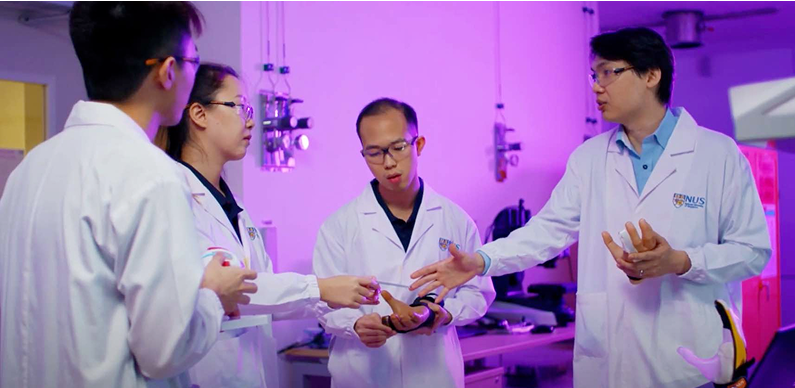
Electronic skin. I was fascinated by the idea of machines that could feel, partly inspired by scenes in Star Wars when Luke gets a robotic hand that can sense touch. Back then, electronics were bulky and rigid. I eventually started working on flexible, stretchable sensors that could mimic human skin, even though hardly anyone was in the space yet. That early work became the foundation of a research path I’m still on today. Our group has since developed some of the highest-performing electronic skin systems in the field. One of our spinout technologies: a wearable device that measures eye pressure went on to win the international James Dyson Award, the first time a Singapore team has done so in the award’s 17-year history.
How did entrepreneurship fit into your journey?
It began with a leap. I paused my research career to co-found Preview Medical, a medtech startup built on A*STAR technology. We licensed the IP, commercialized the product, and achieved an exit within five years. At the time, Singapore’s medtech ecosystem was still young, and it felt like a risky move. But thanks to the support of ASTAR and EDB, we made it happen. That experience deeply shaped how I think about impact.
What’s your current role?
I’m Vice President at National University of Singapore (NUS) Enterprise. I help young researchers turn their ideas into real-world impact. We’re expanding globally, with BLOCK71 offices in the US, China, Japan and Southeast Asia. Through the National Graduate Research Innovation Programme (GRIP), we train postgrads to think about market fit, go-to-market plans and fundraising.
Advice for future technopreneurs?
Try things. Be uncomfortable. That’s where the growth is. Know your risk appetite, sure, but take the first step. You don’t have to quit your job to start. Talk to people. Test your ideas. If it’s not for you, move on. If it is—go all in. Direction and speed matter. Find your velocity early.
What influenced your thinking over the years?
People. Books are great, but it’s the people I’ve met across disciplines who shaped me most. Talk to doctors. Go to events. Share your work. It takes time, but it gives you insight that reading alone never will.
Final thoughts?
 Fusion. It’s still early, but I believe it could change the energy landscape in our lifetime. I’m excited to see how the global research community — A*STAR included — can contribute to that future.