
Changing Lives, One Invention at a Time: Dr Chin Sau Yin
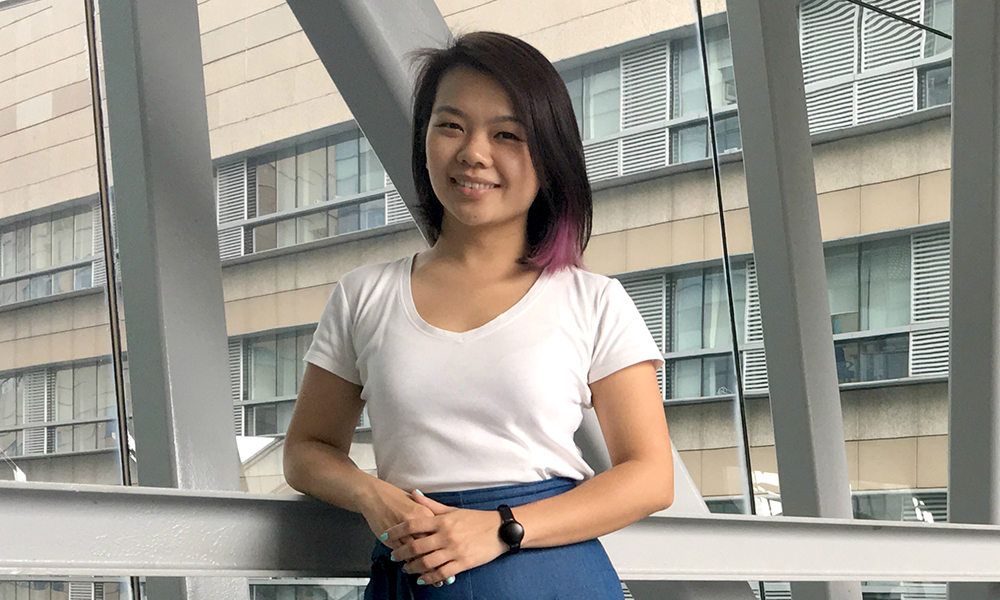
Dr Chin Sau Yin
National Engineers Day is back for the ninth year- an annual festival that highlights significant advancements across different fields. Find out how biomedical engineer Chin Sau Yin aims to make a life-changing discovery.
When others see a problem- Dr Chin Sau Yin sees an opportunity – an opening to create. Like the time her dog hurt itself. She did not want it to limp around- so she built it a wheelchair. Unfortunately- her dog- a six-year-old Corgi- was not pleased and wriggled itself out of the contraption.
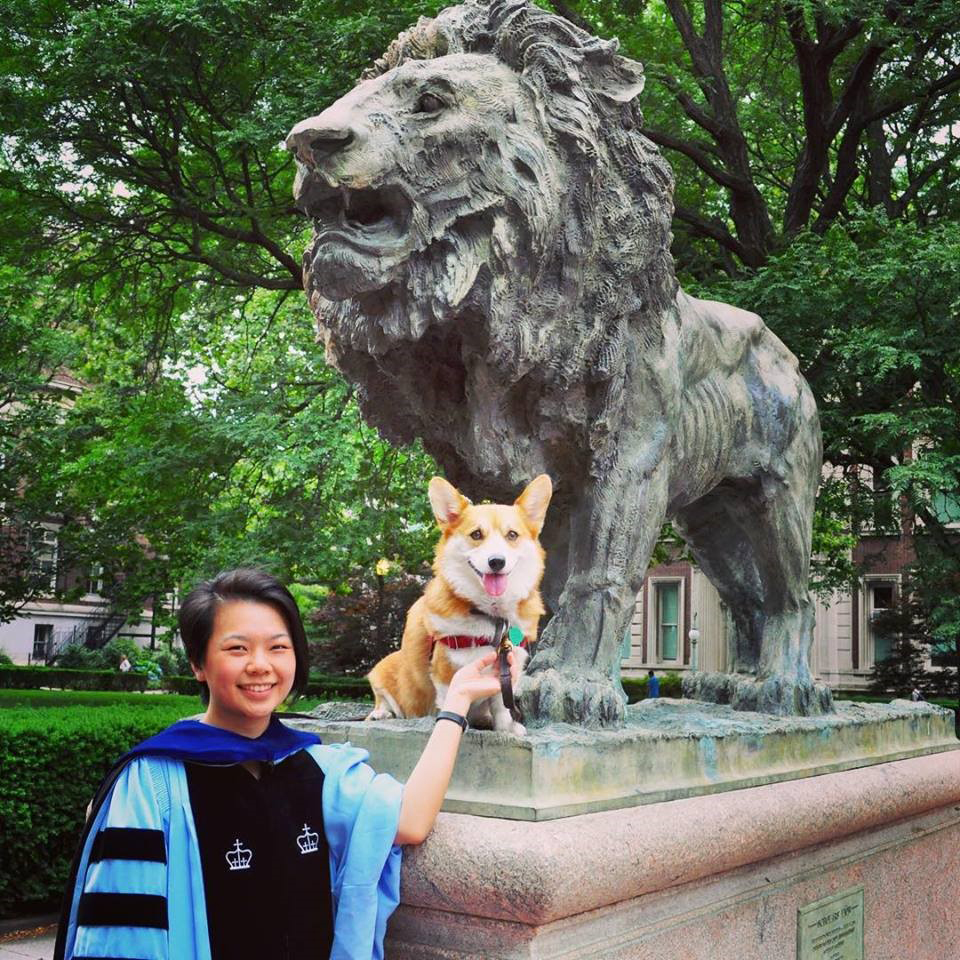
Dr Chin and her beloved Corgi.
But that’s science- not all inventions succeed. It does not faze the 34-year-old.During her graduate school days at Columbia University in the United States- the A*STAR scholar led the team that developed a drug-delivery micromachine – made of hydrogel – that can be implanted under the skin and controlled using an external magnet.
The final design of the device- modelled after the Geneva drive – the gear mechanism used in watches to make seconds tick – only came about after multiple failed designs.
"I made several versions- some from scratch. Then one day- a junior looked at one of my designs and said- 'hey that looks like the Geneva drive'- and that’s how the final design came about-" she recalled with laugh.
The result is a 3D-printed micromachine that has no batteries or wires. It is actuated by an external magnet to the precisely release the dose of drug that should be administered. In the future- it could be used to administer localised- low-doses of chemotherapy to treat cancer.
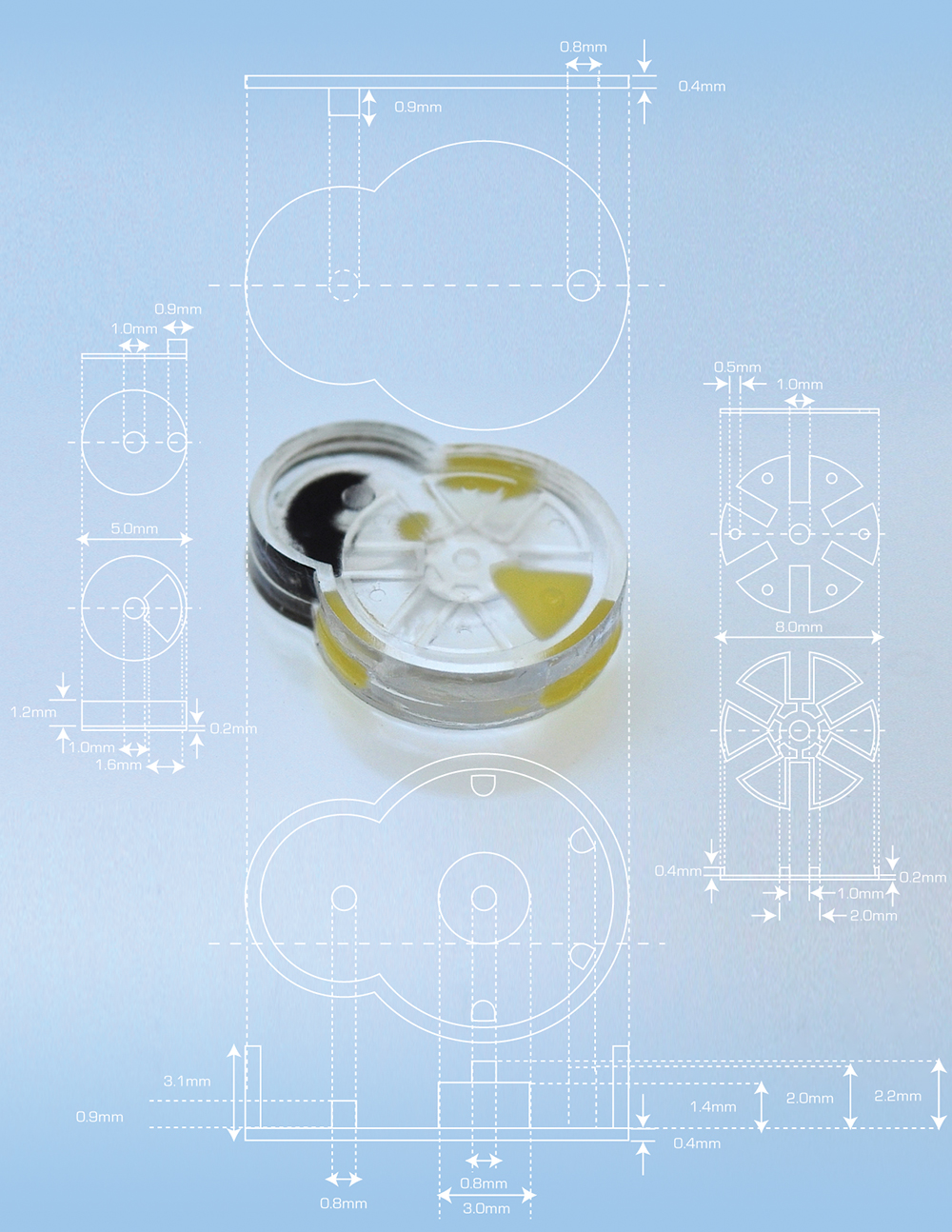
Dr Chin's 3D-printed drug-delivery micromachine.
"As the drug is delivered locally- and not through the blood circulation- it can be given at lower dosages- which reduces the potential of side-effects-" added Dr Chin- whose paper on the research was published in international scientific journal Science Robotics last year.
Since returning to Singapore as a research fellow at A*STAR’s Molecular Engineering Laboratory- she has been studying how the device can be used for other purposes. This includes using it to culture cells in the laboratory.
Her work is her dream. From young- she always aspired to do ground-breaking research. Though she briefly considered studying medicine- she chose biomedical engineering as she felt she could make a significant impact on healthcare with just one discovery.
While she admits it sounds idealistic now- she is still gunning for that life-changing invention.
With that goal in mind- she has been participating in more "extra-curricular activities" to expand her horizons. This includes being president of non-profit organisation Biotech Connection Singapore- which promotes entrepreneurship in life sciences.
The organisation holds talks and networking sessions- bringing scientists- government officials and venture capitalists together- as well as provides consulting services.
She believes that benchwork is insufficient to bring technology to actual application. Good science- she said- does not automatically translate to a good invention.
"You can’t just hide in your lab. You need to network- meet people- understand the business of science- and market your work to others-" she said. "If not- your work will never progress."