One Interface. Full-stack Capabilities. Bigger Cross-domain Programs.
Advanced Manufacturing
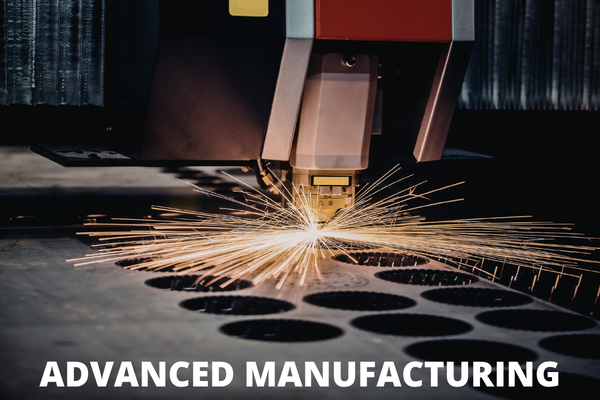
The Advanced Manufacturing domain at IAIC focuses on transforming how products are designed, produced, and sustained through the integration of data, AI, and high-performance computing. As manufacturing systems grow more complex and operate under tighter constraints in cost, speed, and sustainability, traditional approaches are no longer sufficient.
IAIC develops next-generation capabilities spanning physics-informed AI models, simulation-to-real digital twins, autonomous manufacturing systems, and lifecycle intelligence. These enable faster design and validation, adaptive and self-optimising production, and data-driven decisions across the entire product lifecycle, from concept to operation and maintenance.
Our work is anchored in real-world deployment, partnering closely with industry to address high-impact challenges in sectors such as semiconductors, aerospace, and precision engineering. A key differentiator is our human–AI collaborative approach, where AI copilots and decision-support systems augment engineers and operators rather than replace them, ensuring trust, usability, and scalability in complex environments. Through this integrated approach, IAIC aims to accelerate innovation, improve productivity and resilience, and unlock new value across advanced manufacturing ecosystems.
Finance and Digital Services

The Finance and Digital Services domain focus on helping Singapore grow as a trusted hub for AI-driven digital innovation. We work closely with industry partners, across banking, fintech, and digital platforms, to co-develop practical, next-generation AI solutions that can be deployed in real-world settings. A key emphasis is on building AI systems that are not just powerful, but also safe, reliable, and scalable, especially for high-stakes environments like financial services.
Building on initiatives such as MERaLiON and the agentic AI systems engineering, we bring together AI research, engineering, and domain expertise to bridge the gap from ideas to impact. This includes developing capabilities in areas such as multimodal AI and agentic systems and ensuring they can be effectively integrated into business processes.
Beyond deep partnerships with leading enterprises, we also aim to uplift the broader ecosystem, supporting SMEs, start-ups, and talent development. At the same time, we develop shared platforms and tools that can be reused across sectors, contributing to wider AI adoption and strengthening Singapore’s digital economy.
Healthcare

The healthcare industry is undergoing a fundamental shift. Ageing populations, rising chronic disease burden, and workforce constraints are placing unprecedented pressure on traditional care models. In Singapore, this transition is especially acute, as the nation enters a super-aged phase while accelerating its move toward community-based and preventive care. Episodic, hospital-centric healthcare focused on reactive treatment and is no longer sufficient to meet the growing scale and complexity of needs.
A new paradigm is emerging one that is predictive, personalised, and continuous. Data, AI, and advanced compute are at the core of this transformation. From primary care to specialties such as cardiovascular, neurological, and ophthalmic care, AI-enabled clinical decision support and advanced analytics can augment clinician capacity, enhance diagnostic accuracy, and enable earlier, more proactive interventions. At the population level, these capabilities strengthen care coordination, reduce avoidable hospitalisations, and improve overall system efficiency supporting truly integrated, patient-centred care across the full continuum.
By bridging cutting-edge AI research with real-world clinical deployment, IAIC accelerates the translation of innovation into impact. It develops scalable, trusted AI solutions that enhance care delivery, empower healthcare professionals, and improve patient outcomes. Through close collaboration with healthcare providers, policymakers, and industry partners, IAIC drives measurable improvements in efficiency, resilience, and quality advancing a healthcare system that is not only smarter, but more sustainable and patient centric.
Hub of the Future
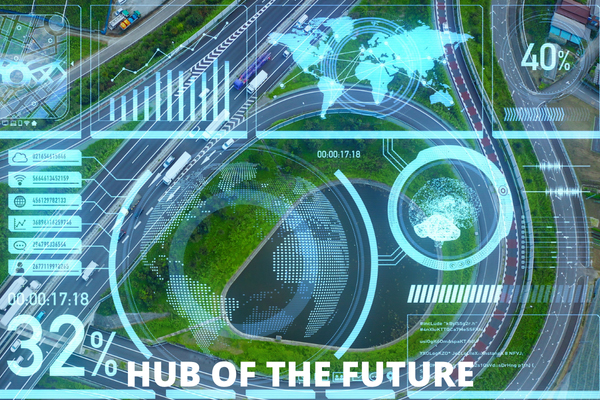
The Hub of the Future is a forward-looking research initiative that reimagines how complex transportation and logistics hubs, such as airports, seaports, and urban mobility networks are designed, operated, and optimised in an increasingly dynamic and uncertain world. Led by IAIC, the initiative brings together advances in artificial intelligence, modelling and simulation, and data engineering to enable integrated, system-of-systems optimisation across traditionally siloed domains.
By harnessing real-time data, predictive analytics, and digital twin technologies, the Hub of the Future aims to transform operations from reactive and rule-based processes into proactive, performance-driven ecosystems. This enables stakeholders from operators and regulators to service providers to make coordinated, data-informed decisions that enhance efficiency, resilience, and sustainability. Key focus areas include intelligent airport and port operations, seamless multimodal transport integration, and adaptive response to disruptions such as extreme weather or demand surges. Through close collaboration with industry and government partners, IAIC seeks to translate cutting-edge research into deployable solutions that deliver measurable impact, strengthen Singapore’s position as a global connectivity hub, and set new benchmarks for the future of intelligent, autonomous, and sustainable transportation systems.
Semiconductor

Our semiconductor research strategy is centred on helping Singapore remain a globally competitive semiconductor hub through the application of AI, modelling, simulation, and advanced compute. We focus on three major opportunities: intelligent manufacturing, accelerated process innovation, and cross-stack design/system optimisation. As the industry shifts toward 3D architectures, heterogeneous integration, chiplets, and AI-driven products, traditional siloed approaches are no longer sufficient.
Our core advantage is the ability to translate advanced digital technologies into industrial impact. We combine strengths in machine learning, multimodal AI, optimisation, computer vision, time-series analytics, and software platforms with close engagement across the semiconductor value chain.
Our strategic direction is to develop reusable technology assets and deploy them through partnerships with fabs, equipment suppliers, materials players, and design ecosystem partners. This positions us to generate economic impact, ecosystem growth, and long-term national capability.
Sustainability
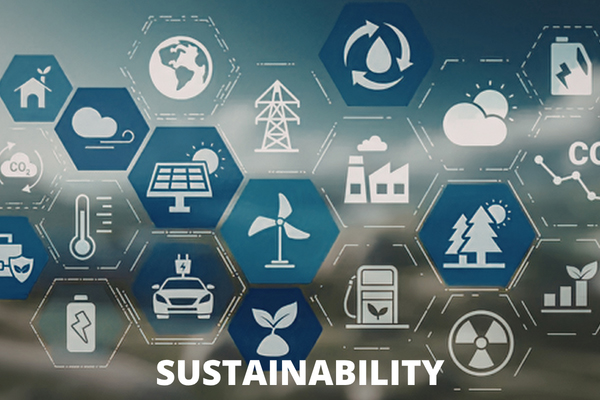
We are an interdisciplinary team harnessing the combined power of physics-based modelling, data, AI, and high-performance computing to address complex, real-world sustainability challenges. Our work focuses on enabling integrated, scalable solutions embedded in decision-making and operations.
Our research is anchored in environmental prediction and planning, sustainable materials discovery and product innovation, and the deployment and scaling of low-carbon solutions. Across these domains, we integrate multi-physics simulation with AI to enable scenario-based planning, accelerate design and optimisation, and support risk-informed deployment of decarbonisation technologies. Looking ahead, we are advancing frontier capabilities in multi-physics, multi-scale modelling, physics-informed surrogate models, generative AI for design, and closed-loop autonomous optimisation. These approaches deliver orders-of-magnitude acceleration shifting from high-fidelity simulation to real-time prediction, from iterative trial-and-error to simulation-led co-design, and from offline analysis to adaptive, self-improving systems.
By combining scientific rigour with scalable digital platforms, we bridge discovery to deployment delivering both impact in science and impact from science, while enabling industry and agencies to achieve energy efficiency, emissions reduction, and climate resilience at scale.