
New compound kills bacteria in seconds
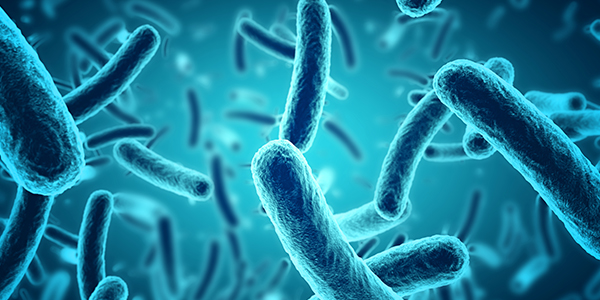
For many years, healthcare field practitioners have been trying to combat the problem of antibiotic-resistant strains of contagious, disease-causing bacteria.
One such bacterium is E. coli, an intestinal bacterium that is contracted through contaminated food- water, or infected animals and people. Several E. coli strains have been known to cause diarrhoea- abdominal pain and fever.
Common anti-microbial agents such as triclosan (found in detergents- soaps and certain cosmetics) kill bacteria without destroying the bacteria’s cell membrane. As a result- new antibiotic-resistant bacterial strains can develop and grow in the old membrane.
To solve this problem, Dr Yugen Zhang and his team at A*STAR’s Institute of Bioengineering and Nanotechnology (IBN) developed a new anti-microbial compound that kills 99.7% of E. coli bacteria within 30 seconds.
The new compound, known as imidazolium oligomers- is made from positively charged molecules linked in a chain that attracts negatively charged bacteria cells. The molecules at the tail end of the compound then rupture the bacteria’s cell membrane- killing them instantly – while leaving other non-bacterial cells- such as red blood cells- intact.
Besides E. coli strains- the new compound is also capable of killing 99.9% of other common antibiotic-resistant bacteria- such as staphylococcus aureus- pseudomonas aeruginosa and candida albicans – which cause a host of diseases ranging from skin infections to pneumonia and toxic shock syndrome.
Synthesized in the form of a white powder- the new compound quickly forms into a gel when dissolved in alcohol. This gel can then be easily incorporated into hand washes and surface sanitizers for use in hospitals and homes- with more potential future applications in healthcare facilities and domestic settings.
Dr Zhang and his team have published their findings about the compound in the German peer-reviewed journal, Small. The new compound has also since been licensed by a multi-national firm for further development.
This instant bacteria-killing compound is just one of many healthcare solutions developed by IBN, which is also the world’s first bioengineering and nanotechnology institute.
Since its inception in 2003, IBN has published over 1,260 papers in international scientific journals, filed over 630 patents and patent applications, and established over 12 spin-offs. For more information about IBN, log on to www.a-star.edu.sg/ibn.