
RNAi and High-Content Imaging Screening Facility
Turn complex biology into actionable, measurable insight.
The RNAi and High-Content Imaging Screening Facility helps researchers move from biological questions to robust, image-based evidence and validated leads. We combine functional genomics expertise with automated screening, high-content imaging, live-cell analysis, and quantitative data interpretation to support projects in oncology, drug discovery, and target biology.
Established in 2006 by Frederic Bard at IMCB/A*STAR as Singapore’s first RNAi facility, we bring nearly two decades of experience in RNAi screening and functional genomics. Our team works alongside researchers at every stage, from experimental design and assay development to screening, image analysis, and biological interpretation.
RNAi and CRISPR screening
We provide strategic guidance and practical support for arrayed SMARTpool siRNAscreens, from focused studies of approximately 200 genes to genome-wide screens covering up to 20,000 genes. We also support custom CRISPR knockout and CRISPRi workflows, including pooled CRISPRi library generation, screening, and next-generation sequencing analysis in pool CRISPR screen workflows.
Assay development, miniaturization, and automation
Our team designs and optimizes robust cell-based assays for screening. Ultra-low-volume nano dispensing with the I.DOT system enables reagent delivery down to 10 nL per well, helping reduce reagent consumption while supporting efficient screening of small-molecule libraries. We can automate 96- and 384-wellworkflows using liquid-handling and plate-management systems.
High-content imaging and quantitative analytics
High-content imaging converts complex cellular phenotypes into quantifiable measurements. We support assay execution, instrument training, image acquisition,and analysis using the Phenix OptiQ and Operetta CLS platforms. These systems support multi-parameter imaging across a range of magnifications and applications, including live-cell and endpoint assays.
Live-cell kinetic analysis
The Incucyte SX5 enables label-free, time-resolved monitoring of cell behavior. Applications include cell proliferation, cytotoxicity, scratch-wound migration, spheroid growth, antibody internalization, and neuronal activity assays. Continuous monitoring can reveal dynamic responses that may be missed by a single endpoint measurement.
Key Services
- RNAi & CRISPR Screening: Strategic guidance/assistance/ execution of arrayed SMARtpool siRNA screens ranging from targeted 200 gene plates to 20,000 gene genome-wide screens alongside custom CRISPR KO and CRISPRi pooled library generation and screening.
- Assay Automation & Miniaturization: Design and optimization of robust cell-based assays using ultra-low volume I.DOT nanodispenser technology (down to 10 nL per well) for efficient, in-house screening of 3,000–5,000 small compound libraries. Automation of 384/96 assay needs with contact liquid handler Bravo V11/Agilent robotics.
- High-Content Imaging & Analytics: Hands-on training and assay execution using Phenix OptiQ(April 2027) and Operetta CLS systems, enabling users to transition seamlessly from rapid image acquisition to robust, quantifiable data analytics.
- Live-Cell Kinetic Assays: Label-free cell detection and continuous monitoring using the Incucyte SX5 system for proliferation, spheroid growth, scratch wound, cytotoxicity, antibody internalization assays, neuronal activity assay.
Key Applications
- Target Identification & Validation: Identify and validate disease drivers, therapeutic targets, and pathway regulators using arrayed RNAi or CRISPR loss-of-function approaches.
- Phenotypic Screening: Profile cellular responses to perturbations and discover phenotypes that may not be predicted by a single molecular target.
- Compound screening: Screen small-molecule libraries in 2D monolayer or 3D spheroid models using image-based, multiparametric readouts.
- Dynamic Cell Profiling: Quantify proliferation, cytotoxicity, migration, antibody internalization, spheroid/organoid behavior, and other time-dependent cellular responses.
Key Equipment
- High-Content Imaging & Live-Cell Analysis
- Phenix OptiQ: High-content imaging with laser-spinning-disk confocal capability, multi-colour and live-cell imaging, and objectives ranging from 5× to 63× water immersion. The system supports automated acquisition of slides and microplates for high-throughput workflows, humidity chamber and has hypoxia live culture capability. Has robot plate stacker scheduling capability.
- Operetta CLS: High-content imaging with LED-based spinning-disk confocal capability and objectives ranging from 5× to 63× water immersion. The platform supports a wide range of image-based cellular assays and live imaging capability. Do slides and plates. Has robot plate stacker scheduling capability.
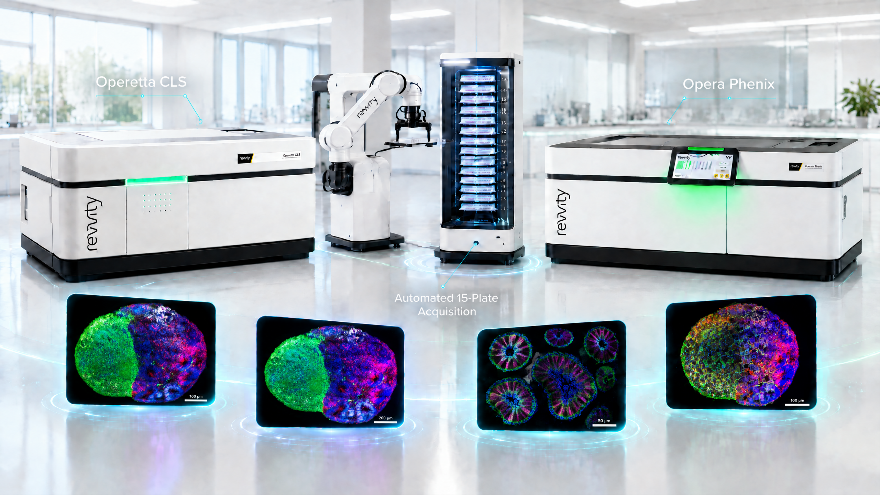 Image 1: Operetta CLS/Opera Phenix
- Incucyte SX5: HLive-cell imaging with Green, Orange, and NIR channels, together with dedicated modules for label free analysis with cell-by-cell analysis, scratch-wound assays, spheroid growth, and neuronal activity monitoring. 5X,10X,20X air objective.
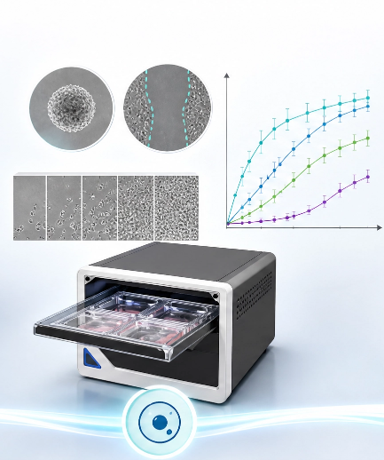 Image 2: Incucyte SX5
- I.DOT S Nanodispenser: Enables ultra-low volume, non-contact liquid dispensing down to 10 nanoliter scale for highly efficient reagent and compound distribution from 96 well source to target 96/384/1536 plates
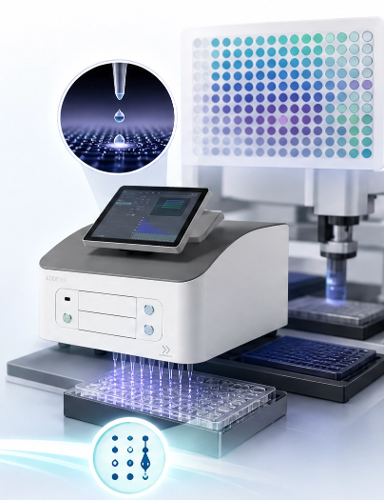 Image 3: I.DOT S Nanodispenser
- Dispendix C.WASHCentrifugal plate washing for rapid, tipless liquid removal with reduced cross-contamination risk.
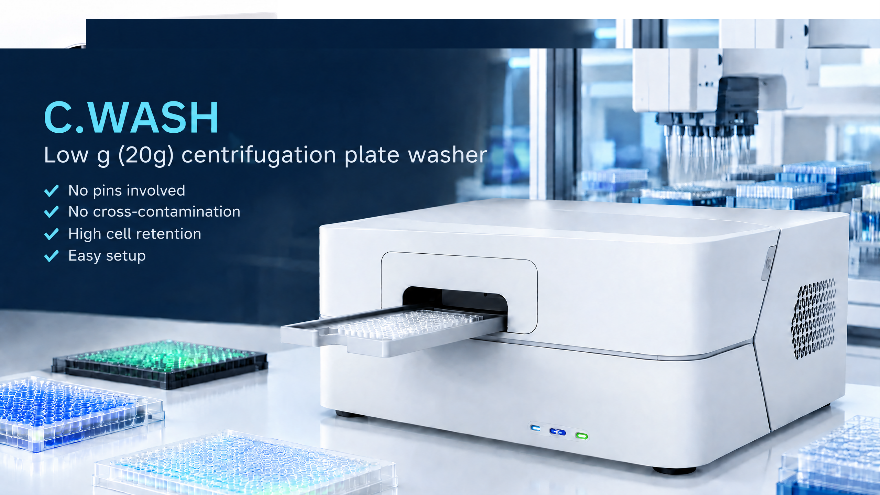 Image 4: Dispendix C.WASH
- Agilent Bravo / BenchCel V11: Automated liquid handling and plate management for reproducible 96- and 384-well workflows.
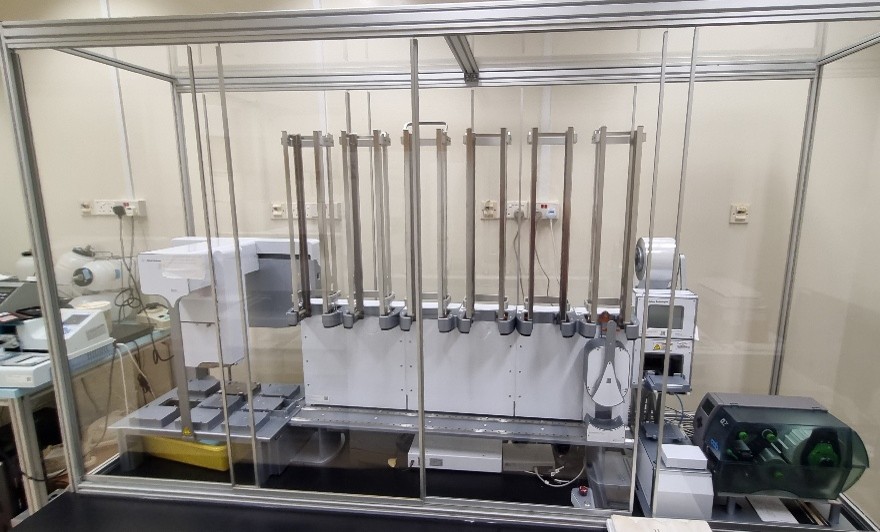 Image 5: Liquid Handler Agilent Bravo / BenchCel V11
- Integra VIAFLO 384: Electronic pipette contact system for precise and efficient 384-well plate transfers in BSC.
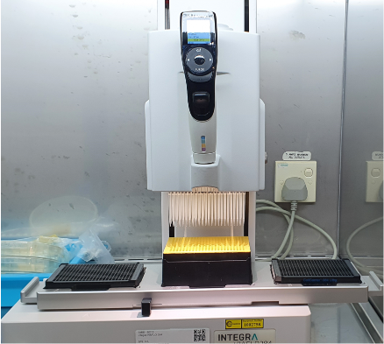 Image 6: Liquid Handler Integra VIAFLO 384
- Multidrop Combi/Biotek washer EL406: Automated bulk dispensing for microplate-based cell, reagent, and assay workflows.
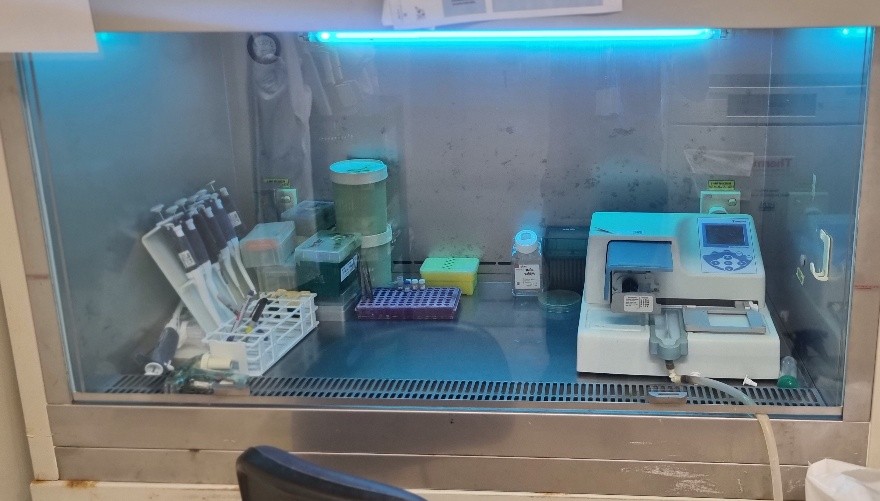 Image 7: LMultidrop Combi in BSC Non-Contact Dispenser
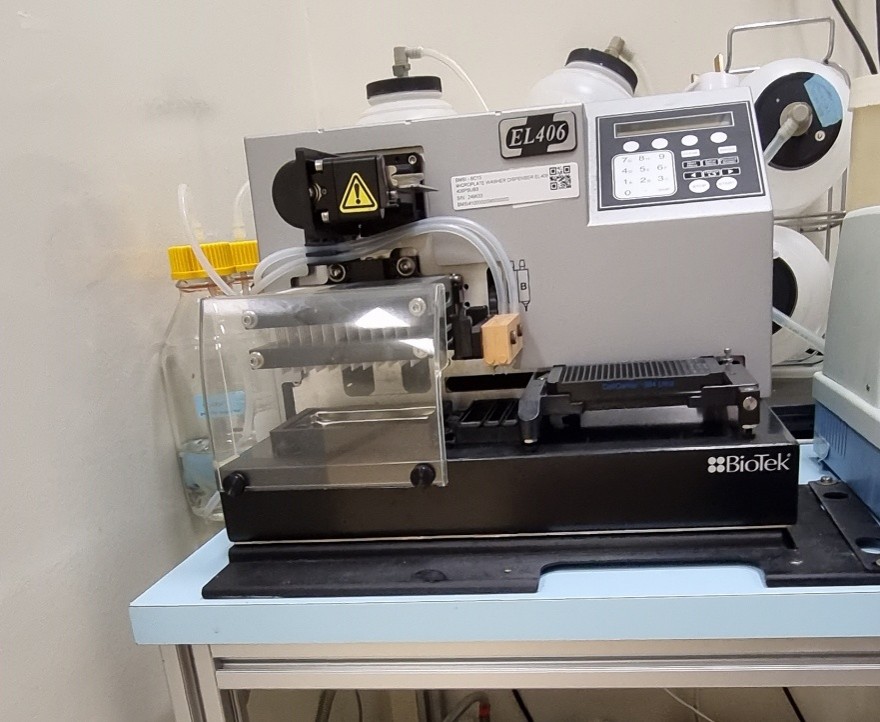 Image 8: Biotek Plate Washer
- Multi-Mode Detection
- SpectraMax i3: SpectraMax i3: Multi-mode microplate detection for luminescence, NanoBRET, fluorescence polarization, fluorescence, and AlphaScreen readouts, with support for 96-, 384-, and 1536-well formats.
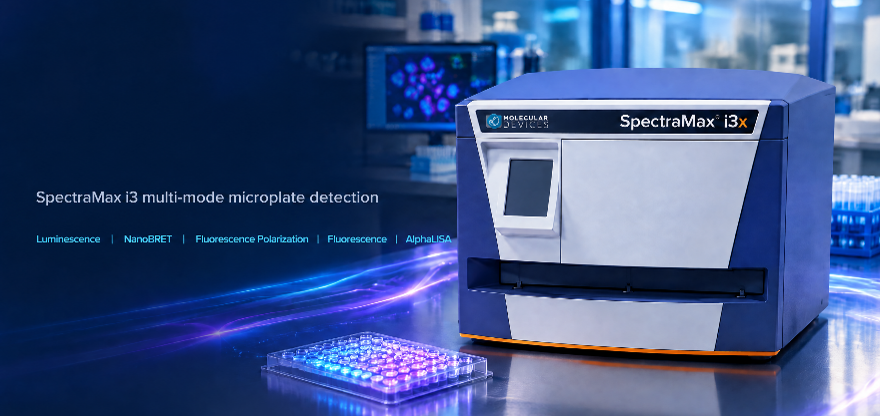 Image 9: SpectraMax i3
- Preprinted Arrayed Libraries: We house comprehensive Human and Mouse siRNA siGENOME SMARTpool arrayed libraries (Horizon/Dharmacon) targeting specific pathways and the complete genome:
- Kinase
- Phosphatase
- GPCR
- Druggable Genome
- miRNA
- Whole Genome
Our People
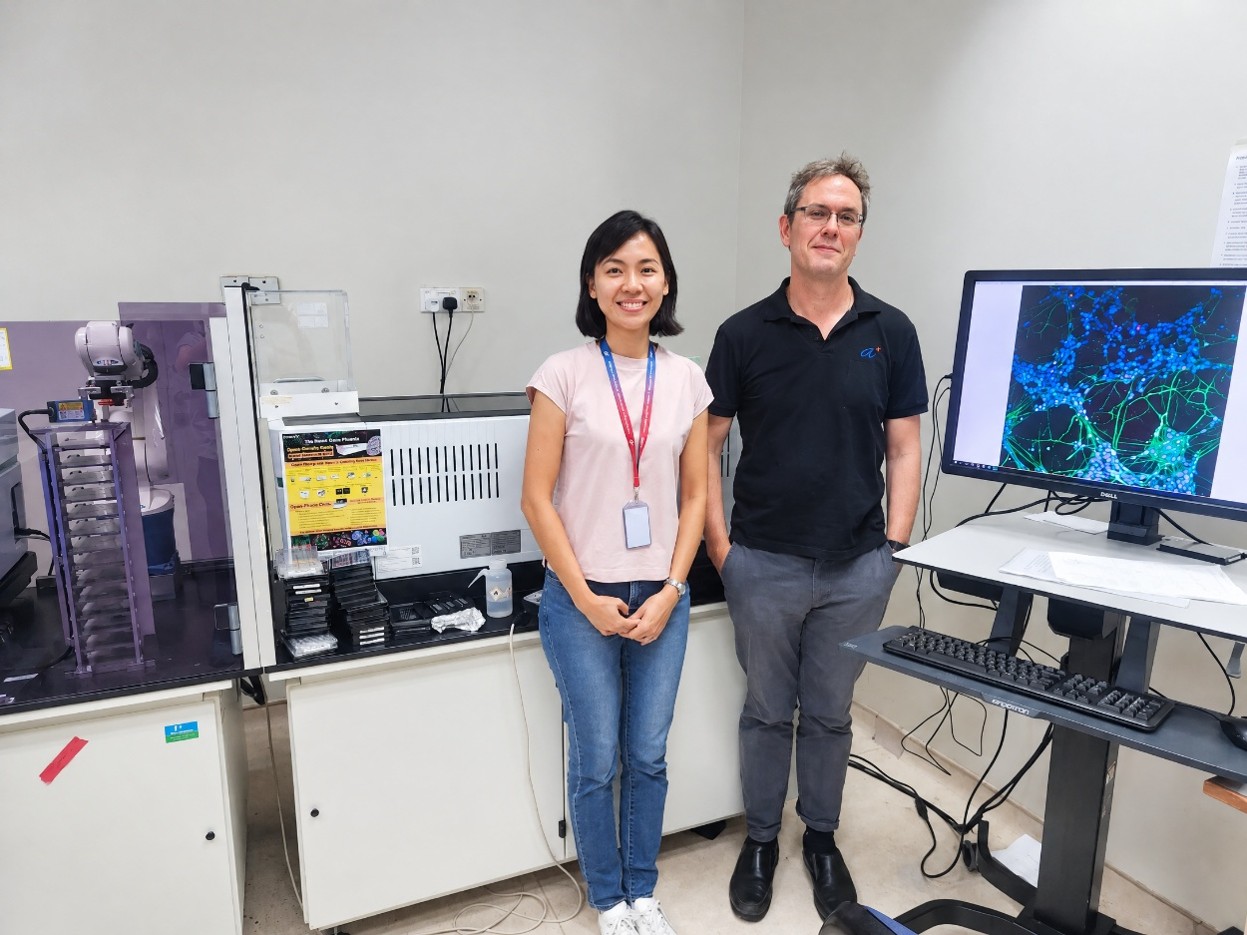
Key team members: Dr. Vachiranee Limviphuvadh leads AllerCatPro analyses, and Dr. Minh N. Nguyen leads AllerCatToxin analyses. Both collaborate on AllerCatPro Enzyme.