.png?sfvrsn=c3edc68e_6)
News
Zeroing in on the Root of Gastric Cancer
22 May 2026
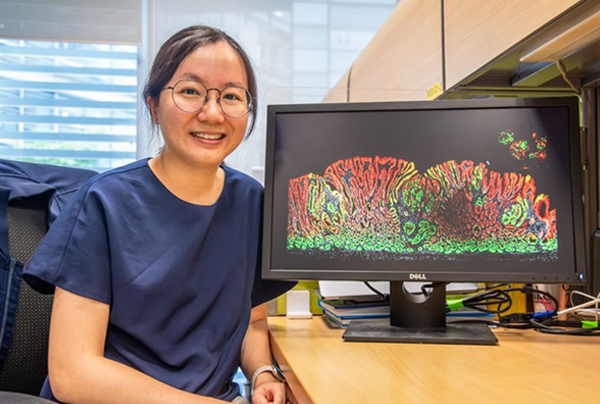
Dr Grace Lim, Senior Scientist at A*STAR IMCB
When cancer returns, it often appears in new and unexpected areas of the body, plunging patients and their loved ones back into uncertainty. Why does it come back — and can it be stopped at its source?
Scientists believe the answer lies in a small group of cells known as cancer stem cells.
Why some cancers return
“Even though chemotherapy kills most cancer cells, the disease can return because some cells are resistant to treatment,” says Dr Grace Lim, Senior Scientist at A*STAR Institute of Molecular and Cell Biology (A*STAR IMCB).
Cancer stem cells are highly resistant to conventional treatments like chemotherapy. While treatment may clear the visible tumours, these cells can persist and silently grow new tumours.
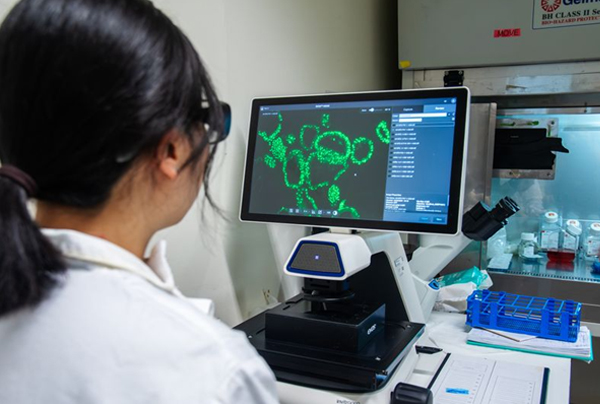
Since 2020, Dr Lim has been studying cancer stem cells in aggressive forms of gastric cancer with Professor Nick Barker, an authority in gastrointestinal stem cell biology. Their lab at A*STAR IMCB is investigating how these cells can be identified early, with the aim of developing more targeted treatments to prevent relapse and improve patient outcomes.
Finding the “Beacon”
Cancer stem cells in stomach tumours have been difficult to study, largely because they are hard to identify. That is, until recently, when Dr Lim and her team identified a protein called Aquaporin-5 (AQP5) in these cells.
The impact is significant. Cells carrying AQP5 were found to play a key role in tumour growth and recurrence. Think of AQP5 as a beacon: it allows scientists to reliably distinguish harmful gastric cancer stem cells from other cells, far more clearly than earlier markers. In laboratory models, eliminating these cells caused tumours to shrink and limited their ability to regrow, even in advanced disease.
The discovery marks a shift in how gastric cancer may be treated — by targeting the root drivers of the disease, rather than the tumour bulk.
“Our approach has been to focus on targeting the critical cells that drive recurrence and metastasis, so that we can shift from being reactive to preventive — eliminating the source of these recurrent cancers before they spread.”
Shifting the strategy
The need for a new strategy is clear. Asia has the highest incidence of gastric cancer globally, at about 11 cases per 100,000 people (Global Cancer Observatory), and Singapore is not immune. Around 600 new cases are diagnosed each year in Singapore. While the disease is highly treatable when detected early, roughly two-thirds of patients are diagnosed too late for optimal treatment as early symptoms are often subtle or absent . Survival drops to 10 per cent at advanced stages, making it one of the deadliest cancers. The disease is also highly prone to recurrence.
“More attention needs to be given to cancer recurrence because it often shows up as metastatic disease in areas like the liver or lungs, and becomes much harder to treat,” explains Dr Lim.
Personalising treatment
No two patients — and no two tumours — are the same. Cancers are constantly evolving. Some can even change and become stem-like, adding another layer of complexity.
“With AQP5, we can begin to explore more precise treatment strategies by focusing on the cells that may drive cancer recurrence,” says Dr Lim. “This could include studying whether chemotherapy might one day be combined with therapies targeting AQP5-positive cells, or whether AQP5 could help identify patients at higher risk of relapse so that treatment approaches can be better informed.”
The team is now working with partners such as the Experimental Drug Development Centre, Singapore’s national platform for drug discovery and development, hosted by A*STAR, to develop more precise treatments for clinical testing. The goal is to develop antibodies and other drugs that could target AQP5-positive cells, potentially allowing for more tailored treatments.
From curiosity to discovery
Dr Lim’s love for stem cell biology began with a simple fascination: how a single cell could give rise to complex organisms. That curiosity, which started during her undergraduate years at Duke University where she first worked with microscopic worms in the lab, now fuels her work in gastric cancer research. In 2024, she was recognised with the L'Oréal-UNESCO For Women in Science award.
“Making new discoveries — the prospect of being the first in the world to do it — that drives me every day. Often, you cannot find the answer yourself. You need to build collaborations and work as a team to tackle these complex problems.”
This curiosity-led approach also shaped the team’s discovery of AQP5. Their work began with healthy stem cells in the gut — cells that help repair and renew the stomach lining — which led them to explore whether AQP5 might also play a role in cancer stem cells.
That curiosity paid off. Their findings could change how cancer is treated — not just by shrinking tumours but by eliminating the cells that allow them to return. For patients, this could mean fewer relapses and a better chance at lasting recovery.
A*STAR celebrates International Women's Day
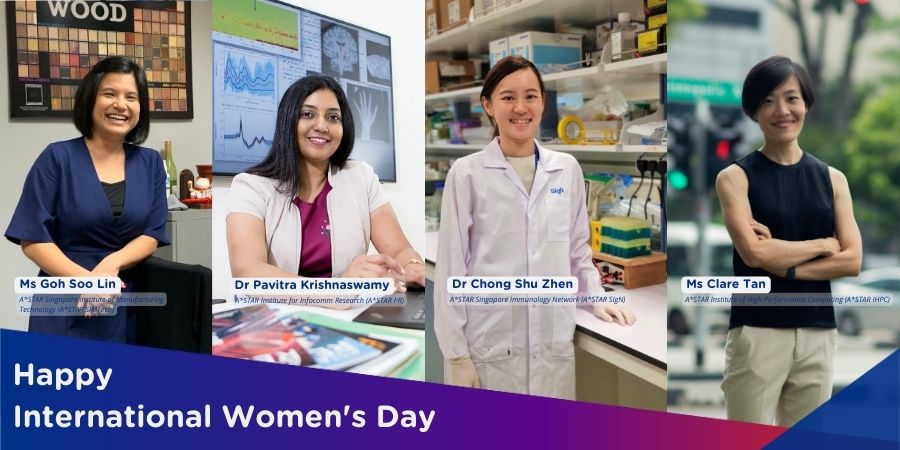
From groundbreaking discoveries to cutting-edge research, our researchers are empowering the next generation of female science, technology, engineering and mathematics (STEM) leaders.
Get inspired by our #WomeninSTEM