
From Research to Real-World Value
A*Star is helping businesses turn innovation into stronger capabilities, greater productivity and new opportunities – creating value that extends well beyond the laboratory.
Source: The Business Times © SPH Media Limited. Permission required for production.
Singapore's sustained investment in research and development is not only building scientific capabilities, but also delivering value today through stronger companies, new businesses, intellectual property, quality jobs and capabilities that help Singapore remain competitive in a rapidly changing global economy.
These outcomes are the result of partnerships and engagements that deepen over years, rather than one-off projects. The impact can be seen in two very different journeys: one helps an established manufacturer move up the technology curve, and another that has taken Singapore-developed research from the lab to global markets.
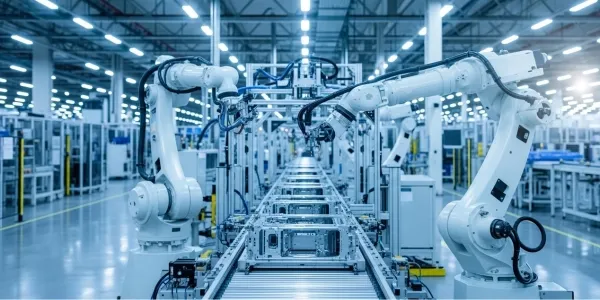
Sunningdale Tech, an established precision engineering and manufacturing company, has worked with A*Star to adopt artificial intelligence, robotics and automation. The collaboration has improved the company’s productivity and quality while strengthening its Singapore-based capabilities to fuel its global operations.
Respiree represents another pathway. Spun off from A*Star research, the medtech company has developed research in optical sensing and biophotonics into an AI-enabled platform for continuous cardio-respiratory monitoring.
The stories of Sunningdale and Respiree demonstrate A*Star’s role in connecting research capabilities with industry needs and translating science into products, businesses and capabilities.
“Being a bridge means closing the gap between scientific discovery and real-world adoption,” says Beh Kian Teik, Chief Executive, A*Star.
“As Singapore’s innovation ecosystem matures, our role is evolving too. It is no longer simply about transferring a technology from the lab to a company. Increasingly, we help bring together the research, infrastructure, talent, industry partners and capital needed to move an idea towards deployment.”
Rather than treating commercialisation as a linear process, A*Star is building what Beh calls “more repeatable pathways from research to real-world use”.
Making manufacturing smarter
For Sunningdale Tech, the starting point was a practical manufacturing challenge.
One example was the inspection of impeller components, where even a small cosmetic flaw could affect performance.
Operators were carrying out manual inspections around the clock, checking about 10,000 parts a day. Conventional machine vision systems were not flexible enough and every new product required manual reprogramming.
The company needed a system that could identify genuine defects across different product variants and moulds while accounting for variables such as reflections and lighting. That led Sunningdale to A*Star, with which it has worked since 2021.
“We have seen how much AI capability they have built up over the years through their research,” says Barry Tay, Senior Director, Sunningdale Innovation Tech Centre. “So when this specific gap came up, they were the obvious partner to help us close it, leveraging on A*Star’s deep technical expertise in machine learning and computer vision.”
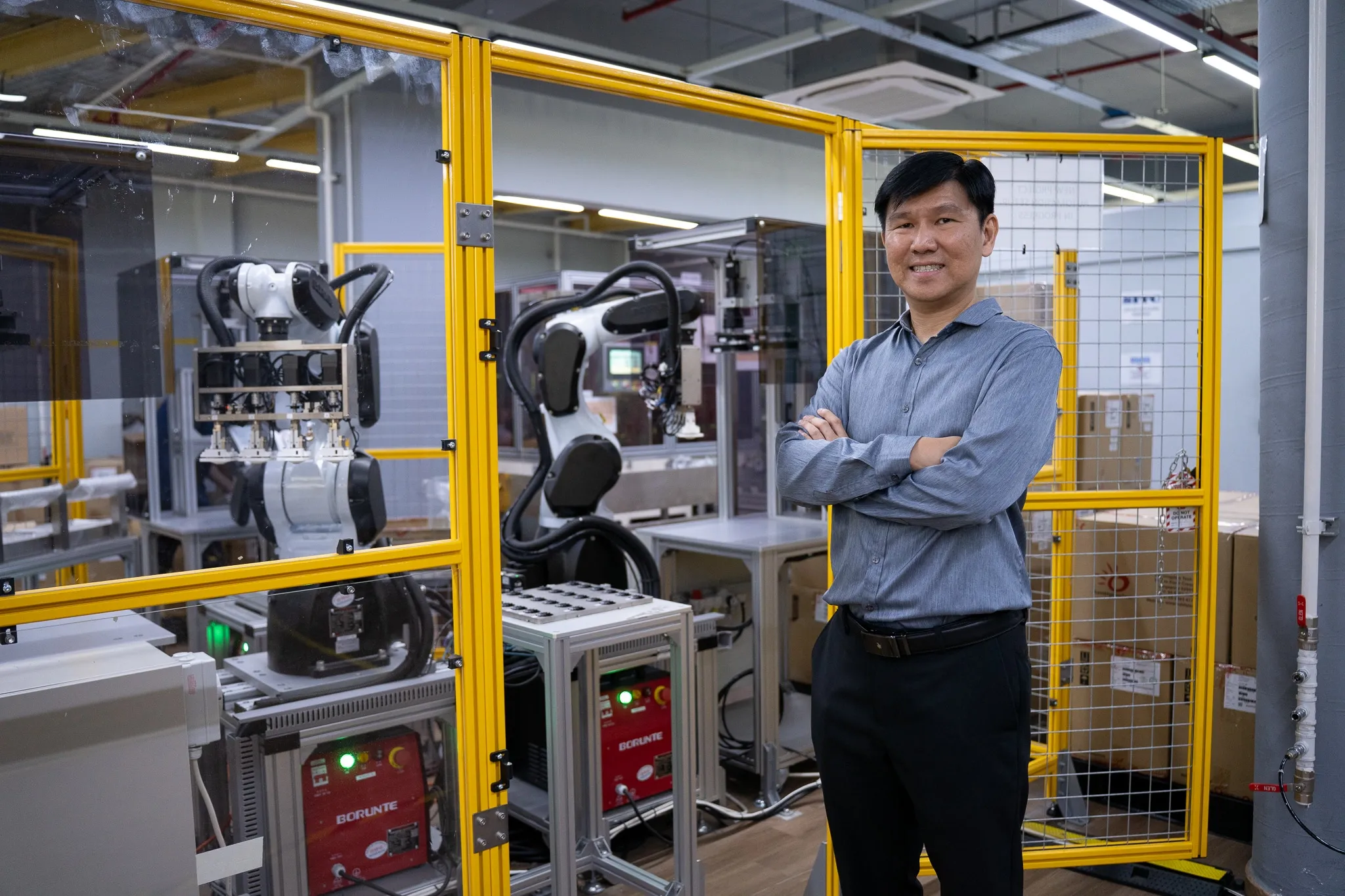
Mr Barry Tay, Senior Director, Sunningdale Innovation Tech Centre.
Sunningdale engineers developed the system needed to present each component correctly to the cameras, while A*Star researchers trained the algorithm to distinguish genuine defects from normal variations. One product alone had six different moulds, and the algorithm needed to work reliably across all of them.
Early versions were too sensitive, identifying imperfections that human inspectors would not consider defects and resulting in excessive rejection rates.
“It took months of back-and-forth to calibrate it properly, so it matched what our customers actually consider acceptable, not some theoretical perfect standard,” Tay says.
A*Star’s involvement has extended beyond individual projects. Through the Technology for Enterprise Capability Upgrading (T-UP) programme, its engineers have worked alongside Sunningdale’s teams on practical manufacturing challenges, with a seconded A*Star engineer instrumental in its wider push towards Industry 5.0 and automation.
The AI inspection project has similarly built Sunningdale’s AI and computer-vision capabilities. Once fully deployed, it will increase inspection capacity from about 10,000 to up to 30,000 components a day and generate hundreds of thousands of dollars in annual savings, while freeing operators for higher-value work.
The framework could eventually be deployed across Sunningdale’s 21 sites in 11 countries, extending a solution co-developed in Singapore with A*Star’s engineering talent to its global operations. Several multinational customers have already expressed interest in applying the capability to future production lines, strengthening Sunningdale’s position as a more advanced manufacturing partner.
For Singapore, the broader opportunity is to develop and deploy sophisticated manufacturing capabilities locally, strengthening its position in global supply chains as manufacturers seek greater productivity and increasingly complex technologies.
Sunningdale’s Singapore operation is central to that strategy.
“Singapore serves as Sunningdale's global R&D and innovation centre of excellence, where we develop advanced manufacturing capabilities, engineering expertise and new technologies that are subsequently deployed across our operations worldwide in 11 countries,” says Khoo Boo Hor, CEO, Sunningdale Tech.
Through collaborations with A*Star, including the T-UP programme – launched in 2003 to support promising local companies by deploying scientifically-skilled talent into companies – and partnerships with the Advanced Remanufacturing and Technology Centre (ARTC), Sunningdale has built capabilities in additive manufacturing, automation and AI.
“Beyond individual projects, these collaborations have helped build enduring technical expertise within our teams, allowing Singapore to continue serving as the innovation engine that supports Sunningdale's global growth and competitiveness,” says Khoo.
Grooming talent is also part of the equation.
“Our goal is to superpower our people, not replace them,” says Khoo. “As AI becomes more embedded in manufacturing, we see growing opportunities to upskill our workforce and create new career pathways in areas such as automation, data analytics and advanced manufacturing. The future is not AI versus humans, but AI working alongside humans to make them more effective.”
Beyond individual roles, such collaborations help build a workforce with more advanced AI, automation and manufacturing capabilities, strengthening Singapore’s capacity to support increasingly sophisticated industrial activity.
From laboratory to global market
Respiree demonstrates a different route from research investment to economic value: creating a new enterprise around Singapore-developed science.
The company emerged from A*Star research into optical sensing and biophotonics, exploring how light could detect subtle changes in the skin and chest wall associated with breathing.
That work eventually formed the basis of Respiree’s RS001, a wearable sensor.
The challenge was to turn the technology into a product that could meet clinical requirements, integrate into healthcare workflows and achieve commercial adoption.
“Respiree actually started from research I was doing at A*Star into optical sensing and biophotonics,” says Gurpreet Singh, CEO, Respiree.
A*Star infrastructure and networks supported the early stages of development. Respiree tested and validated its technology using A*Star facilities, while three T-Up engagements provided scientific and clinical networks for work on algorithms, data infrastructure and clinical integration.
Commercialisation support and gap funding by A*Star also helped the company manage the risks of bringing deep technology into healthcare.
For a medtech company, the path from promising technology to clinical adoption is demanding.
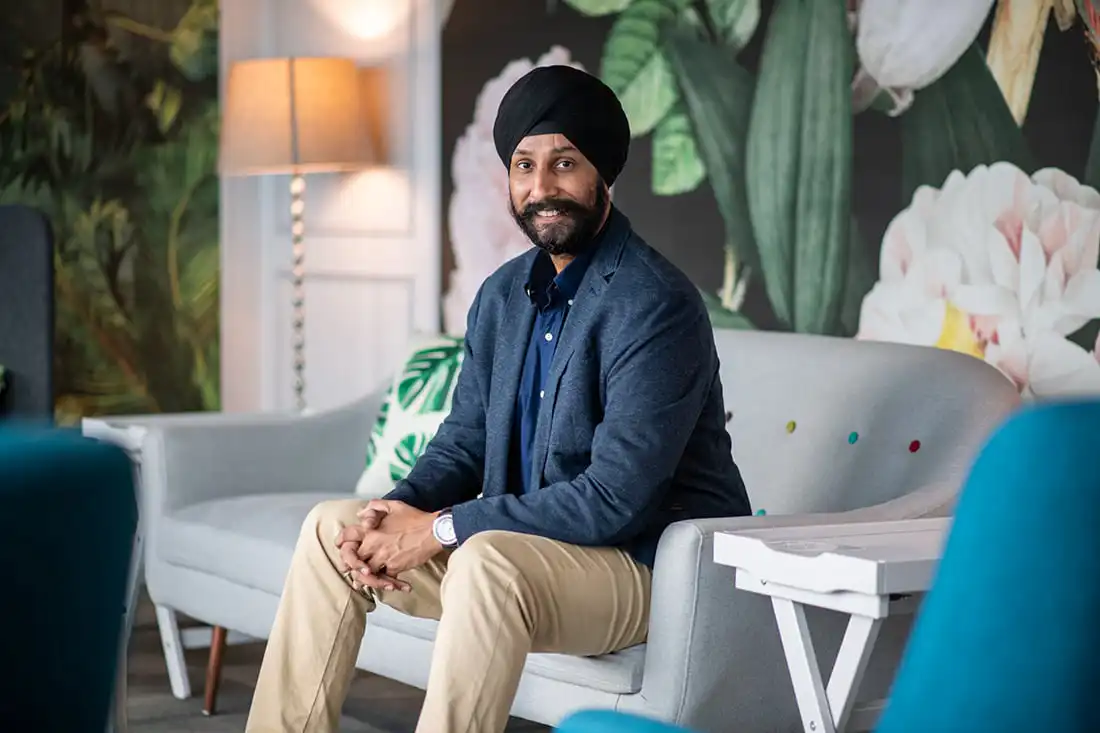
Dr Gurpreet Singh, CEO, Respiree.
It requires evidence that the technology works, regulatory clearances, integration into hospital workflows and the ability to manage large volumes of physiological data without creating more false alarms.
“A*Star's ecosystem helped at critical junctures throughout that journey – from early-stage development through to funding and commercialisation guidance further down the line,” says Singh. “That's what let us move from a promising piece of tech to something clinicians could actually trust and use.”
Clinical validation has become an important part of Respiree’s commercial growth. A peer reviewed study with Mayo Clinic showed a 16-fold improvement in precision over conventional hospital alarms for detecting acute deterioration.

Respiree’s RS001 enables continuous, non-invasive monitoring of a patient’s vital signs to detect early signs of deterioration.
The company has also initiated efforts with Philips and Roche Diagnostics, supporting international distribution and pilots across Asia-Pacific and the United States.
The combination of clinical evidence and commercial partnerships has helped attract further investment. Respiree raised US$11.6 million (S$14.7 million) this year to expand its operations, including establishing a base at the Texas Medical Center Innovation hub in Houston.
The company has grown from two people to close to 40, with operations in Singapore, Australia and the US, and regulatory clearances in Singapore, Europe, Australia and the US.
The value of A*Star-developed research therefore extends beyond the original IP and technology. It has moved from research into company creation, funding, employment and international expansion, creating an internationally deployable healthcare capability.
Respiree’s continuous monitoring system is designed to identify changes in a patient’s condition earlier, particularly where frequent manual checks are difficult.
In a typical 40-bed ward, the company estimates it could save nurses up to 12 hours a day spent on routine bedside checks, freeing them to focus on patients requiring greater attention.
For Singapore, the broader significance lies in developing a medtech company from locally generated research and scaling it into international markets.
“Singapore gave us something that's genuinely hard to find elsewhere: deep research capability sitting right alongside funding – which matters a lot for de-risking healthcare sales cycles and time to market,” says Singh.
He points to the combination of research, academic and clinical networks, commercialisation support, manufacturing and access to global markets as a distinctive advantage.
“It's not just about doing good science – it's having an ecosystem that helps carry that science all the way through to a global business, and eventually, to real impact on patients' lives.”
Building the ripple effect
The two companies illustrate what A*Star’s Beh describes as complementary pathways for Singapore’s innovation economy.
“Respiree represents new enterprise creation,” he says. “It is about taking Singapore developed science and building a deep-tech company around it by supporting the transition from technology development and validation to commercialisation and scale.”
“Sunningdale Tech represents enterprise capability transformation. It shows how an established company can use science and research to solve more complex problems, deepen its capabilities and compete through differentiated technology.”
“One pathway creates new champions; the other strengthens existing ones. Singapore needs both.”
The value of R&D does not end when a research project is completed.
“The real value of an industry collaboration is not the project itself, but the ripple effect it creates - new capability, intellectual property, talent, and the confidence to tackle the next, harder problem,” says Beh.
When companies become more productive, develop intellectual property, win customers or build deeper technological capabilities, the benefits spread through stronger industry clusters, supplier networks and strategic capabilities. Successful companies can also attract capital for the next generation of businesses and technologies, while anchoring more sophisticated activity, know-how and career pathways for workers in Singapore.
This is the economic rationale for translating R&D into industry outcomes. Rather than measuring success solely through research outputs, Singapore can capture greater value when scientific capabilities become growing businesses, globally deployed technologies and high-value activities anchored locally.
A*Star’s role is evolving alongside Singapore’s innovation ecosystem.
Under Singapore’s national Research, Innovation and Enterprise (RIE) 2030 plan, the country has committed $37 billion over five years to boost research, innovation and enterprise.
A*Star’s priorities include moving from technology push towards real-world pull, enabling multidisciplinary research and building an AI-ready organisation, with the aim of making the kinds of outcomes seen in Sunningdale and Respiree more repeatable. These help existing companies transform while also turning Singapore-developed technologies into new, globally investible ventures.
Artificial intelligence is strategic to that next phase. The opportunity is not simply to become a better adopter of generic AI tools but to combine AI with the deep scientific and engineering capabilities built through decades of R&D investment.
“A*Star can bring AI together with data, computing and autonomous systems to accelerate scientific discovery and solve industrial problems in sectors that matter to Singapore,” says Beh.
“For enterprises, that can mean faster R&D, smarter manufacturing, new products and capabilities that are difficult for competitors to replicate. Our role is to help companies move from being users of AI to innovators with AI.”
The value of this AI-driven innovation extends beyond how much more a company can produce. It lies in building capabilities that are difficult to replicate, creating new sources of enterprise value and enabling people to take on more sophisticated work.
Singapore’s competitive advantage is not simply the presence of laboratories, researchers or technologies but the ability to connect those assets to companies that can apply them, scale them and compete globally.
For Sunningdale, that means using research and advanced technologies to make a Singapore-based manufacturing operation more productive and sophisticated, while deploying those capabilities across a global network.
In Respiree’s case, it means taking research developed in Singapore and turning it into a medtech company with global ambitions, regulatory clearances, investment and growing employment.
Sunningdale and Respiree's outcomes were not one-off wins but the product of engagement sustained over years, and the goal is to make that pattern repeatable rather than exceptional.
Singapore has shown this can be done across different parts of its innovation ecosystem. In RIE2025, which ran from April 2021 to March 2025, A*Star's intellectual property has helped seed more than 40 companies, which have gone on to attract more than S$1 billion in follow on funding.
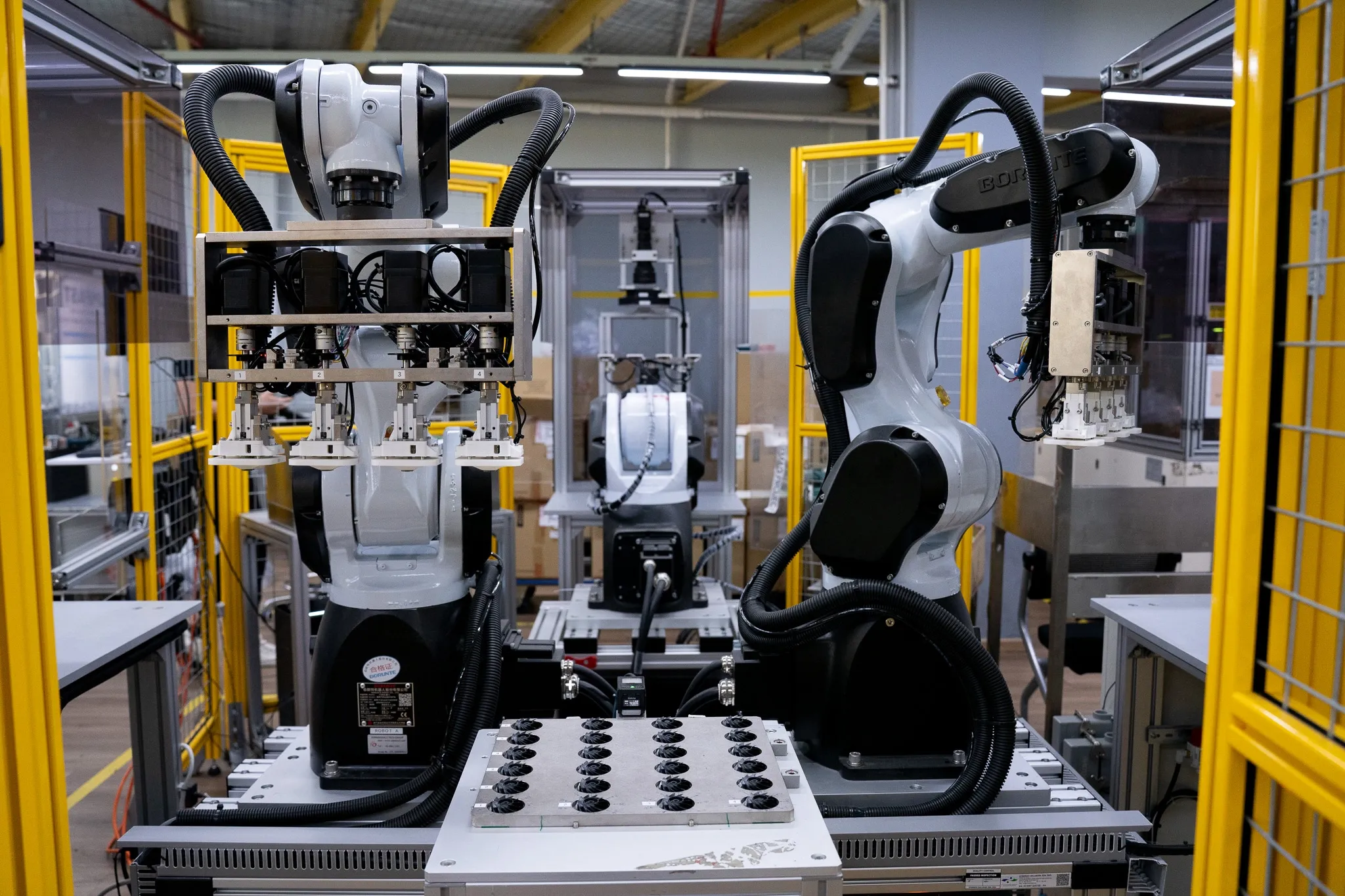
An AI-powered vision system, co-developed by Sunningdale Tech and A*STAR, inspects components on the factory floor.
The benefits can already be seen when these connections work well. Across 1,252 industry projects in the financial year of 2025, for example, companies have committed their own R&D investment alongside A*Star.
“Success would mean Singapore is known not only for the quality of its research, but for what that research creates: more Singapore-developed technologies reaching global markets, more researchers becoming founders, more deep-tech companies scaling, and more proprietary technologies built here,” says Beh.
“We should also see more of the resulting intellectual property, capital, talent and decision making anchored in Singapore.”
The country is also fostering a culture to dream boldly and experiment with curiosity, stepping forward to orchestrate and shape the future, rather than watch it unfold, Beh says.
“Ultimately, success is when these outcomes become more repeatable, and Singapore can shape both the next wave of innovation and capture an impactful share of the value it creates.”