
Reimagining Construction Lifting Through Automation
What if levelling a heavy prefabricated building component could take less than a minute? GENIOS’ Intelligent Lifting Frame (iLF) automates load levelling while supporting precise positioning, stabilisation and real-time monitoring during construction lifting operations.
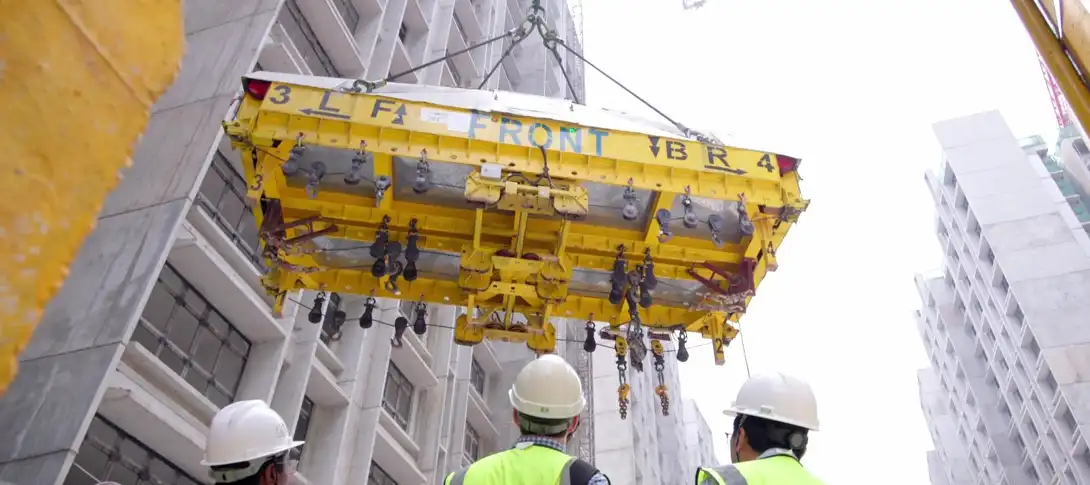
Through the Technology for Enterprise Capability Upgrading (T-Up) programme, GENIOS worked with A*STAR Singapore Institute of Manufacturing Technology (A*STAR SIMTech) to refine the iLF for construction-site use and build the technical expertise to develop it further.
The Challenge
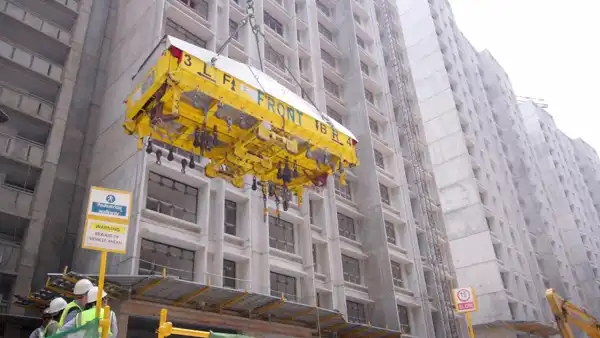
Lifting and positioning heavy prefabricated components is demanding work. Teams must manage uneven loading, wind-induced sway and tight worksite constraints while keeping loads level and accurately positioned. Even slight misalignments can delay installation. Different component types may also require different lifting frames, adding equipment and operational complexity.
GENIOS set out to adapt a research prototype for practical construction-site use. The system needed reliable lifting and positioning controls, alongside monitoring that would give operators timely information about the load.
Our Innovation
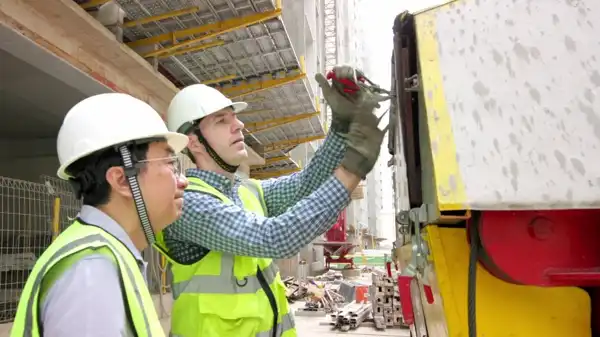
GENIOS emerged from research under the Cities of Tomorrow (CoT) programme, involving NUS, the Housing & Development Board (HDB) and A*STAR SIMTech. After the research project was completed, NUS Professor David Chua spun off the company GENIOS to commercialise its technology. Through the T-Up secondment, Dr Joel Stephen Short worked with GENIOS on the iLF’s sensing, control and stabilisation capabilities, while helping its engineers build the know-how to refine the technology for commercial use.
Uneven loading
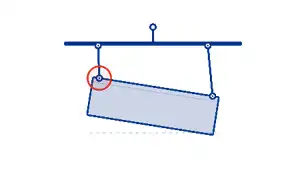
What could go wrong? A prefabricated component tilts during lifting.
So what? Misalignment can require repeated adjustments, delay installation and create risks from unexpected movement.
Overloaded lifting points
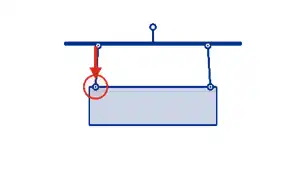
What could go wrong? Too much weight is borne by one lifting connection.
So what? Excessive stress could damage lifting equipment or cause a connection to fail, putting workers and materials at risk.
Incomplete unrigging
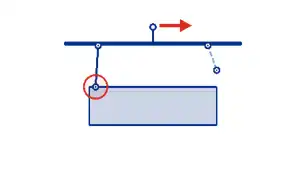
What could go wrong? A lifting connection remains attached after the component is positioned.
So what? Moving the crane could pull the component out of position, damage equipment or endanger nearby workers.
Illustrations are simplified explanatory diagrams, not technical drawings of the iLF. The consequences shown are potential risks, not reported incidents.
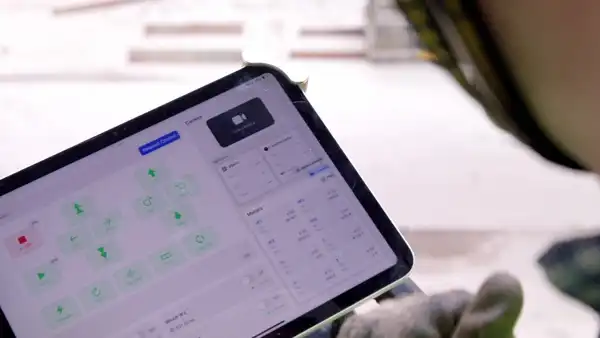
The iLF automates load levelling in under a minute. Independent corner adjustments and remote-controlled load rotation support precise positioning, while anti-sway technology helps stabilise loads in windy conditions. Real-time monitoring alerts operators to uneven loading, overloaded lifting points and lifting connections that have not been fully detached after installation, helping them respond to potential issues.
The Impact
Deployed and validated at a construction site in Jurong West, the iLF enabled faster levelling and more controlled installation. It also reduced the need for multiple lifting configurations across different component types, simplifying operations for teams handling prefabricated components.
The collaboration supported further design refinements, including reducing the system’s weight and preparing it for wider deployment. With the technical expertise and capabilities gained through T-Up, GENIOS is better equipped to continue developing automation solutions that can improve productivity and safety in construction.