
Teaching machines to spot defects: How Sunningdale Tech is leveraging AI-powered inspection
As products become increasingly sophisticated, catching microscopic defects of each part has grown beyond what conventional inspection methods can efficiently handle. This makes the inspection process labour-intensive to run and tedious to keep up to date.
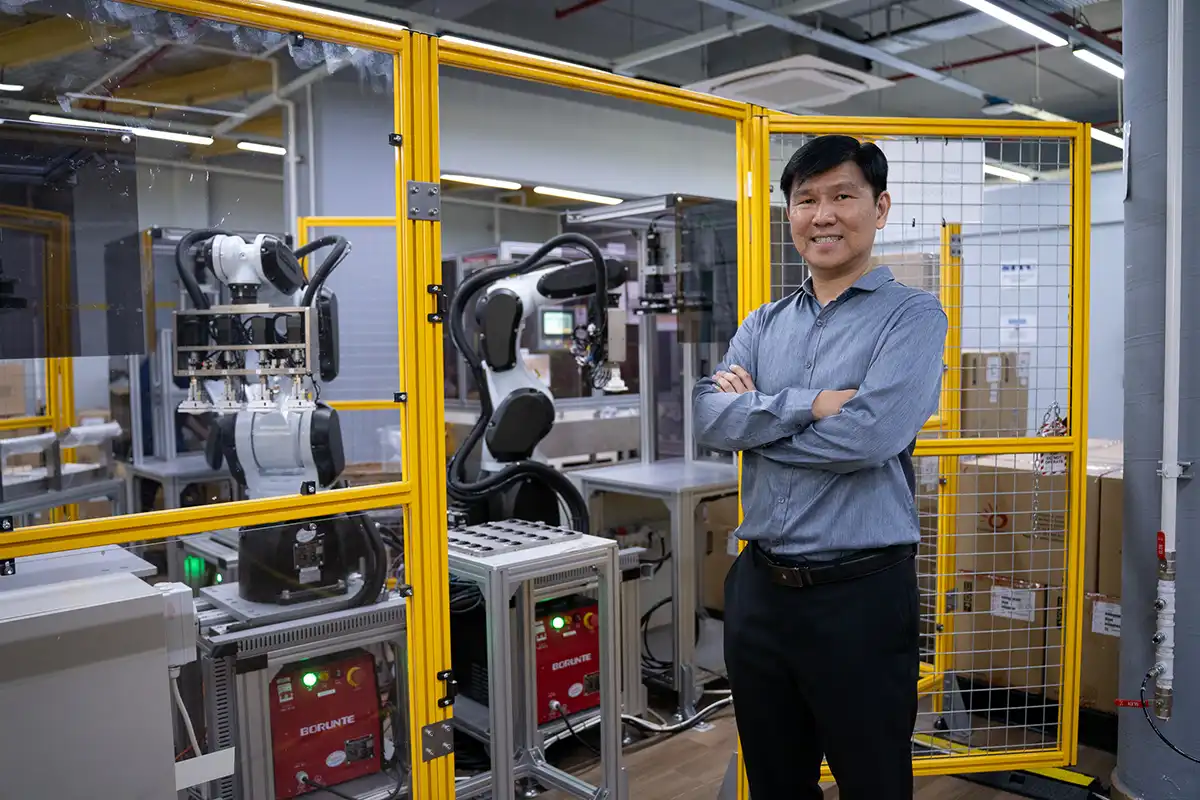
Mr Barry Tay, Senior Research and Development Director, Sunningdale Tech, with the AI-powered vision system, co-developed by Sunningdale Tech and A*STAR.
Sunningdale Tech, a precision plastics manufacturer largely serving the automotive, healthcare and consumer sectors, partnered A*STAR in early 2025 to develop an artificial intelligence (AI)-powered visual inspection system. Through a combination of automation, machine vision and AI, it can detect microscopic defects with greater consistency than manual inspection.
The AI inspection project is not Sunningdale Tech's first collaboration with A*STAR to lead to new and better ways of working. A*STAR supported Sunningdale through the T-Up programme , where researchers were seconded to work on earlier projects in additive manufacturing, while A*STAR Advanced Remanufacturing and Technology Centre (A*STAR ARTC) has supported its adoption of automation and AI.
After 18 months of development, repeated trials and continuous refinement, the system is approaching deployment. Once fully implemented, it will inspect up to 30,000 components each day across three impeller variants. The AI inspection system also has the potential to scale well beyond Sunningdale Tech's Singapore operations, with interest already emerging from multinational customers.
The Challenge
Once fitted inside a hairdryer motor, a plastic impeller spins at high speed to generate its airflow. Even a single cosmetic imperfection or the slightest imbalance can throw off how closely the finished product performs against its design. Manufacturing the component is challenging, but proving that every piece leaving the factory meets exact quality standards is harder still.
- Labour-intensive manual inspection: Before the AI system, operators worked in shifts to manually inspect around 10,000 parts daily, searching for defects barely visible to the naked eye. The process was labour-intensive, time-consuming and kept skilled staff from higher-value work.
- Painstaking machine vision programming: Traditional machine vision systems required engineers to manually define every inspection region, then repeat the process for each new product, which is a tedious cycle that limited how fast the system could scale.
Our Innovation
Sunningdale Tech and A*STAR combined complementary expertise to build the system. Sunningdale Tech designed the robotic handling and automation that presents each component to the cameras, while A*STAR contributed machine vision and AI algorithms to interpret what they capture.
The AI approach marked a fundamental shift from traditional machine vision. Rather than manually programming every inspection region, engineers trained the AI by showing it sample products and the range of defects seen day to day, teaching it to identify defects anywhere on a component.
Building the system required solving several technical challenges. Engineers first determined how the robot should manipulate each component to capture the clearest images, then selected a 25-megapixel vision system and trained the AI to distinguish genuine defects from harmless variations caused by reflections, lighting and differences across the six moulds used to produce the part.
Calibrating the AI to be precise took as much care as building it. An uncalibrated AI is so sensitive that it rejects more parts than a human inspector would. Engineers spent months refining its confidence thresholds so the system matched real-world customer expectations rather than theoretical perfection.
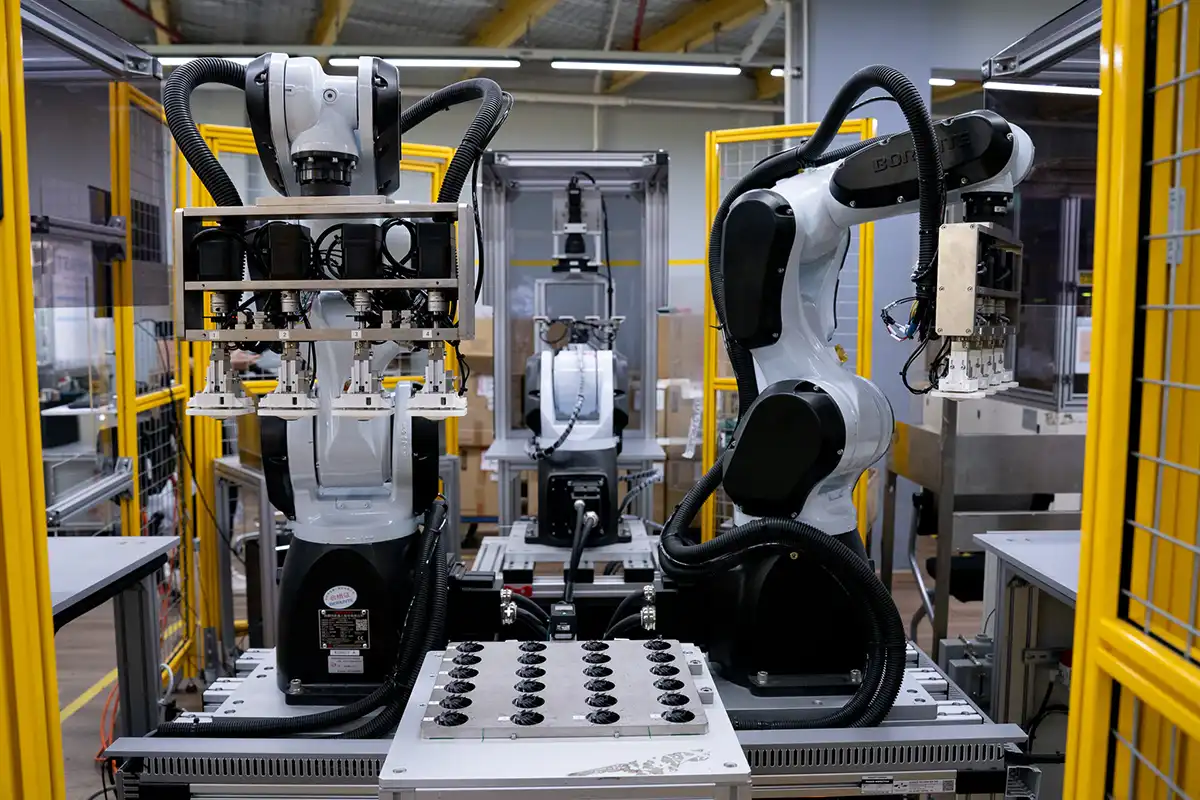
An AI-powered vision system, co-developed by Sunningdale Tech and A*STAR, inspects components on the factory floor.
A*STAR has supported Sunningdale Tech through:
- seconding researchers through the T-Up programme to work alongside the company's engineers on practical challenges such as process optimisation and powder recycling methodologies for its industrial metal 3D printing system; and
- accelerating technology adoption through A*STAR ARTC, including additive manufacturing, automation and AI, while building deeper technical expertise within the company's engineering teams.
The Impact
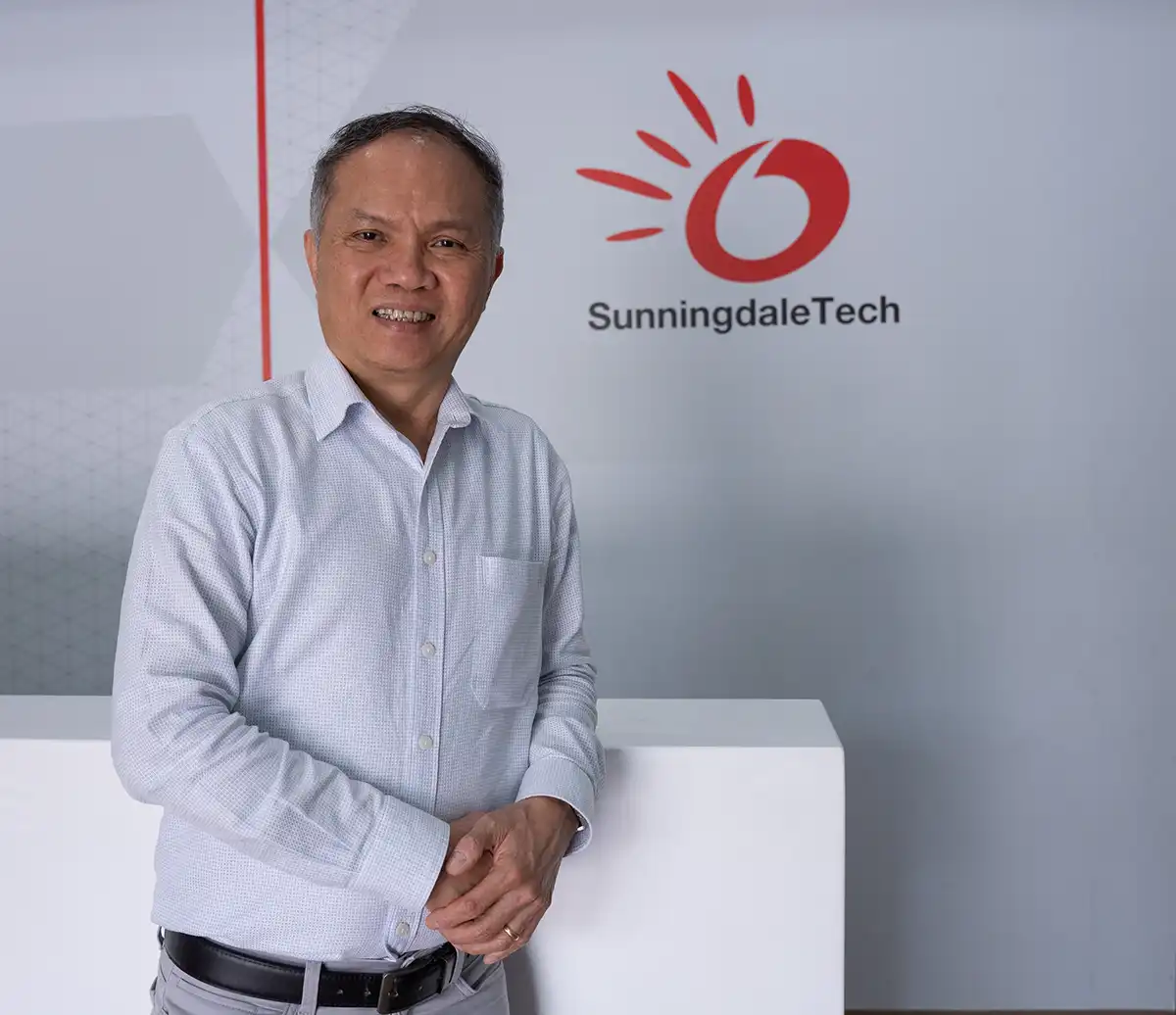
For Mr Simon Tan, Chief Technology Officer at Sunningdale Tech, the AI project marks the latest chapter in a manufacturing career spanning more than four decades, one that began before the days of computer-aided design and manufacturing. “There was no such thing as computer-aided manufacturing, computer-aided design,” he recalled.
Key outcomes include:
- Scaling capacity, elevating roles: Once fully implemented, the AI system will inspect up to 30,000 components daily across three impeller variants – nearly triple of current manual capacity with greater consistency. It is expected to save hundreds of thousands of dollars annually while enabling operators to take on higher-value work, including managing automated production and applying their engineering judgement and customer engagement capabilities.
- Deployment across Singapore and potentially beyond: The system could be deployed across Sunningdale Tech’s 21 sites in 11 countries. It reflects a broader shift in customers’ expectations beyond quality and scale towards innovation, automation and advanced engineering capabilities. This ability has attracted interest from several multinational customers, seeking to integrate AI inspection into future production lines.
- A strategic shift into higher-value segments: Sunningdale Tech deliberately repositioned around higher-precision, higher-value segments such as healthcare, which now accounts for roughly one-third of its business. A*STAR's T-Up programme and A*STAR ARTC have strengthened the capabilities needed to meet leading medical device customers’ stringent quality, precision and reliability requirements.
- Stronger technical capabilities: In 2021, Sunningdale Tech invested in one of Singapore's earliest industrial metal 3D printing systems. A*STAR researchers seconded through the T-Up programme have since worked with its engineers to advance Industry 5.0, providing the expertise behind its Autonomous Mobile Robots. Combined with wider system integration across machines and shop-floor infrastructure, this has improved productivity and accelerated the adoption of smart manufacturing practices.
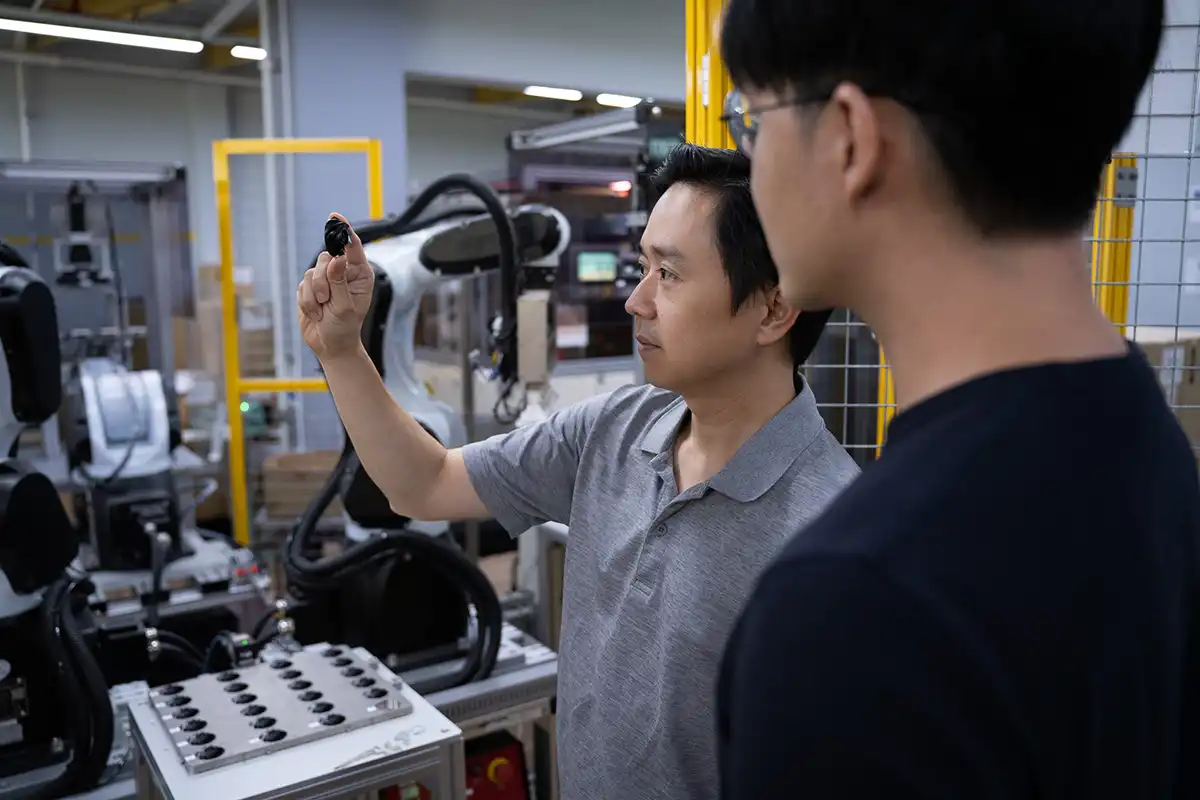
Rather than replacing people, the goal is to equip them with better tools, solve increasingly complex engineering problems and keep pace with customers whose products continue to evolve.
In an increasingly competitive advanced manufacturing sector, Singapore’s edge will depend on how well companies can turn R&D into capabilities that create commercial value and open up new opportunities. Sometimes, that begins with solving a problem as precise as detecting a minuscule crack in a hidden impeller.