Have We Already Forgotten The Lessons of Covid-19?
How we respond to a pandemic is shaped by preparedness in peacetime. Some parts of the world are letting their guard down.
Published on 26 January 2026 | Source: The Straits Times © SPH Media Limited. Permission is required for reproduction.
By Professor Lisa Ng, Executive Director at A*STAR infectious Diseases Labs and A*STAR Biomedical Research Council.
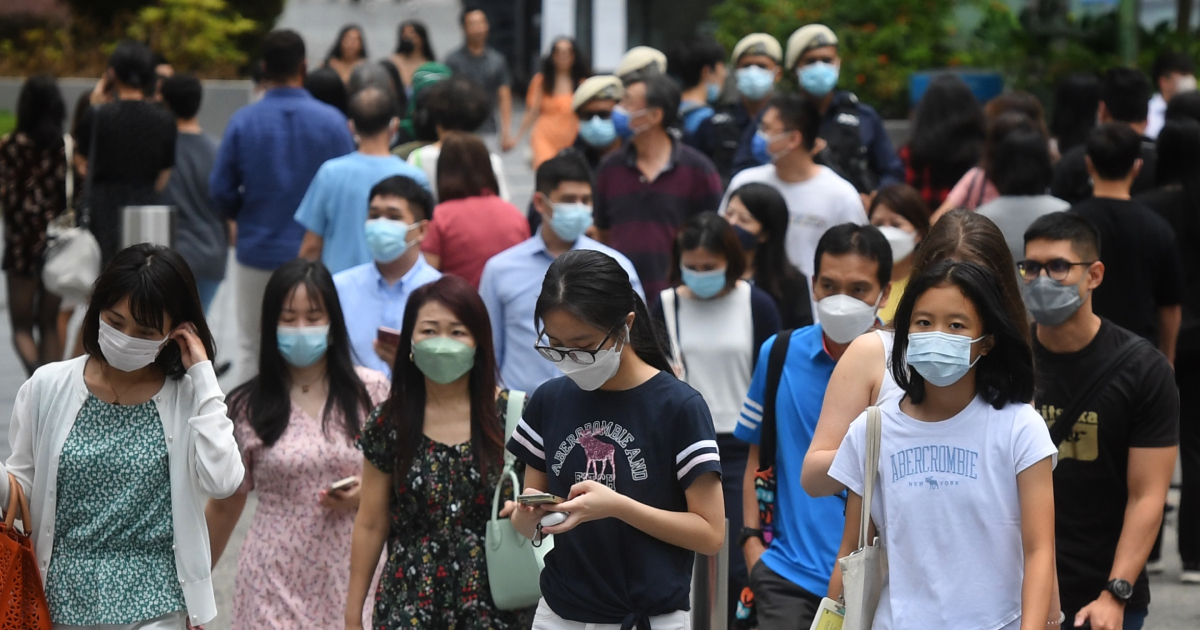
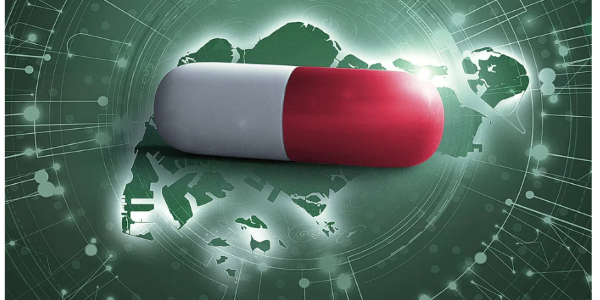
Around the world, pandemic-era health funding and global aid for health programmes have declined. This deprioritisation matters because preparedness capabilities erode quietly, the writer says. ST PHOTO: CHONG JUN LIANG
Six years ago, in December 2019, the world first learnt of Covid-19. While the virus no longer dominates headlines, the conditions that foster pandemics have not disappeared. What has changed is our collective attention.
For over two decades, my work has focused on infectious diseases, much of it outside moments of crisis. While attention sharpens during outbreaks, preparedness is shaped in the long stretches between them, when momentum can quietly soften even as risks persist. Pandemics are not defeated by our reaction to the crisis when it hits us. Our response is shaped by years of sustained research, training a pipeline of talent, surveillance and collaboration. When these foundations weaken, we find ourselves scrambling to catch up.
This is why the recent launch of Singapore's Communicable Diseases Agency (CDA) is significant. It signals a serious, long-term commitment to public health preparedness and response. Strong institutions anchor accountability, coordination and national capability.
But preparedness does not reside in structure alone. Its effectiveness depends on whether scientific capabilities, operational systems and partnerships remain active and connected when there is no immediate crisis forcing alignment. This is where preparedness is most often tested, and where it is most vulnerable.
When Attention Flags
During the Covid-19 pandemic, science moved at unprecedented speed. Vaccines were developed in under a year, not through shortcuts, but because decades of prior research in virology, immunology and vaccine platforms had laid the groundwork. Diagnostics were scaled rapidly, treatments evaluated rigorously, and genomic surveillance enabled scientists worldwide to track the virus’s every move, in near real time. These were not miracles, but dividends from long-term investment.
The pandemic's cost reminds us what is at stake: over 14.9 million deaths globally and an estimated US$13.8 trillion (S$17.56 trillion) in economic losses. In Singapore alone, more than 1,700 lives were lost. Preparedness is not an abstract concept; it is measured in lives, livelihoods and societal disruption.
But that is easily forgotten. Once the immediate crisis recedes, a familiar cycle begins. Attention shifts. Funding priorities change. Infectious diseases quietly slip down the list of urgent concerns.
This pattern is visible globally. Compared with oncology or metabolic disease, infectious disease pipelines offer lower commercial returns. Treatments are often short-term, markets are highly price-sensitive, and last-line antibiotics and antivirals are reserved for later treatment lines to preserve their effectiveness, further limiting their market. These structural realities have discouraged sustained private-sector investment.
Public research funding has also become more competitive, with attention drawn toward fields perceived to be more immediately impactful. Around the world, pandemic-era health funding and global aid for health programmes have declined, and some major institutions which provided global guidance during the pandemic have seen their budgets slashed drastically.
These shifts have introduced uncertainty for public health systems and for the global health infrastructure that underpins disease surveillance, research continuity and international collaboration.
This deprioritisation matters because preparedness capabilities erode quietly. Expertise disperses. Platforms stagnate. Collaboration slows, even as risks persist.
A Risk We Cannot Ignore
Singapore's Health Minister Ong Ye Kung recently highlighted that there is an estimated 2 per cent chance of a new global pandemic emerging each year, or roughly a one-in-three chance over the next 20 years. He also warned that as memories of Covid-19 fade, vigilance wanes.
Biological threats, like avian influenza and antimicrobial resistance, do not operate on news cycles. The World Bank has projected that if left unaddressed, antimicrobial resistance could reduce global GDP by around 3.8 per cent by 2050 and contribute to tens of millions of deaths worldwide.
Preparedness cannot be switched on overnight. While Singapore's focus remains strong, there is a global risk that systems built during crises lose momentum once urgency passes. Scientific capability requires continuous investment. High-containment laboratories, surveillance platforms and skilled teams must be sustained and kept in active use, supported by proactive collaboration across research institutes, hospitals, regulators and industry.
Lessons From SARS That Still Shape Us Today
I saw this lesson early in my career. The SARS outbreak in 2003 exposed painful gaps in regional and global preparedness, but it also catalysed investment in infectious disease research, infrastructure, and closer collaboration between scientists and clinicians in Singapore. Those investments paid off years later during Covid-19.
One example was diagnostics. Capabilities built after SARS enabled A*STAR and Tan Tock Seng Hospital to co-develop the Fortitude test kit for Covid-19 in under a month. It became the first “ready-made” hospital laboratory diagnostic kit authorised for clinical use in Singapore, allowing for earlier diagnosis of cases and the ability to isolate patients quicker. The kit was rapidly deployed locally and shared with regional partners.
Scientific platforms created for one purpose often prove invaluable for another. Global data-sharing system GISAID, originally built for influenza surveillance, became a backbone for tracking Covid-19 variants worldwide. These examples show what sustained preparedness looks like in practice: investments made long before a crisis that enable faster detection, clearer decisions and earlier intervention when it matters most.
At A*STAR, we see this continuity in our own work. Decades of research on chikungunya have deepened understanding of immune responses to mosquito-borne, including why some patients suffer prolonged joint pain. Recent findings show that proteins in mosquito saliva can influence the body’s response to chikungunya infection, insights that may shape future vaccine and therapeutic design.
Chikungunya is not a pandemic disease, but it remains a concern for Singapore and in the tropics. Research on such diseases may appear niche, but it sharpens risk assessment, improves clinical care, and strengthens global preparedness – ensuring that when new threats emerge, we are not starting from scratch.
From Research to Real-World Readiness
Singapore’s preparedness today is underpinned by years of deliberate investment. High-containment and infection model capabilities allow scientists to safely study high-risk pathogens and quickly test interventions, before an outbreak escalates.
But infrastructure alone is not enough; pandemic response depends on a whole-of-ecosystem effort. Recent experience shows that even countries with advanced laboratories and hospitals struggled when responsibilities were fragmented and systems operated in silos.
What strengthens Singapore is our ability to move as one. Ministry of Health-led initiatives help align outbreak response and organise vaccine development across public and private institutions. Collaboration between research institutions and public healthcare clusters ensures research translates into public health impact.
Investments in biomanufacturing further support the rapid development of RNA-based vaccines and therapeutics. In this field, speed determines not just how quickly transmission is contained, but ultimately how many lives can be protected.
Meanwhile, regional and global partnerships with the World Health Organization and the Pasteur Network ensure our capabilities are exercised beyond borders. These links must be kept warm, not cold-started in crisis.
While no single institution or country can fully offset a global pullback in pandemic-related funding and capacity, countries with strong scientific and public health capabilities, including Singapore as well as partners in the Europe, Japan, and South Korea, the wider region, can still contribute meaningfully through sustained global partnerships.
Having experienced chikungunya and other mosquito-borne infections firsthand, I have seen how disease affects not only individuals, but also families, workplaces and communities. It has shaped my conviction that science must ultimately serve people.
Preparedness is shaped by peacetime decisions, not crisis-driven urgency, and no institution can sustain it alone. Even the strongest national institutions operate within a global health landscape, where structural gaps persist.
This makes it all the more important to remain deliberate and consistent in our approach: sustaining investment, and keeping scientific research, surveillance and response connected within Singapore and across borders. Preparedness is not a one-off achievement, but a discipline that must be practised together, before the next outbreak forces our hand.
About the author
Professor Lisa Ng is the Executive Director of the A*STAR Infectious Diseases Labs and the A*STAR Biomedical Research Council. She received the 2025 President’s Science Award for her contributions to viral infection immunology and advancing global pandemic management.
A*STAR celebrates International Women's Day
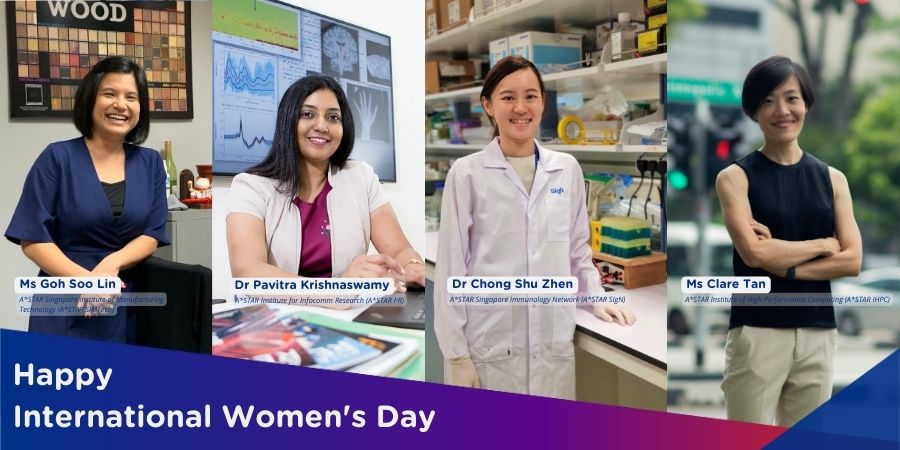
From groundbreaking discoveries to cutting-edge research, our researchers are empowering the next generation of female science, technology, engineering and mathematics (STEM) leaders.
Get inspired by our #WomeninSTEM