Gut instincts: How AMILI’s microbiome model fast-tracks research for better Asian gut health
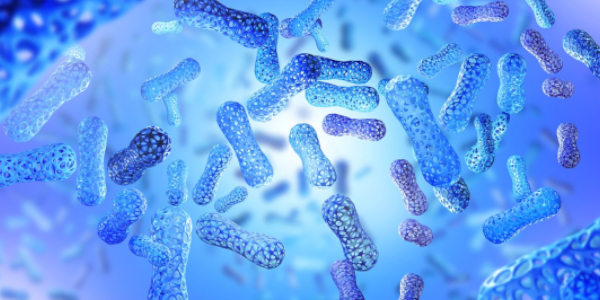
In recent decades, the gut microbiome, an intricate community of trillions of bacteria, fungi and microorganisms that lives in one’s digestive tracts, has emerged as an area of scientific interest. Deeply tied to overall health, one’s microbiome profile is shaped by eating habits, lifestyle, living environment and genetics.
Jump to Section: The Challenge | Our Innovation | The Impact

However, the Asian gut microbiome has been greatly understudied compared with its Western counterparts, resulting in a general lack of understanding and customised therapies for a range of conditions.
Founded in 2019, local bio-tech firm AMILI (which stands for Asia Microbiome Library) decided to fill that gap by collecting stool samples from thousands of healthy, disease-free Singaporeans. Its goal was to not only build a multi-ethnic Asia-specific database, but also offer a gut microbiome transplant service in which donors’ healthy microbes are introduced into patients suffering from Clostridium difficile (a highly contagious bacteria) infections in the colon and other gut microbiome-related conditions.
When food brands began to approach AMILI for support in developing gut-healthy products, its Chief Executive Officer Jeremy Lim turned to A*STAR to tap their expertise through the Technology for Enterprise Capability Upgrading (T-Up) programme, which supports local start-ups in enhancing their technological expertise and competitiveness. Together, they worked to develop a model to evaluate how different ingredients affect the Asian gut with samples from AMILI’s microbiome bank, minimising the need for lengthy human trials.
The Challenge
With the growing demand for functional foods that promote gut health, food companies seeking to develop their product offerings reached out to AMILI for support in testing their products’ effects on the gut microbiome. But the company had no experience in the food industry.
At the same time, gut microbiome studies typically require human trials, which are tedious, time-consuming and cost millions of dollars — an investment that many food companies are unlikely or unable to make. The most viable and cost-effective solution would be to find a way to conduct gut microbiome studies without a human participant, an area that AMILI had not yet explored. That was when A*STAR stepped in.
Our Innovation
In 2022, AMILI worked with A*STAR for expertise and was introduced to T-Up secondee, Dr Germaine Yong, a senior microbiome scientist with a focus on food and diet. She set out to develop a pre-clinical, lab-based alternative to traditional human trials, which was eventually named the Functional Microbiota Assay (FMA).
A*STAR SIFBI, Dr Germaine Yong who was seconded to AMILI through the T-Up programme.
Beyond familiar macronutrients and micronutrients which are routinely assessed, the FMA captures a third, often-neglected dimension — the gut microbiome’s response. Essentially a simplified model of the lower gut, specifically the colon, it is designed to mimic digestive environment in vitro to predict human responses to specific foods and ingredients.
In this model, microbiome samples from AMILI’s extensive library are incubated with different ingredients to simulate how they interact with the gut microbiome, mimicking in vivo complexity with high accuracy.
Using metagenomic analysis to isolate and study microbial DNA, the assay determines each ingredient’s effect on the gut microbiome and, in turn, its influence on overall immune and metabolic health. AMILI’s clients can then use these insights to formulate and fine-tune products backed by scientific validation.
The T-Up project created a whole new toolkit in AMILI Analytics, diversifying ways to meet our partners’ commercial and scientific appetites.
— Dr Germaine Yong, senior scientist at A*STAR
The Impact
While AMILI had already been working with some clients using human studies prior to T-Up, the FMA offered an additional suite of tools at a much more affordable price point, while also delivering quicker results and scalability. For instance, a local start-up that produces plant-based milk was able to receive recommendations on what base ingredients were most suitable for their target audience within just three months.
The FMA model has also spurred unprecedented business growth for AMILI:
- Business diversification: A new business consulting arm called AMILI Analytics was launched in 2023, which partners with global enterprises to transform microbiome insights into healthier, scientifically-validated products that allow companies to differentiate themselves in a highly competitive market.
- Revenue growth: The start-up generated $1.5 million in revenue from 15 commercial clients and research partners.
- Efficiency gains: By tailoring the FMA model to reflect different age, sex and health profiles, AMILI’s microbiome testing process saw a six-fold increase in scalability.
We want to show people here that what they eat affects their health. Making small changes to their diet, and to when they eat certain kinds of food, can have an effect. We also want to create opportunities for local food manufacturers to use the data to formulate better food.
— Associate Professor Jeremy Lim, Chief Executive Officer of AMILI.
On a mission to build the world’s largest multi-ethnic Asian gut microbiome database, AMILI is not only driving the development of personalised products and services to optimise gut health, but also paving the way for a deeper understanding of how different populations respond to treatments — insights that could ultimately reshape healthcare.
A*STAR celebrates International Women's Day

From groundbreaking discoveries to cutting-edge research, our researchers are empowering the next generation of female science, technology, engineering and mathematics (STEM) leaders.
Get inspired by our #WomeninSTEM