iCORE Immunomapping
The iCORE Immunomapping, previously known as Immunomapping Platform (IMAP) spun off from Joe Yeong Laboratory (JY Lab) in 2024, provides a best-in-class service for one-stop spatial biology solutions from sample handling to high-end spatial data generation by facilitating access to high-end and latest spatial technologies. Positioned at the intersection of pathology and advanced spatial biology technology, iCORE Immunomapping serves as a specialized bridge between laboratory research and clinical application (immuno-patho translation).
Key Services
We provide a wide range of services from general histology, spatial transcriptomics and spatial proteomics. It primarily focuses on experiment designing, optimisation, spatial proteomic staining and imaging, allowing assay customisation, development and validation.
1. Access to High-End Spatial Technologies
Instead of a researcher having to go to different labs for staining and imaging, we handle the entire wet-lab pipeline:
- General Histology: Basic tissue preparation and assessment.
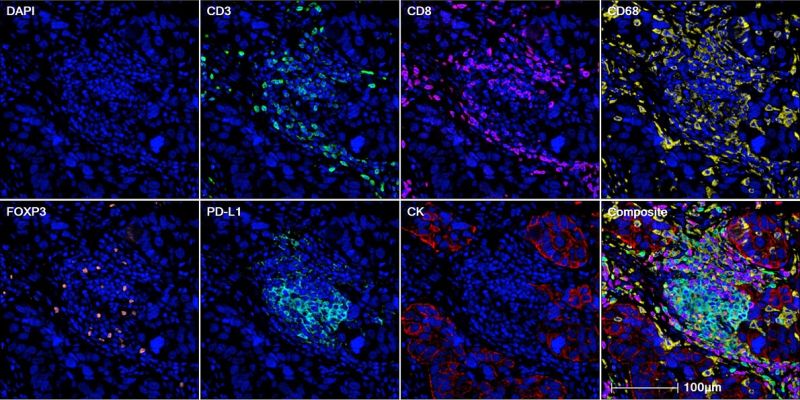
- Spatial Proteomics: Visualizing dozens of proteins simultaneously on a single tissue section using technologies like Multiplex Immunofluorescence (mIF).
- Spatial Transcriptomics: Mapping gene expression within the architectural context of the tissue.
2. Capability in Translational Research
iCORE Immunomapping's strength in its integration with the global immune-oncology ecosystems:
- Scientific Backing: Supported by Dr. Joe Yeong, a recognized expert in quantitative multiplexing and a key figure in the Society for Immunotherapy of Cancer (SITC).
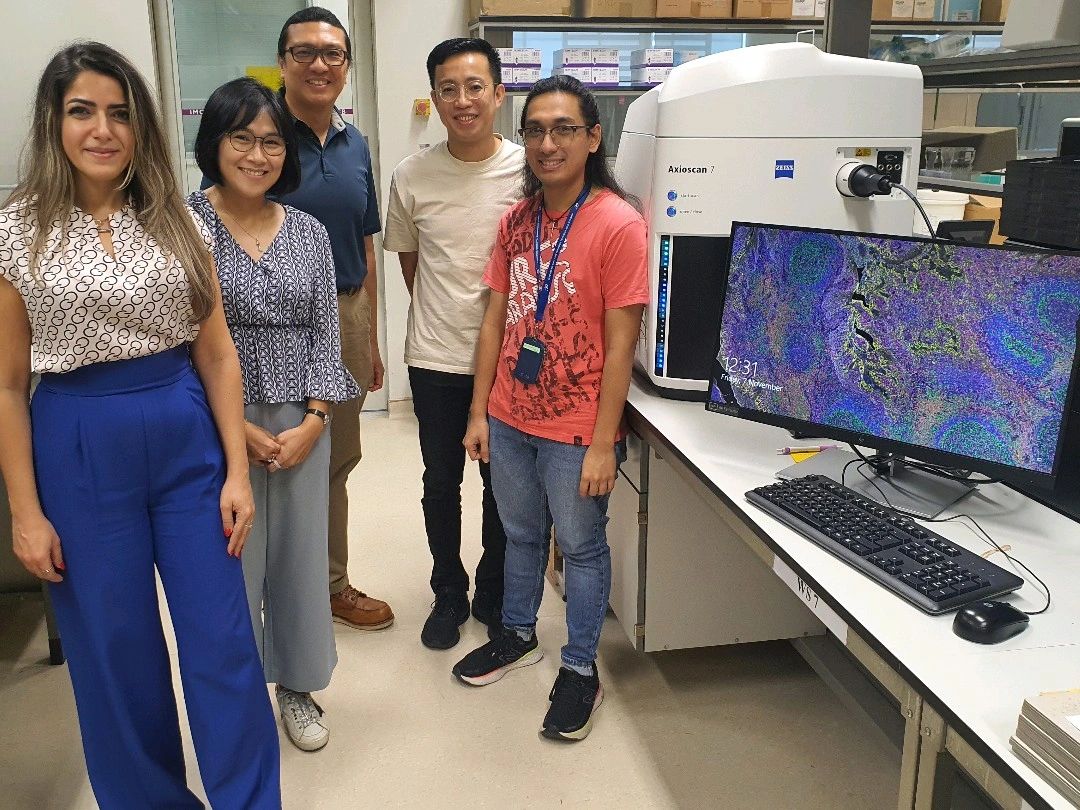
- Operational Leadership: Managed by Craig Ryan Joseph, a senior research officer and platform manager mentored by Joe Yeong, who ensures support for academic discovery with the development of a reliable service based platform to meet researcher's endeavours in spatial biology.
- Strategic Links: Its connection to A*STAR (IMCB) means the platform stays at the forefront of "Theranostics"—using diagnostic imaging to guide specific therapies.
3. Engagement
We seek not just to provide a spatial biology pipeline build on her expertise of spatial biology and science but aims to provide a holistic client experience. We understand that research is novel and unique which may need greater support in experiment designing and customisation.
- Experimental Design: Helping researchers decide which markers (e.g., PD-L1, CD8, FoxP3) are most relevant to their specific study.
- Optimization: Fine-tuning the chemical process to ensure that different antibodies don't interfere with one another.
- Validation: Ensuring the resulting data is robust enough for clinical or industry-level publication.
Key Applications
Tumour-Immune Microenvironment Studies
Single Cell Profiling at Proteomic and Transcriptomic Levels
Tumour/ Histological Spatial Profiling
Multi-biomarker Panels and Tissue-based Assays
Data generated from these approaches can be used for:
AI-Enabled Digital Pathology
Target Discovery and Validation
Research in Personalised Cancer Medicine (e.g. Antibody Drug Conjugate and Vaccine development)
Key Equipment
General Histology:
Tissue Handling: Processor, Embedder, Microtome, Cryotome, Basic Tissue Staining (H&E and Immunohistochemistry)
Imaging:
Zeiss Axioscan7
Landing Med Pathology Scanner
Staining:
Leica BondMax Autostainer
COMET1.0
Multiplex Immunohistochemistry (6plex)
Our People
The iCORE Immunomapping platform is run by Craig Ryan Joseph and scientifically supported by pioneer and key opinion leader (Integrative Biology for Theranostics Lab, IMCB, A*STAR) in automation of quantitative multiplex immunofluorescence / immunohistochemistry and led by the group leader, Dr Joe Yeong, who is a member of Pathology Committee, Society of Immunotherapy for Cancer and the executive secretary of Singapore Society of Oncology – Cancer immunotherapy consortium.