Making Molecules Matter
“I think the biggest motivation for me in chemistry is to make things that will actually matter. But I want to do more than just create molecules. I want to be more involved in what happens after.”
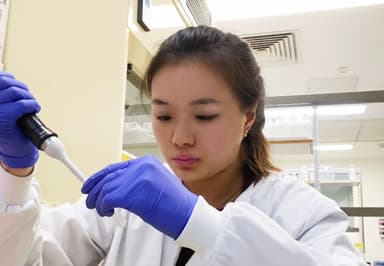
National Science Scholarship (BS-PhD) recipient Christine Ng’s journey shows how her personal drive and support from her supervisor helped reshape her career path.
When Christine first arrived at Stanford University in 2020, she intended to specialise in synthetic chemistry. She had spent a year at the Experimental Drug Development Centre (EDDC) in Singapore, and completed two more rotations in chemistry labs within Stanford to further hone her skills.
However, as she delved deeper into her studies, Christine found her perspective shifting. She wanted more than to just create molecules, drawing her towards the world of chemical biology. This led Christine to reach out to Professor Steven Banik, whose journey from chemistry to chemical biology mirrored her own ambitions.
Unlike the usual experience where students spend weeks shadowing others, Christine was able to dive into her research immediately. “What struck me was that, even though the lab was still being set up, Steven had already cleared a hood for me to start work in,” Christine recalls. This gesture also set the tone for their future relationship – one of mutual respect, enthusiasm, and a shared passion for pushing boundaries.
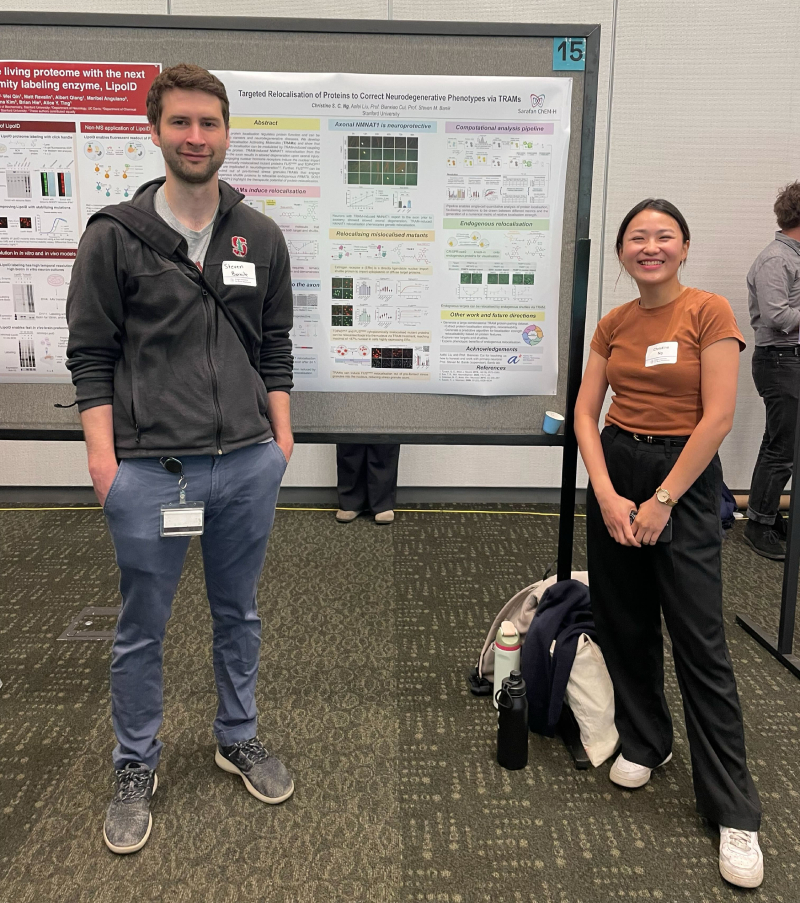
As Christine was Professor Banik's first graduate student to join his lab, he felt a sense of responsibility to help Christine succeed, acknowledging the risk she took in joining a new lab. "There's a lot of pressure that comes with figuring out what to do with your first group of students," Professor Banik admits. "But she was able to, basically on day one, just start going," Professor Banik recalls, highlighting Christine's readiness and enthusiasm. “It was kind of like the dream scenario for a professor that’s just started—she was super interested and engaged.”
By striking a balance between providing guidance and allowing freedom, Professor Banik created an environment where Christine grows independently while knowing support is always available if needed. As she has progressed, Professor Banik transitioned from providing direct guidance to serving as a sounding board for Christine's ideas, encouraging her independence and creativity. Banik takes great pride in Christine's accomplishments, and when her graduate work was published in Nature, he reflects with humility: "I was just kind of lucky to be there and witness it."
As a supervisor, Professor Banik is deeply invested in Christine's academic and career growth. Their collaborative approach fosters an environment of mutual learning, inspiring each other through their exchange of ideas. This dynamic relationship not only accelerates Christine's development but also exemplifies the importance of having the right guidance in nurturing the next generation of researchers.