Wong Yi JingA*STAR Graduate Scholarship
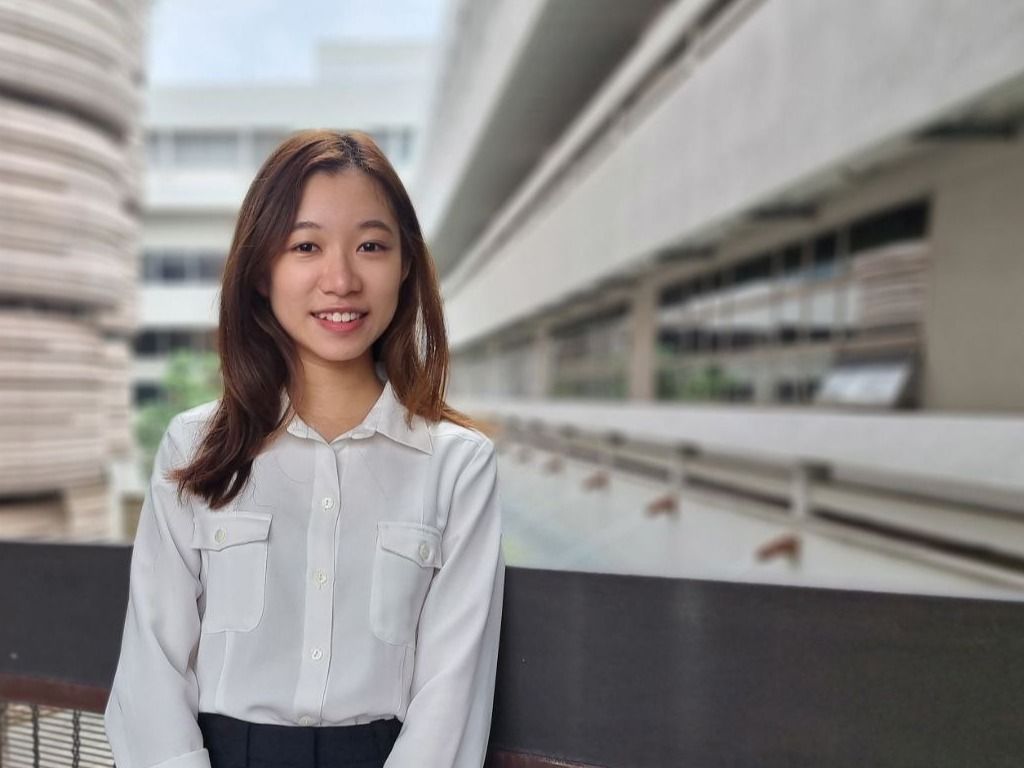
Wong Yi Jing, A*STAR Graduate Scholarship Recipient
Have you ever wondered how plants are feeling?
She does this by attaching flexible electrodes to them. To engage in intelligent conversation with the plants, the material interface is very important. The electrodes are generally attached to the surface of the plant (e.g., stem and leaf) or inserted into plant tissues.
Similar to the medical wearables we wear on our wrists to track our vital signals, plant wearables capture electric signals emitted from the plants as they respond to different stimuli such as touch, light, and wounding (physical damage). By analysing these signals, Yi Jing can gain a better understanding as to how their environment affects them.
Why Yi Jing decided to pursue a PhD in material science
She became sure of her interest in scientific research during her third year of undergraduate studies in the Bachelor in Materials Engineering programme at NTU. As a top student in her cohort, she was invited to participate twice in the prestigious Undergraduate Research Experience on Campus (URECA) programme, an 11-month research programme.
Yi Jing used a material-based approach for her URECA projects. She first investigated the use of transparent bamboo-composite materials as a potential alternative to glass, for creating energy-saving smart windows. Another project involved improving the properties of stretchable electrodes for use on human skin to better capture EMG (electromyography) signals which are generated in the muscles when muscles contract.
The stint as a material scientist intrigued her and led her to consider a career as a scientist, and ultimately take up the A*STAR Graduate Scholarship (AGS). The AGS supports students for up to four years of PhD or EngD (Doctorate of Engineering) studies at various local universities, such as NTU, National University of Singapore, Singapore University of Technology and Design, and Singapore Management University.
That is the question constantly on Wong Yi Jing’s mind. As a PhD student exploring the use of flexible electronics as a sensing technology for plants at the Nanyang Technological University (NTU), she spends her day thinking about how to get them to talk back to her.