Argonaute Lifesciences: Saving Limbs, Restoring Lives - A Singapore Start-up’s Breakthrough in Chronic Wound Care
A Singapore start-up, Argonaute Lifesciences, is transforming how doctors and patients treat chronic wounds through Product Ten Hydrogel — a product that accelerates healing and could help prevent amputations. The company emerged from research at A*STAR Skin Research Labs (A*STAR SRL) and Nanyang Technological University, Singapore’s Lee Kong Chian School of Medicine (LKCMedicine), both members of the Skin Research Institute of Singapore (SRIS).
Tackling a Silent Epidemic
Chronic wounds such as diabetic foot ulcers, venous leg ulcers and pressure ulcers are a growing global healthcare challenge. They affect nearly 2 per cent of the world’s population and consume up to 4 per cent of national healthcare budgets.
For people with diabetes, one in three will develop a foot ulcer in their lifetime. They are hard to heal, resulting in repeated infection, prolonged hospitalisation, or even amputation. In Singapore, an estimated four amputations occur every day due to wounds that fail to heal.
“Patients live in fear of infections and amputations, and families carry the heavy emotional and financial weight of long-term care,” said Dr Chin Jiah Shin, Senior Scientist at A*STAR Skin Research Labs, co-inventor of Product Ten Hydrogel and co-founder of Argonaute Lifesciences. “This is not just about healing wounds — it’s about saving lives.”
From Model to Medicine
Despite advances in wound care, most existing products only protect the wound surface. They do not address the underlying biochemical factors that cause chronic wounds to persist — including oxidative stress, abnormal pH, and inflammation that prevents new tissue from forming.
To study these mechanisms more precisely, researchers at the A*STAR Skin Research Labs (Dr. Chin Jiah Shin from A*STAR SRL) and LKCMedicine (Professor David Becker) developed the Perturbed Wound Model (PWM), a sophisticated preclinical platform that replicates the microenvironment of human chronic wounds. Unlike traditional animal models, PWM captures the physiological imbalances that stall healing, providing a more accurate tool for testing targeted interventions.
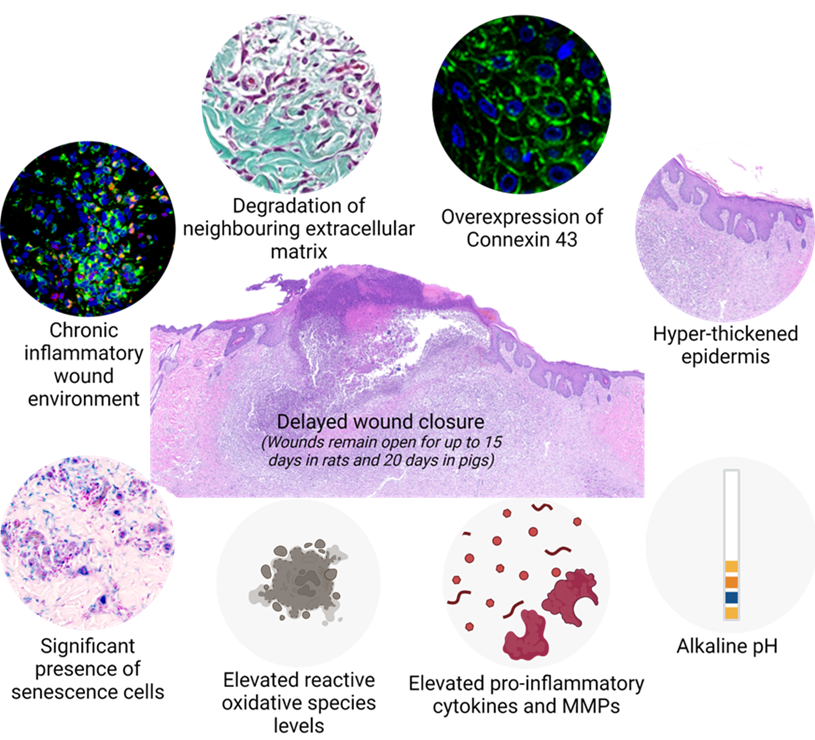
Summary of the features of PWM
The PWM has become a recognised benchmark in wound-healing research, cited in multiple peer-reviewed journals and receiving awards at the World Union of Wound Healing Societies Congress 2022. Dr Chin was also awarded the Young Investigator Award (First Prize) at the 18th International Conference on Biomedical Engineering.
The model has allowed preclinical evaluation of Product Ten Hydrogel; a formulation designed to stabilise fragile antioxidants and release them gradually into the wound bed. By restoring biochemical balance, the hydrogel promotes faster and more complete healing.
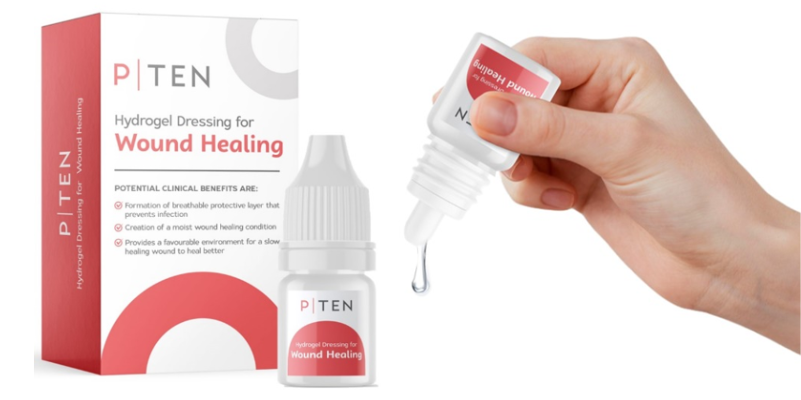
From Lab to Clinic: Product Ten Hydrogel
Recognising Product Ten Hydrogel’s therapeutic potential, the research team have spun-out Argonaute Lifesciences (2025), with support from A*STAR’s Innovation & Enterprise Venture Creation Group. The company’s goal: to change the way doctors and patients fight chronic wounds.
To bridge the gap from research to reality, Argonaute is progressing through a phased development pathway:
• Pilot-scale manufacturing aligned with ISO-certified quality systems, ensuring product consistency and regulatory readiness.
• Comparative benchmarking studies against existing wound-care products to demonstrate efficacy.
• Partnership with Changi General Hospital’s Wound Healing Centre, paving the way for first-in-human clinical trials approved under SingHealth.
“Every phase of development builds on scientific evidence and clinical validation,” said Dr Chin. “Our aim is to establish Product Ten Hydrogel as a trusted, deployable, easy to use treatment in chronic wound management.”
Market Impact
The global chronic wound care market is a multibillion-dollar market, driven by rising diabetes rates and ageing populations. Yet unmet clinical needs remain high — many wound management strategies offer protection but not effective healing.
Product Ten Hydrogel is designed to fill this gap. Its single-dose, ready-to-use format simplifies application and ensures sterility, making it suitable for both hospital and home-care settings. Early preclinical studies indicate that wounds treated with the hydrogel heal up to 50 per cent faster compared to existing standard treatments.
The potential benefits are extensive:
• For patients: Faster recovery, less clinic visits, and a greater chance of avoiding amputation.
• For caregivers: Reduced emotional and logistical burden from long-term wound management.
• For healthcare systems: Shorter treatment cycles, reduced hospital stays, and lower costs.
These combined advantages have already drawn interest from investors, clinicians, and hospital networks, setting the stage for the hydrogel’s wider clinical adoption and commercialisation within the next few years.
Homegrown Innovation Powered by a Collaborative Biomedical Ecosystem
Argonaute Lifesciences embodies Singapore’s ability to translate public-sector research into real-world innovation. By combining the scientific expertise of SRIS members, and their clinical partners, the project demonstrates how a national research ecosystem can accelerate health innovation from the lab bench to the bedside.
Beyond creating a new wound treatment, Argonaute’s journey showcases how Singapore’s collaborative biomedical environment fosters entrepreneurship, strengthens clinical partnerships, and bridges scientific excellence with industry application.
Through Product Ten Hydrogel, the team is advancing the science of wound repair and delivering tangible benefits for patients — reinforcing A*STAR’s mission to advance science and develop innovative technology to drive economic growth and improve lives.