Quick Navigation
Analytical Science & Technology (Metabolomics)
Delivering Powerful Insights on Cellular Metabolism
The Metabolomics Group focuses on developing advanced platform technologies to tackle key challenges in biotherapeutics product and process development. Our focus areas include: (1) Comprehensive bioprocess characterisation to drive knowledge-based media and process optimisation (2) Identification of distinctive metabolic signatures in cell-based disease models to inform and accelerate drug development (3) Comprehensive characterisation of novel therapeutic modality products.
Focus Areas
- Bioprocess characterisation and optimisation
- Identification of unique metabolic behaviour in cell-based models
- Characterisation of new modality products
Our Capabilities
Untargeted Metabolomics LC-MS Workflows for Polar and Lipid Metabolites
Multi-class coverage for identification of key cellular metabolic pathways
Targeted Profiling LC-MS Workflows for Quantitative Analyses
High sensitivity and robust quantitative assays
Stable Isotope-Resolved Metabolomics (LC-MS/MS2)
In-depth insights on pathway activity and nutrient fate
Real-time Cellular Metabolic Analysis
Real-time, high throughput analysis of cellular bioenergetics via simultaneous measurements of mitochondrial respiration and glycolytic activity
Our Technologies
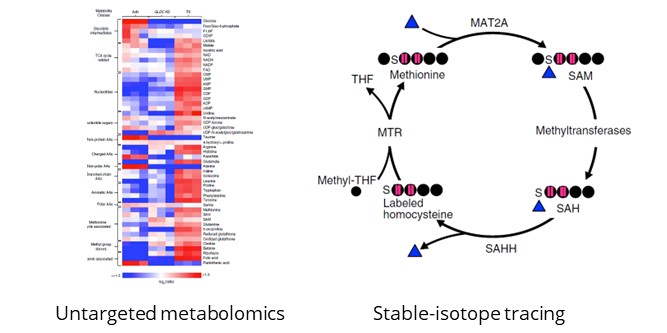
Investigation of aberrant cellular metabolism for drug development models - Untargeted Metabolomics & Stable Isotope Tracing Approach
In partnership: Wang, Z., et al., Methionine is a metabolic dependency of tumor-initiating cells. Nat Med, 2019. 25(5): p. 825-837.
- Untargeted Metabolomics: Global profiling of small molecules in biological samples to understand metabolic behaviour in different biological systems
- Stable-isotope Tracing Design Coupled with LC-MS/MS enables the in-depth study of how individual metabolites are consumed or produced in specific pathways of interest
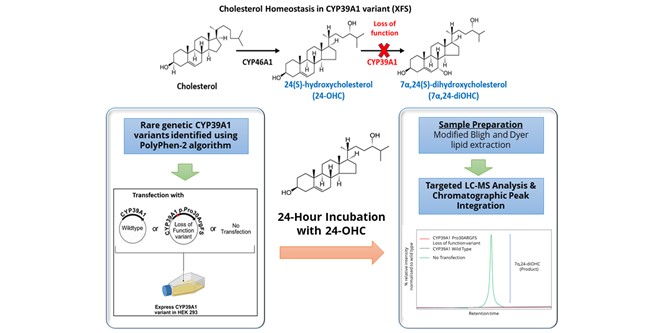
Investigation of aberrant cellular metabolism for drug development models - Targeted Metabolomics Approach
In partnership: Genetics of Exfoliation Syndrome, P., et al., Association of Rare CYP39A1 Variants With Exfoliation Syndrome Involving the Anterior Chamber of the Eye. JAMA, 2021. 325(8): p. 753-764.
- Targeted Metabolomics: Absolute quantitation of specific metabolites of interest, for hypothesis-driven research and validation studies following untargeted profiling outcomes.
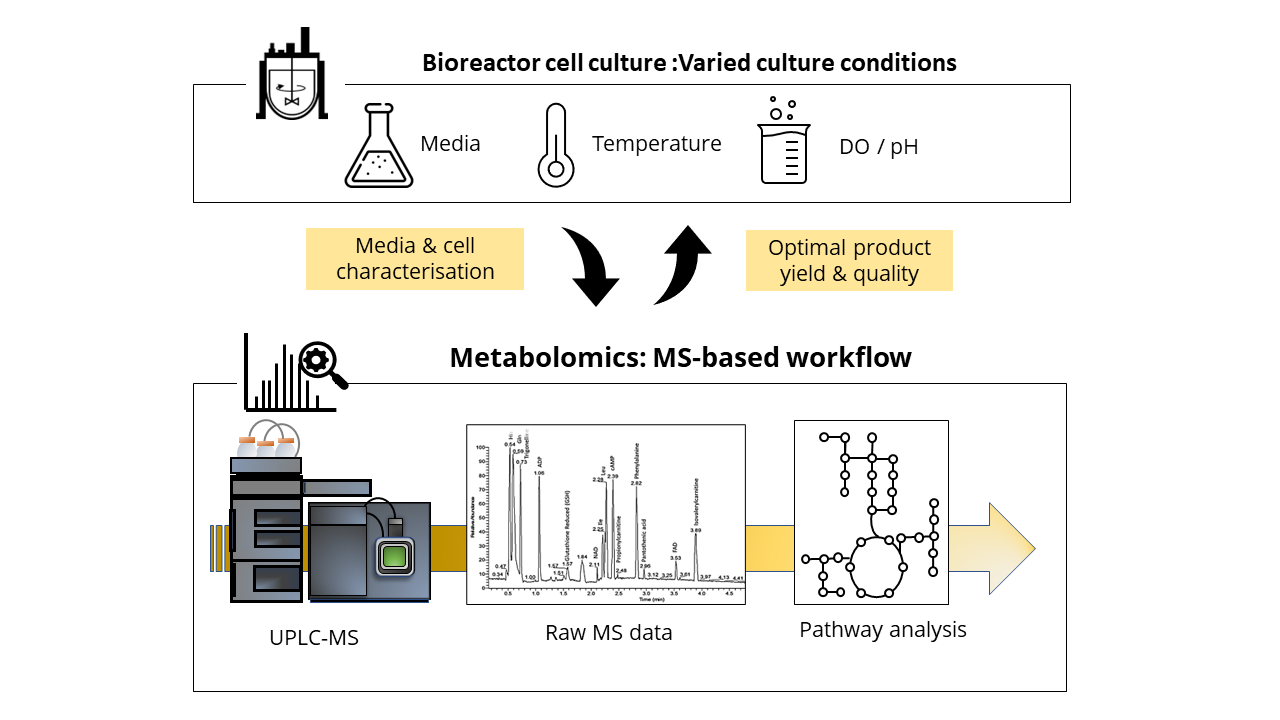
Bioprocess Characterisation and Optimisation
- Deep and well-established expertise in obtaining in-depth metabolite information on cell-based bioproduction processes for characterisation, leading to media design and bioprocess optimisation.
- Detection and Identification of Short-Chain Peptides: Untargeted profiling of short-chain peptides in protein hydrolysates and culture media to serves as a basis of understanding the bioactivities and their benefit as serum alternatives
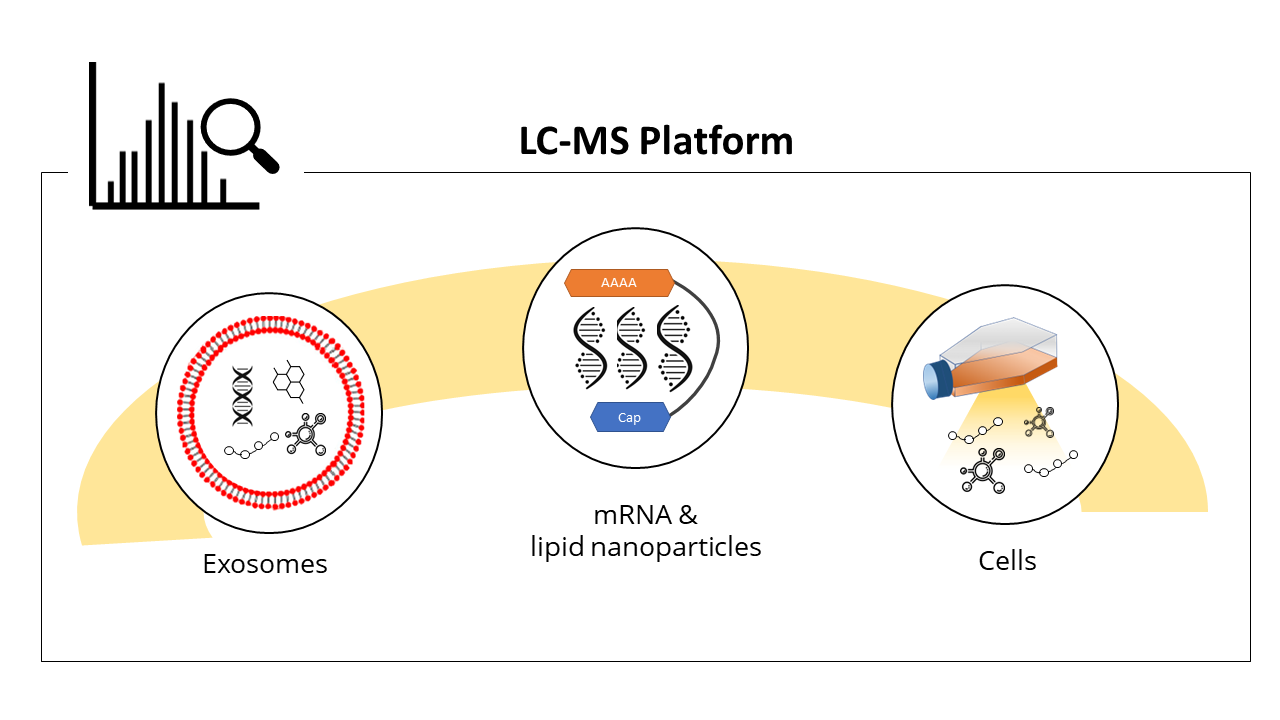
Characterisation of New Biotherapeutic Modalities
- LC-MS as a Platform for Determination of Product Critical Quality Attributes (CQA)
Example: 5’-cap structure, 5’-end capping efficiency, poly-A tail integrity as well as lipid nanoparticle composition for mRNA-based therapeutic products
The Team
.jpg?width=200&height=300)
.JPG?width=200&height=300)
.jpg?width=200&height=300)
.jpg?width=200&height=300)
Our Track Record
Featured Publications
- Shuwen Chen, Esther Kai Lay Peh, Farouq Bin Mahfut, Yuan Sheng Yang, Yin Ying Ho and Ying Swan Ho (2026) Comprehensive Lipidomic Analysis of Recombinant Protein-Producing CHO Cell Cultures: Insights for Media and Process Development. Mass Spectrometry 15(1): A0192
- Zhengwei Wu, Zhenxun Wang, Seow Qi Ng, Jessica Alice Lidster, Paul Schwerd-Kleine, Zi Jin Cheryl Phua, Kai Lay Esther Peh, Yin Ying Ho, Ju Yuan, S Shathishwaran, Xun Hui Yeo, Ying Zhang, Yui Hei Jasper Chiu, Li Yieng Eunice Lau, Tony Kiat Hon Lim, Angela Takano, Eng Huat Tan, Anders Jacobsen Skanderup, Vinay Tergaonkar, Weiping Han, Ying Swan Ho, Daniel Shao Weng Tan, Wai Leong Tam (2025) Induction of a metabolic switch from glucose to ketone metabolism programs ketogenic diet-induced therapeutic vulnerability in lung cancer. Cell Metabolism 37(11): 2233–2249.e9
- Meiyappan Lakshmanan, Sean Chia, Kuin Tian Pang, Lyn Chiin Sim, Gavin Teo, Shi Ya Mak, Shuwen Chen, Hsueh Lee Lim, Alison P Lee, Farouq Bin Mahfut, Say Kong Ng, Yuansheng Yang, Annie Soh, Andy Hee-Meng Tan, Andre Choo, Ying Swan Ho, Terry Nguyen-Khuong and Ian Walsh (2024) Antibody glycan quality predicted from CHO cell culture media markers and machine learning. Computational and Structural Biotechnology Journal 23: 2497–2506
- Shi Ya Mak, Shuwen Chen, Wey Jia Fong, Andre Choo and Ying Swan Ho (2024) A simple and highly sensitive LC–MS workflow for characterization and quantification of ADC cleavable payloads. Scientific Reports 14(1): 11018
- Genetics of Exfoliation Syndrome Partnership, Zheng Li, Zhenxun Wang, Ying Swan Ho, Tin Aung, Wai Leong Tam, Chiea Chuen Khor et al. (2021) Association of Rare CYP39A1 Variants With Exfoliation Syndrome Involving the Anterior Chamber of the Eye. JAMA 325(8): 753–764
Landmark Patents & IP
- A high-throughput polyreactivity assay as an in vitro predictor of antibody pharmacokinetic properties (2026)
- Development of mechanistic modelling software for improvement of media optimization (2025)
- Method of treating cancer and combinations thereof (2025)
- Rational improvement of cell culture media using modelling approaches (2023)
- Method of treating a methionine-dependent cancer (2022)
- Rapid analysis and identification of lipids from liquid chromatography-mass spectrometry (LC-MS) data (2021)