Quick Navigation
Develop Scalability for Protein, Cells and Nucleic Acid Encapsulation Process
The RNA Encapsulation Processing group aims to develop scalable encapsulation technologies for protein, cells and nucleic acids to enable efficient and targeted therapeutic delivery. By integrating formulation development with scalable process engineering, the group advances manufacturable solutions that enhance therapeutic performance while reducing production costs.
Focus Areas
- Encapsulation technologies to improve delivery and efficacy of protein, cells and nucleic acids
- Scalable process development and optimization
- 3G modular and automated platforms for mRNA-LNP encapsulation and downstream processing
- Engineering targeted delivery strategies for therapeutic payloads
Our Capabilities
Encapsulation and Formulation Engineering
Design and development of encapsulation systems for proteins, cells, and nucleic acids, with a focus on material selection and formulation optimization to enhance delivery performanceScalable Process Development
Development and optimization of upstream and downstream processes to enable reproducible, high-quality mRNA-LNP production from bench to GMP scale, while maintaining critical quality attributes (CQAS)Modular mRNA-LNP Manufacturing
Establishment of modular and automated platforms for mRNA-LNP encapsulation and downstream purification to support scalable and consistent productionTargeted Delivery Strategies
Engineering of particle composition, surface properties, and ligand functionalization to modulate biodistribution and enhance site-specific delivery
Our Technologies
Liposome-Based Delivery Systems
Scalable liposomal platforms for encapsulation of proteins, nucleic acids, and cells with tunable stability and release.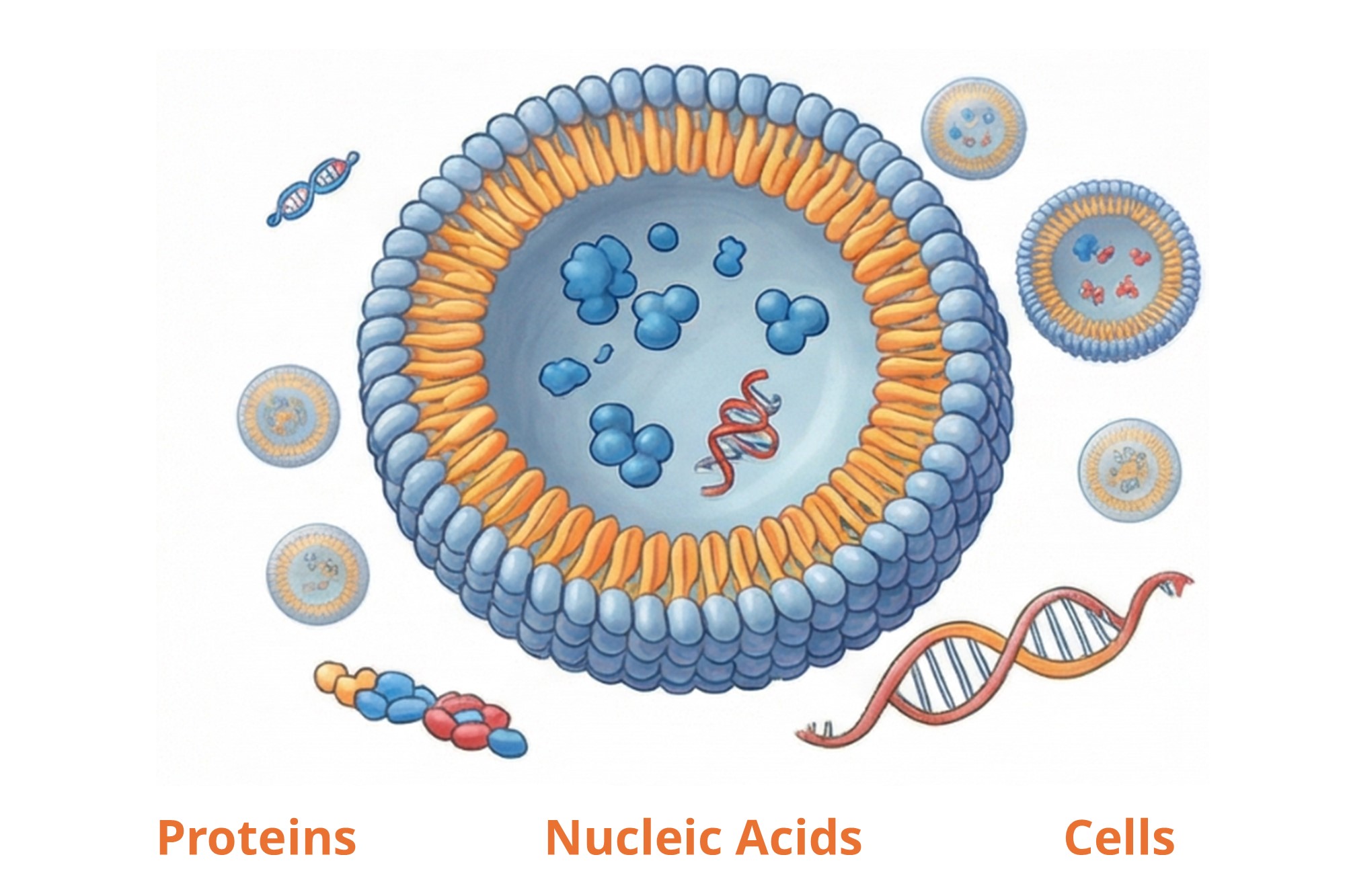
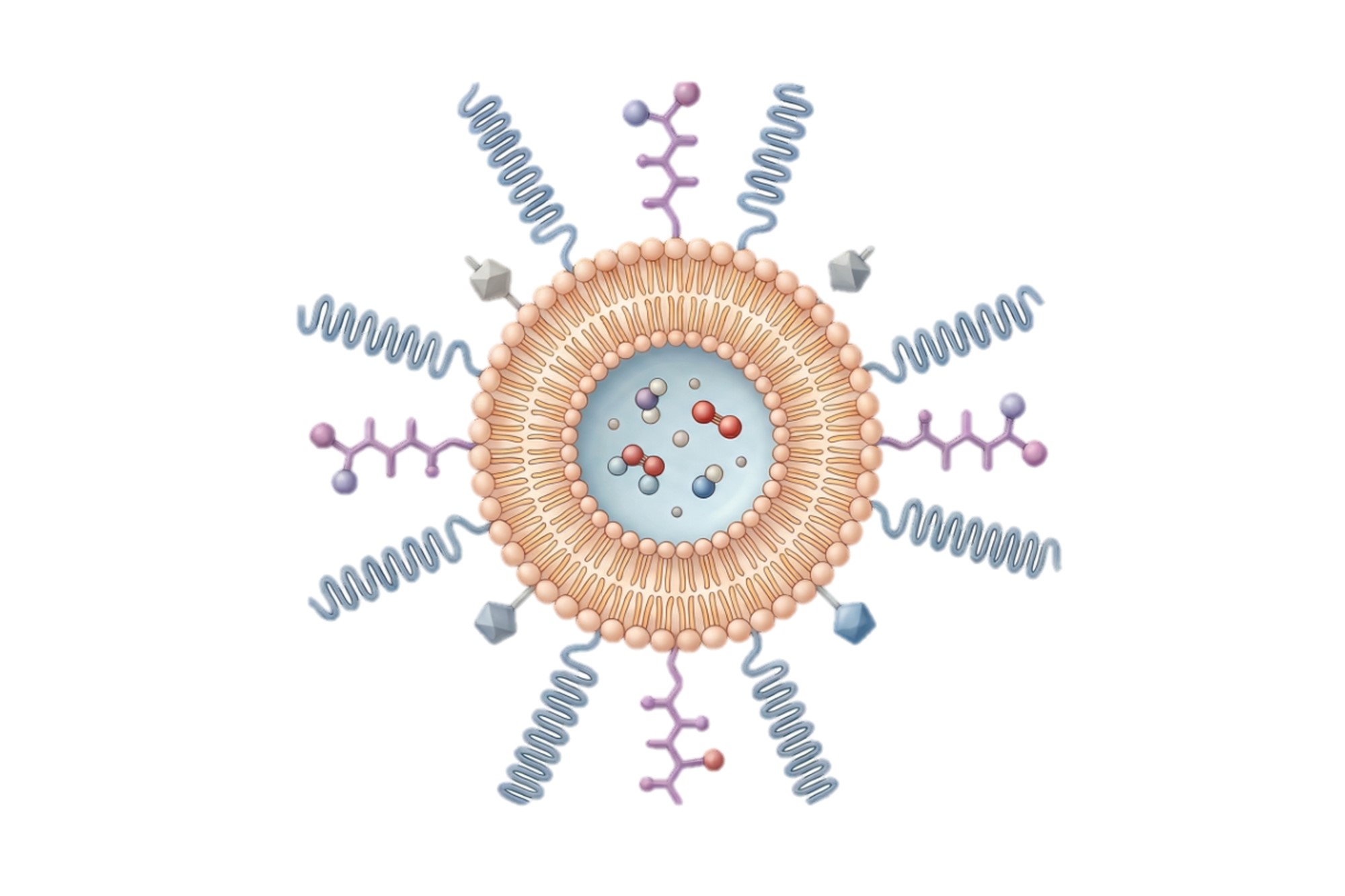
Formulation and Targeting Engineering
- Liposomal platforms with tunable lipid composition and membrane properties, enabling efficient encapsulation, stability, and controlled release
- Surface functionalization approaches, including ligand incorporation, for targeted delivery and modulation of biodistribution
Scalable Manufacturing and Process Development
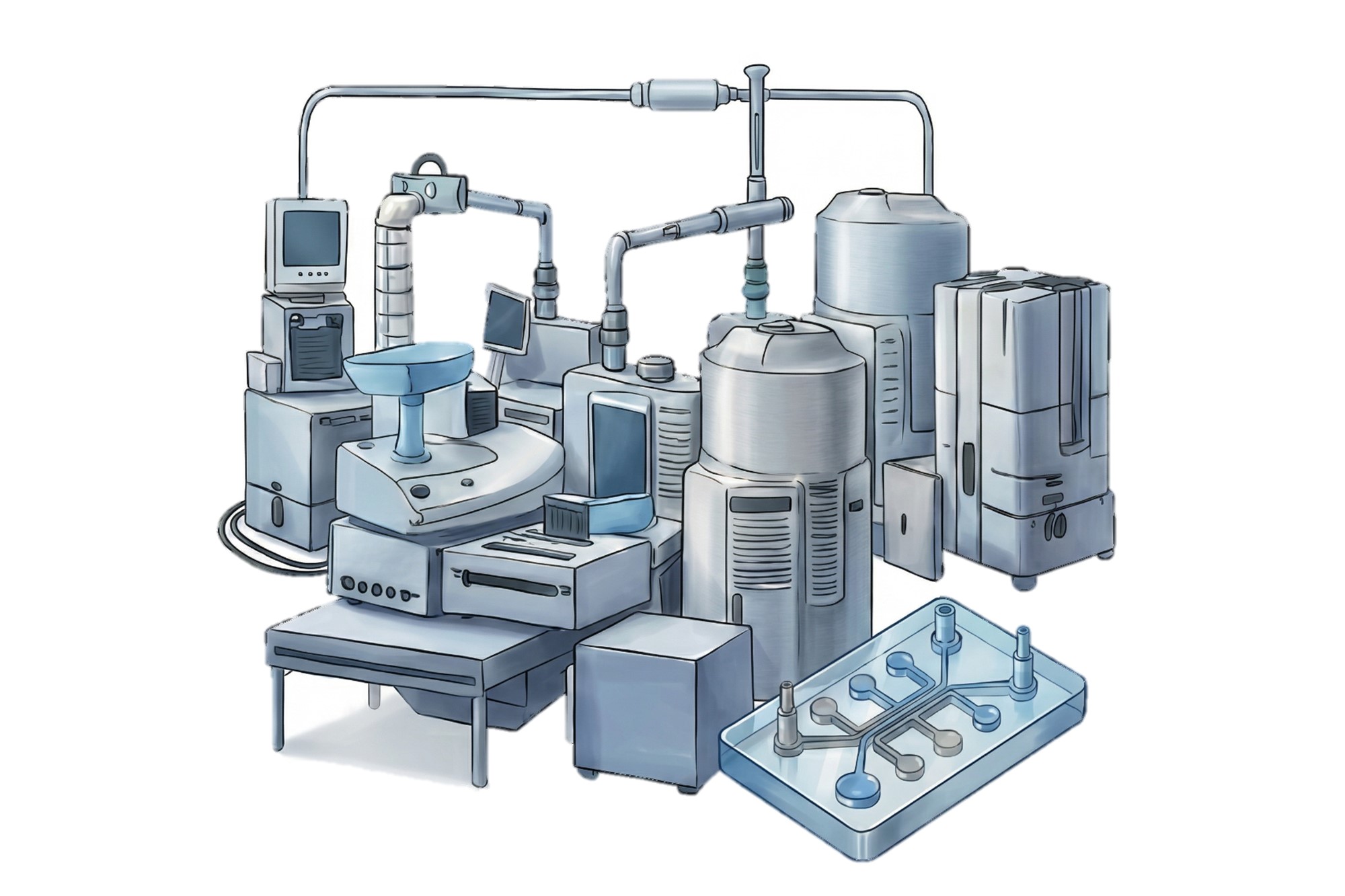
- Microfluidic and controlled mixing approaches combined with downstream processing (e.g., TFF, dialysis) to ensure reproducible, high-quality production from lab to GMP scale
- Modular and automated mRNA-LNP manufacturing platforms
The Team

Our Track Record
Featured Publications
- Xue Lv, Wenjing Niu, Bin Zhang, Jingbo Chen, Shicong Yang, Yuhuan Xue, Yutian Dong, Peiyan Yuan, Yue Pan, Jeremy Tan, Yi Yan Yang, Xin Ding, Xiaomiao Zhao (2024) Self-Assembled Peptide Hydrogels Loaded with Umbilical Cord-Derived Mesenchymal Stem Cells Repairing Injured Endometrium and Restoring Fertility. Advanced Healthcare Materials 13(32): 2400524
- Xinran Peng, Jiaoyu Chen, Yingying Gan, Li Yang, Yuanjing Luo, Changxin Bu, Yi Huang, Xinhai Chen, Jeremy Tan, Yi Yan Yang, Peiyan Yuan, Xin Ding (2024) Biofunctional lipid nanoparticles for precision treatment and prophylaxis of bacterial infections. Science Advances 10(14): 9754
- Jiayu Leong, Joyce Tay, Shengcai Yang, Chuan Yang, Eddy Wei Ping Tan, Yanming Wang, Bing Qian Tan, Sherwin Hor, Yau Hong Chua, Jeremy Pang Kern Tan, Qingfeng Chen, James L Hedrick, Yi Yan Yang (2023) Nanocomplexes of Biodegradable Anticancer Macromolecules: Prolonged Plasma Half-Life, Reduced Toxicity, and Increased Tumor Targeting. Advanced Healthcare Materials 12(19): 2201560
- Jeremy Pang Kern Tan, Zhi Xiang Voo, Shaun Lim, Shrinivas Venkataraman, Kai Ming Ng, Shujun Gao, James L Hedrick, Yi Yan Yang (2019) Effective encapsulation of apomorphine into biodegradable polymeric nanoparticles through a reversible chemical bond for delivery across the blood-brain barrier. Nanomedicine: Nanotechnology, Biology and Medicine 17: 236
- Guansheng Zhong, Chuan Yang, Shaoqiong Liu, Yiran Zheng, Weiyang Lou, Jye Yng Teo, Chang Bao, Wei Cheng, Jeremy P K Tan, Shujun Gao, Nathaniel Park, Shrinivas Venkataraman, Yuan Huang, Min Han Tan, Xiaojia Wang, James L Hedrick, Weimin Fan, Yi Yan Yang (2019) Polymers with distinctive anticancer mechanism that kills MDR cancer cells and inhibits tumor metastasis. Biomaterials 199: 76
- Amalina Binte Ebrahim Attia, Pamela Oh, Chuan Yang, Jeremy Pang Kern Tan, Nithya Rao, James L Hedrick, Yi Yan Yang, Ruowen Ge (2014) Insights into EPR effect versus lectin-mediated targeted delivery: biodegradable polycarbonate micellar nanoparticles with and without galactose surface decoration. Small 10(21): 4281