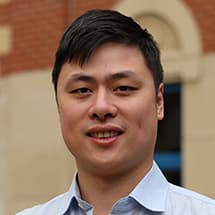
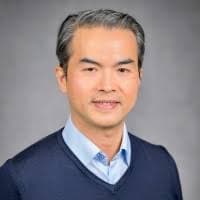
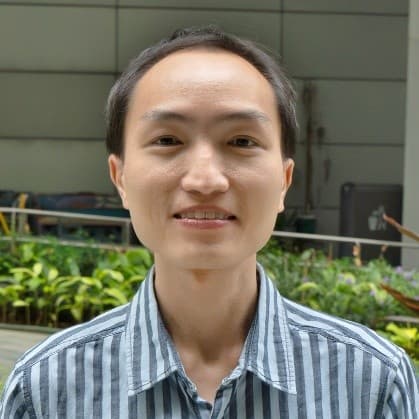
James Lu is the Drug Discovery Programme lead and a Senior Principal Investigator at A*STAR Bioinformatics Institute (BII). Prior to his return to Asia in 2025, he served as a Distinguished AI Scientist at Genentech Inc., where he led pioneering efforts at the intersection of machine learning, pharmacology and clinical development. With over a decade of global biopharma industry experience in computational roles spanning Genentech (USA), AstraZeneca (UK) and Roche (Switzerland), Dr. Lu has advanced AI-driven approaches for PK/PD, systems pharmacology, digital health analytics and disease progression modeling across multiple therapeutic areas. Dr. Lu currently serves as an Associate Editor of CPT: Pharmacometrics & Systems Pharmacology and is on the Editorial Board of Clinical and Translational Science (CTS). He chaired the Scientific Programming Committee for the 2025 American Conference on Pharmacometrics (ACoP) and serves on the Scientific Organizing Committee of the annual Population Approach Group Europe (PAGE) conference since 2025. He served as a co-chair of the AI/ML Working Group (2021-2023) and subsequently for the Machine Learning Advisory Committee (2024-2025) at the International Consortium for Innovation and Quality in Pharmaceutical Development (IQ Consortium).
Research Interests
Discovering and developing novel drugs fundamentally involves generalizing beyond what we have seen: from one chemical space to another; one dosing regimen to the next; one indication or one patient population to another. While data-driven models excel within the domain of the known, grounding machine learning (ML) models in pharmacology, physics, and biology gives it a principled way to reason beyond available training data. In addition, because no model is perfect, decision-makers need more than just a predicted number: they need uncertainty quantification to consider the risk of relying on the computational predictions within the context of use. These questions form the main thrusts of my group’s research.
My research group focuses on developing Pharmacology-Informed, Physics-Informed, and Biology-Informed Machine Learning methods, that embed mechanistic knowledge directly into how models represent and learn from data. This domain knowledge shapes not only what models predict, but also how confidently the decision-makers can act upon the model predictions to advance molecules across stages of drug discovery & development.
Select Projects
Agentic AI Target Funnel: An agentic AI system that reasons in a multifaceted manner across safety, efficacy, druggability and other evidence to eliminate weak targets early and prioritize the ones worth betting on, turning target selection from guesswork into principled intelligence.
Uncertainty Quantification and Active Learning for Molecular Property Prediction: Models that provide assessment of what they do not know - guiding experiments toward the molecules that will be the most informative while optimizing their designs in a multi-objective manner (e.g., considerations for ADME & tox).
AI-Enabled Pharmacometrics, Quantitative Systems Pharmacology, and Disease Modeling: Fusing AI/ML with causality-aware, mechanistic computational models to close the loop between the lab and clinic - using what we learn from the lab to help develop medicines for patients (translational modeling), as well as to learn from gaps in existing therapies via patient treatment data to help design the next generation of medicines (reverse translation).
Recent/ Notable Publications
- Lu, James, and Rajat Desikan. "Quantitative Systems Pharmacology Modeling Amid the Rise of Agentic AI." CPT: Pharmacometrics & Systems Pharmacology 15.4 (2026): e70249.
- 2. Harun, Rashed, et al. "Machine learning‐based quantification of patient factors impacting remission in patients with ulcerative colitis: insights from etrolizumab phase III clinical trials." Clinical Pharmacology & Therapeutics 115.4 (2024): 815-824.
- Terranova, Nadia, et al. "Artificial intelligence for quantitative modeling in drug discovery and development: an innovation and quality consortium perspective on use cases and best practices." Clinical Pharmacology & Therapeutics 115.4 (2024): 658-672.
- Laurie, Mark, and James Lu. "Explainable deep learning for tumor dynamic modeling and overall survival prediction using neural-ODE." npj Systems Biology and Applications 9.1 (2023): 58. 5. Lu, James, et al. "Deep learning prediction of patient response time course from early data via neural-pharmacokinetic/pharmacodynamic modelling." Nature machine intelligence 3.8 (2021): 696-704.
Group Members
| Principal Scientist |
LI Jianguo |
| Senior Scientist |
Chinh Su Tran To |
| Senior Scientist |
GOH JIA NI Janice |
| Scientist |
DONG Bingxue |
| Scientist |
RASHID Md Mamunur |
| Scientist |
TEE Wei Ven |
| Research Officer |
JAMAL Shamieraah |
| Research Officer |
YEOH Chen Jyuhn Isaac |
| Research Officer |
ONGKOWIDJAJA Paul |
| Research Officer |
RAECHELL Raechell |
| Research Officer |
NGUYEN Hung Pham |
| Research Officer |
ZHAN Amy |