Research Spotlight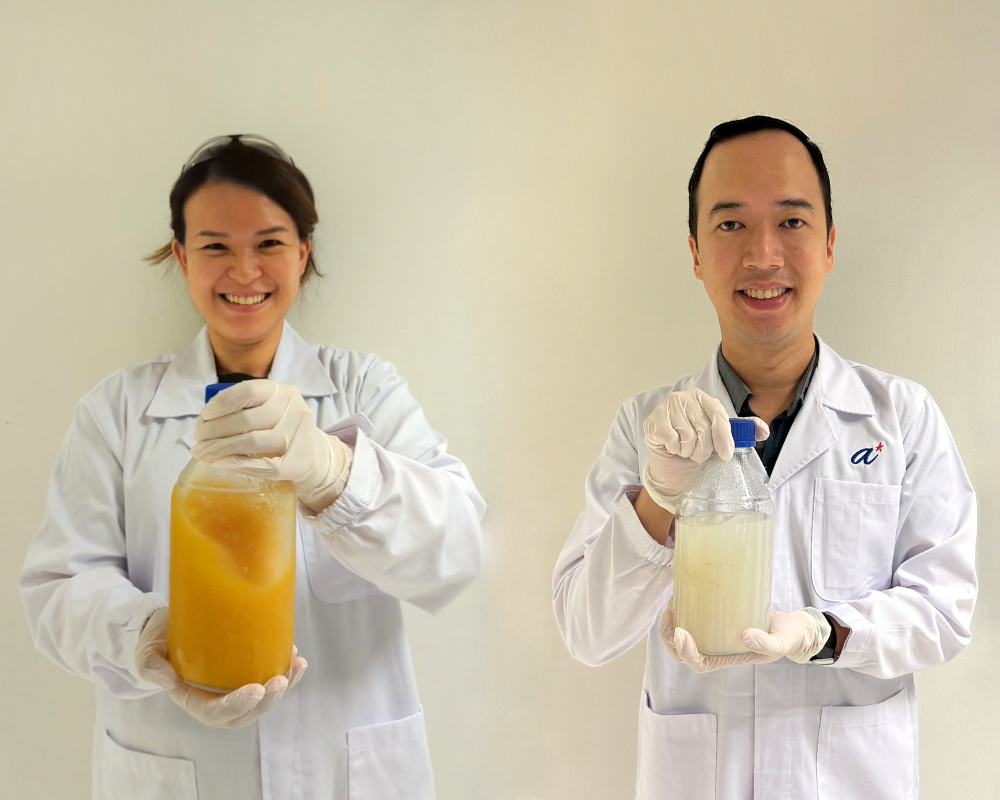
Ms Esther Marie Lin (left) and Dr. Teng Choon Peng (right) from IMRE, A*STAR, holding a bottle of pre-processed fruit waste juices and a bottle of bacteria cellulose fibres respectively
Singapore generated over 817,000 tonnes of food waste in 2021, however only 19 per cent of it was successfully recycled1 . Based on our current rate of waste generation, Semakau Landfill is expected to be fully filled by 2035.
To support Singapore’s Green Plan 2030, which aims to advance Singapore’s sustainable development, A*STAR’s Institute of Materials Research and Engineering (IMRE) has developed processes which can transform food waste into sustainable composite materials like bioplastics, wood and even leather that are environmentally-friendly and biodegradable.
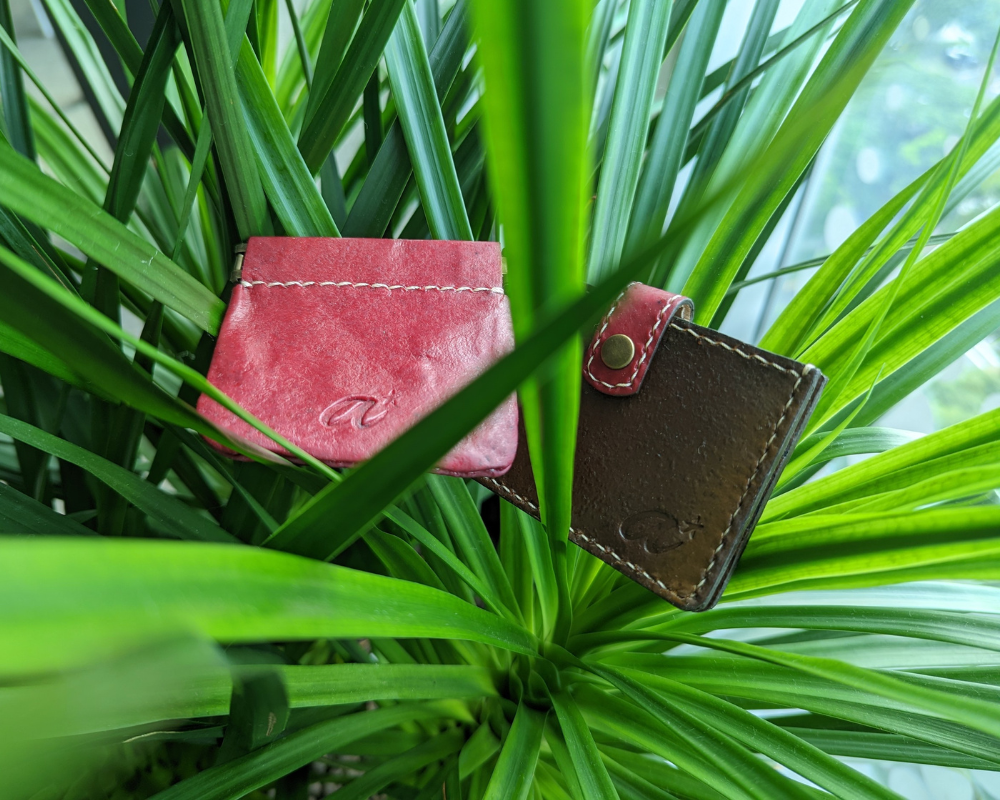
Cardholders made from bioleather created from fruit waste
Fruit waste collected is first processed via juice extraction. The fruit juices are then fermented to produce bacteria cellulose. In this process, bacteria cellulose is first processed from a solid mat into loosely dispersed fibres, which are then mixed with a special formulation and subjected to heat treatment at 70°C to form the final sustainable material.
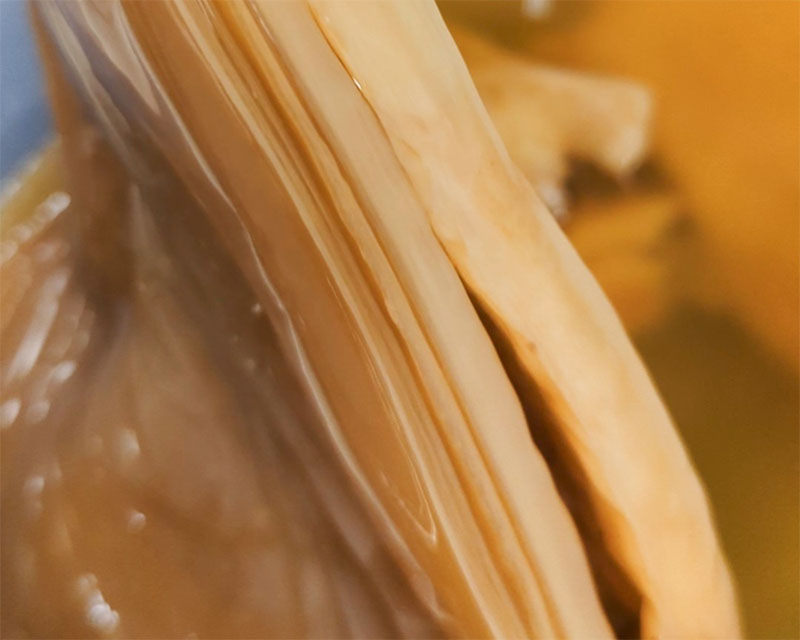
Bacteria cellulose formed after the fermentation of waste fruit juices
By producing materials from food waste instead of using fossil fuels and natural resources, we can cut down on waste and harmful emissions in a move towards achieving a circular economy.
1Source: Nea.gov.sg - Food Waste Management
Transforming Fruit Waste to Useful Sustainable Materials
13 Oct 2022
Ms Esther Marie Lin (left) and Dr. Teng Choon Peng (right) from IMRE, A*STAR, holding a bottle of pre-processed fruit waste juices and a bottle of bacteria cellulose fibres respectively
Singapore generated over 817,000 tonnes of food waste in 2021, however only 19 per cent of it was successfully recycled1 . Based on our current rate of waste generation, Semakau Landfill is expected to be fully filled by 2035.
To support Singapore’s Green Plan 2030, which aims to advance Singapore’s sustainable development, A*STAR’s Institute of Materials Research and Engineering (IMRE) has developed processes which can transform food waste into sustainable composite materials like bioplastics, wood and even leather that are environmentally-friendly and biodegradable.
Cardholders made from bioleather created from fruit waste
Fruit waste collected is first processed via juice extraction. The fruit juices are then fermented to produce bacteria cellulose. In this process, bacteria cellulose is first processed from a solid mat into loosely dispersed fibres, which are then mixed with a special formulation and subjected to heat treatment at 70°C to form the final sustainable material.
Did You Know?
By designing different formulations to mix with the bacteria cellulose fibres, the team from IMRE can produce different sustainable materials – similar to baking different types of cakes with different recipes!
Bacteria cellulose formed after the fermentation of waste fruit juices
By producing materials from food waste instead of using fossil fuels and natural resources, we can cut down on waste and harmful emissions in a move towards achieving a circular economy.
1Source: Nea.gov.sg - Food Waste Management