Research Spotlight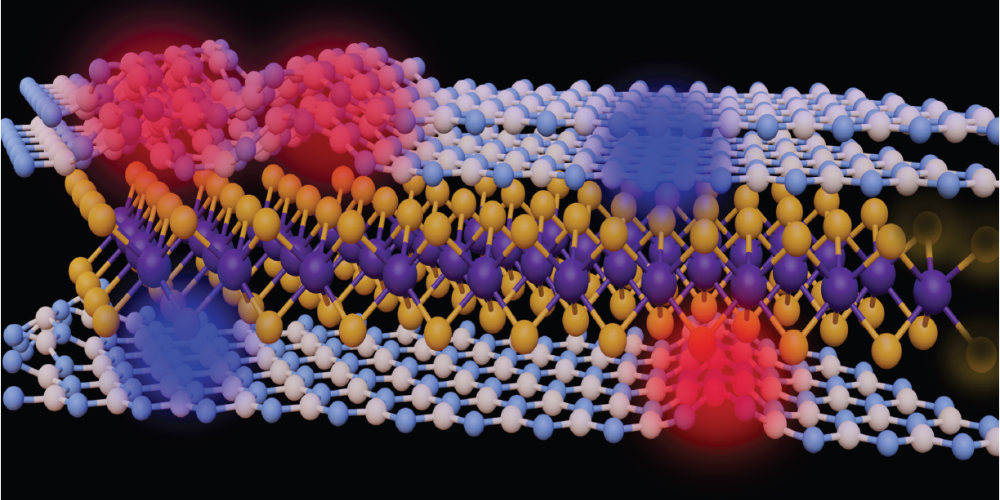
Quantum scientists from A*STAR’s Institute of Materials Research and Engineering (IMRE) are making strides in the realm of 2D semiconductors, led by Professor Johnson Goh and his team. Their recent paper published on Nanoscale, "Probing charge traps at the 2D semiconductor/dielectric interface", sheds light on a long-standing issue in the field: the charge traps at the junction of 2D semiconductors and dielectric materials.
2D semiconductors, famed for their atomic thickness and chemically unreactive surfaces, have sparked great scientific curiosity. Yet, fully unleashing their potential requires overcoming numerous obstacles, such as accurately determining the interface traps density (Dit). Established methodologies employed to examine charge traps at the bulk-semiconductor/dielectric interface have proven inconsistent and, in some cases, incompatible with devices based on 2D materials.
Goh's team has critically evaluated various techniques, dissecting their advantages and drawbacks in studying the charge traps at the 2D semiconductor/dielectric interface. The paper offers an in-depth exploration of methods like small-signal AC measurements, subthreshold slope measurements, and low-frequency noise measurements.
This investigation marks a significant milestone in understanding and addressing the challenges with 2D semiconductors. This journey may lead to developing of the next wave of electronic devices. To explore this research in more depth, you can access the full article, "Probing charge traps at the 2D semiconductor/dielectric interface" here. The work of Prof Goh's team indicates the innovative research being carried out in the captivating arena of 2D semiconductors.
Unveiling the Mysteries of Charge Traps in 2D Semiconductors
03 Nov 2023
2D semiconductors, famed for their atomic thickness and chemically unreactive surfaces, have sparked great scientific curiosity. Yet, fully unleashing their potential requires overcoming numerous obstacles, such as accurately determining the interface traps density (Dit). Established methodologies employed to examine charge traps at the bulk-semiconductor/dielectric interface have proven inconsistent and, in some cases, incompatible with devices based on 2D materials.
Goh's team has critically evaluated various techniques, dissecting their advantages and drawbacks in studying the charge traps at the 2D semiconductor/dielectric interface. The paper offers an in-depth exploration of methods like small-signal AC measurements, subthreshold slope measurements, and low-frequency noise measurements.
This investigation marks a significant milestone in understanding and addressing the challenges with 2D semiconductors. This journey may lead to developing of the next wave of electronic devices. To explore this research in more depth, you can access the full article, "Probing charge traps at the 2D semiconductor/dielectric interface" here. The work of Prof Goh's team indicates the innovative research being carried out in the captivating arena of 2D semiconductors.