1. Advanced AI Solutions for Spatial Omics:
Spatial omics combines omics measurements with spatial context, offering an unprecedented opportunity for scientists to explore tissue complexity and cell-cell interactions. However, this approach also presents challenges in data analysis. Specifically, incorporating spatial information necessitates a spatially aware analytical approach. Dr. Chen has developed several AI-driven tools to address these specific challenges in spatial omics.
SEDR: Spatial transcriptomics is often characterized by high levels of noise and sparsity, with frequent drop-out events. SEDR is a tool designed to address these issues by effectively removing noise and imputing missing data. It combines variational graph autoencoders with masked self-supervised learning, offering a crucial advancement in enhancing the accuracy of spatial transcriptomics data.
STAMP: Spatial transcriptomics produces high-dimensional gene expression measurements with their spatial context. Obtaining a biologically meaningful low-dimensional representation of such data is crucial for effective interpretation and downstream analysis. STAMP integrates topic modeling with deep generative models to provide an interpretable, spatially aware dimensionality reduction tool. It facilitates the identification of biologically meaningful patterns in spatial transcriptomics data. This tool has been applied to various tissues, including the lung, brain, and embryo, and is soon to be published in Nature Methods.
GraphST: A novel approach using graph neural networks and contrastive learning for the spatial integration and clustering of transcriptomics data. This method enhances the understanding of complex spatial relationships within tissues and has been featured in Nature Communications.
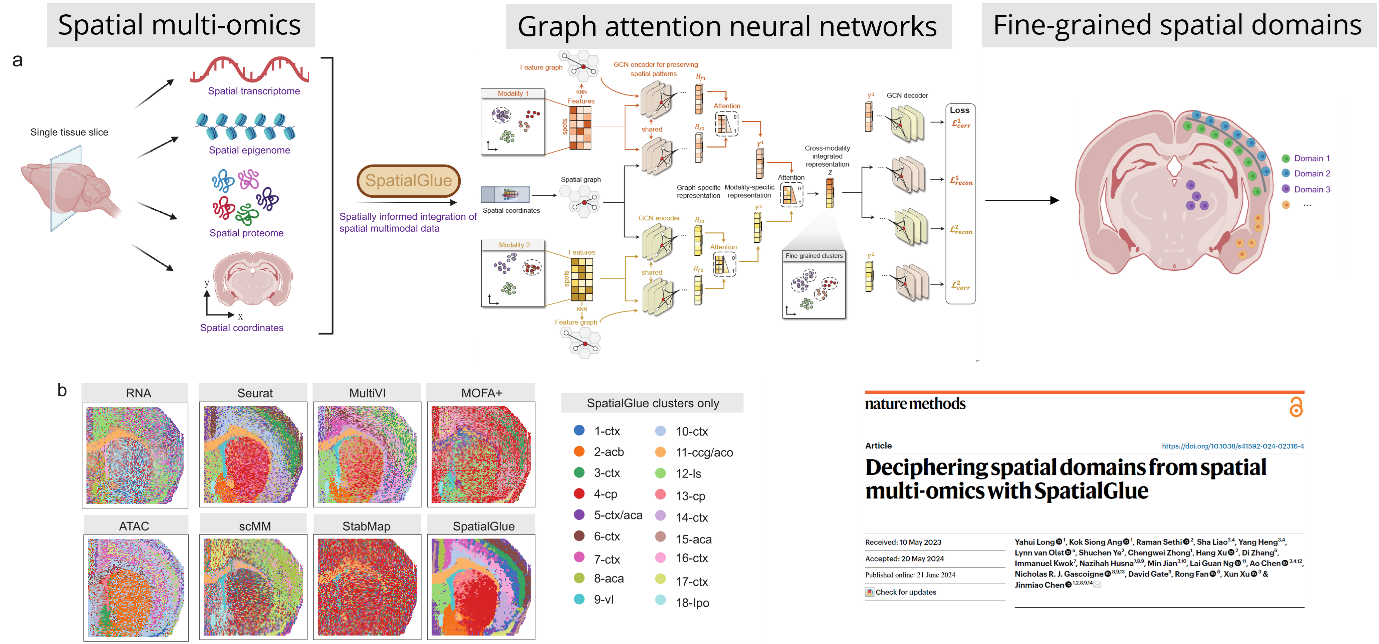
SpatialGlue: A cutting-edge tool designed to decode fine-grained spatial domains from multi-omics data using graph attention neural networks. This tool represents a significant advancement in spatial biology and has been published in Nature Methods.
2. AI for drug discovery:
Dr. Chen’s lab is now expanding into drug discovery, focusing on developing large foundational models tailored for single-cell and spatial biology. By fine-tuning these models with specific datasets, particularly from Asian biology contexts such as hepatocellular carcinoma (HCC) and nasopharyngeal cancer (NPC), her research aims to revolutionize marker discovery, drug response predictions, and personalized medicine.
3. The DISCO Data Hub (https://immunesinglecell.org/):
Since its inception in 2009, single-cell RNA-seq (scRNA-seq) techniques have rapidly advanced, leading to increased throughput and reduced costs. As the number of published studies grows, efficient data integration and retrieval become increasingly crucial. DISCO (in-Depth Integration of Single-Cell Omics) was developed as a comprehensive repository for scRNA-seq datasets, covering a wide range of tissues and disease states. Currently, DISCO houses over 100 million single-cell profiles from more than 16,000 samples, complete with curated metadata and refined cell type annotations based on a harmonized reference. By providing a centralized platform for single-cell omics data, DISCO plays a crucial role in advancing precision medicine. Researchers can use the hub to identify novel biomarkers, understand disease heterogeneity, and develop targeted therapies.
4. The ezSingleCell Platform (https://immunesinglecell.org/ezsc/):
ezSingleCell is an interactive, user-friendly application designed for analyzing various single-cell and spatial omics data types without requiring programming knowledge. It integrates top-performing public methods for comprehensive data analysis, integration, and interactive visualization. The platform includes five modules—scRNA-seq, scATAC-seq, single-cell multiomics, batch integration, and spatial transcriptomics—each offering a complete workflow for specific data types or tasks. It also enables seamless interaction between modules within a unified interface. By addressing the inefficiencies and complexities of disparate tools, ezSingleCell provides a comprehensive solution for omics analysis and has been widely recognized in the research community, including being featured in Nature Communications.
| Senior Principal Scientist | CHEN Jinmiao | [View Bio] |
| Scientist | XU Hang |
| Scientist | KARIOTIS Sokratis |
| Research Officer | SETHI Raman |
| Research Officer | YE Shuchen |
| PhD Student | CHUAH Samuel |
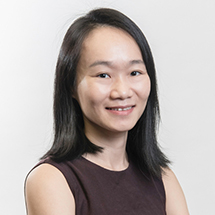 | CHEN Jinmiao Senior Principal Scientist Email: chen_jinmiao@a-star.edu.sg Research Group: Single-Cell Multi/Spatial-Omics and Precision Technology |
Dr. Jinmiao Chen, a Senior Principal Scientist I at the Bioinformatics Institute (BII), leads cutting-edge research focused on AI-powered single-cell and spatial omics analysis. Her work is instrumental in advancing precision medicine by developing tools and methodologies that make complex biological data more accessible and interpretable for scientists worldwide.
Research Focus
Dr. Chen’s research centers around the integration of artificial intelligence with omics technologies to decipher cellular mechanisms at unprecedented resolution. She has made significant strides in the development of computational tools and omics databases that address the challenges posed by the complexity, scalability, and accessibility of single-cell and spatial omics data.
Achievements and Recognition
Dr. Chen’s contributions have earned her numerous accolades, including being named an EMBO Global Investigator (2024-2027), a Highly Cited Researcher by Clarivate Analytics (2020-2023), and an A*STAR Fellow (2023-2026). Her work is also recognized in the SG 100 Women in Tech initiative.
Collaboration and Impact
Dr. Chen's work stands at the forefront of integrating AI with biological research, and her contributions are poised to make a lasting impact on the field of precision medicine, offering new tools and insights that are accessible to a wide range of researchers.
Beyond her publications and tool development, Dr. Chen is dedicated to sharing her findings and tools with the broader scientific community. The DISCO Data Hub and the ezSingleCell platform established by her lab offer open-access resources for single-cell and spatial omics. These platforms facilitate collaboration, data sharing, and analysis across institutions worldwide. Their global reach ensures that valuable data and tools are accessible to researchers everywhere, accelerating the pace of discovery.
| Scientist | XU Hang |
| Scientist | KARIOTIS Sokratis |
| Research Officer | SETHI Raman |
| Research Officer | YE Shuchen |
| PhD Student | CHUAH Samuel |