Screening Body Temperature Using Thermal Imagers
A thermal imager detects the temperature of an object using infrared radiation and displays its temperature profile. Most thermal imagers are designed for industrial applications where the surface temperature of an object can be detected from a distance without contact. This non-contact and non-intrusive way of detecting temperature makes thermal imagers ideal for screening body temperature to identify symptoms of fever; however, not all thermal imagers are suitable for such screening. The environment in which thermal imagers are used may also affect their performance. For effective body temperature screening and proper usage, thermal imagers should meet the recommended requirements based on the Singapore Standard (SS 582)1.
[1] Singapore Standard SS 582
https://www.singaporestandardseshop.sg/Product/SSPdtDetail/0905b458-f73b-4400-aec6-01f16359936b
How Thermal Imagers Work
Thermal imagers are cameras fitted with an array of sensors that detect infrared thermal energy, also commonly known as heat, radiated from the surface of an object, such as a person’s face. The sensors convert detected thermal energy into electronic signals and display it in colours on a video monitor that corresponds to the temperature profile. Different colours on display indicate relative temperature differences.
When detecting rising temperatures, thermal imagers can be set to display selective temperatures with distinct colours—for example, red for distinctive identification.
A fever screening operation goes through a pass/fail test by setting febrile temperature as the elevated temperature, or as the threshold temperature, to quickly identify individuals having higher than normal temperature (see Figure 1 below).
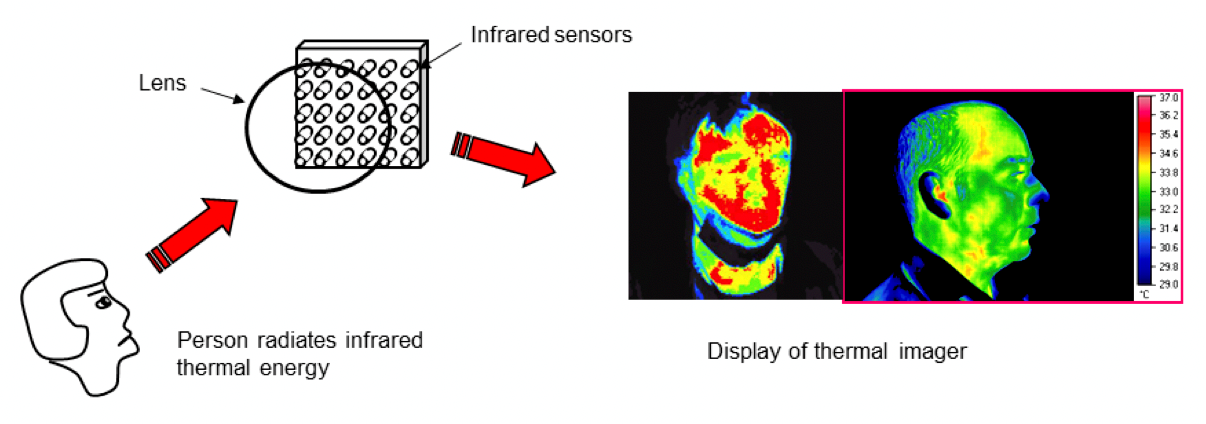
Figure 1: In screening for fever, the thermal imager detects infrared thermal energy (heat) radiated by a person’s face, and display colours based on the temperature profile displayed on a video monitor. Fever temperature will be displayed in distinctive red.
Criticial Requirements of Thermal Imagers
For effective fever screening, it is essential to select thermal imagers with performance characteristics that are suitable for detecting higher body temperatures and tested according to the recognised standard (SS 582).
Some of the critical requirements specified in SS 582 below:
| Parameter | Specification |
| Operating ambient conditions | Indoor stable environment with temperature in range of (20 to 25) ºC, and humidity in the range of (40 to 75) % relative humidity |
Detector pixels | 320 (H) × 240 (V) or more |
Difference between self-corrections | Not more than 0.3 ºC |
Minimum detectable temperature difference (MDTD) | 0.4 ºC |
Uniformity | Within 0.3 ºC |
Distance effect | Not more than 0.3 ºC |
Stability of threshold temperature over at least 24 hours | Within 0.3 ºC for thermal imagers with threshold temperature |
Within 0.2 ºC for thermal imagers with external temperature reference source to set its threshold |
Testing of Thermal Imagers Based on SS 582
To verify the performance of a thermal imager, a stable and known temperature source is needed. It uses a known temperature source to replace an unknown source, i.e., a human face. The blackbody source is a temperature source with a standard behaviour of thermal radiation. As it has a standard behaviour, its temperature can be defined accurately. With that, the imager’s characteristics can be tested against a blackbody source with known temperature as shown in Figure 2. This blackbody source is used as a reference for testing of all critical parameters.
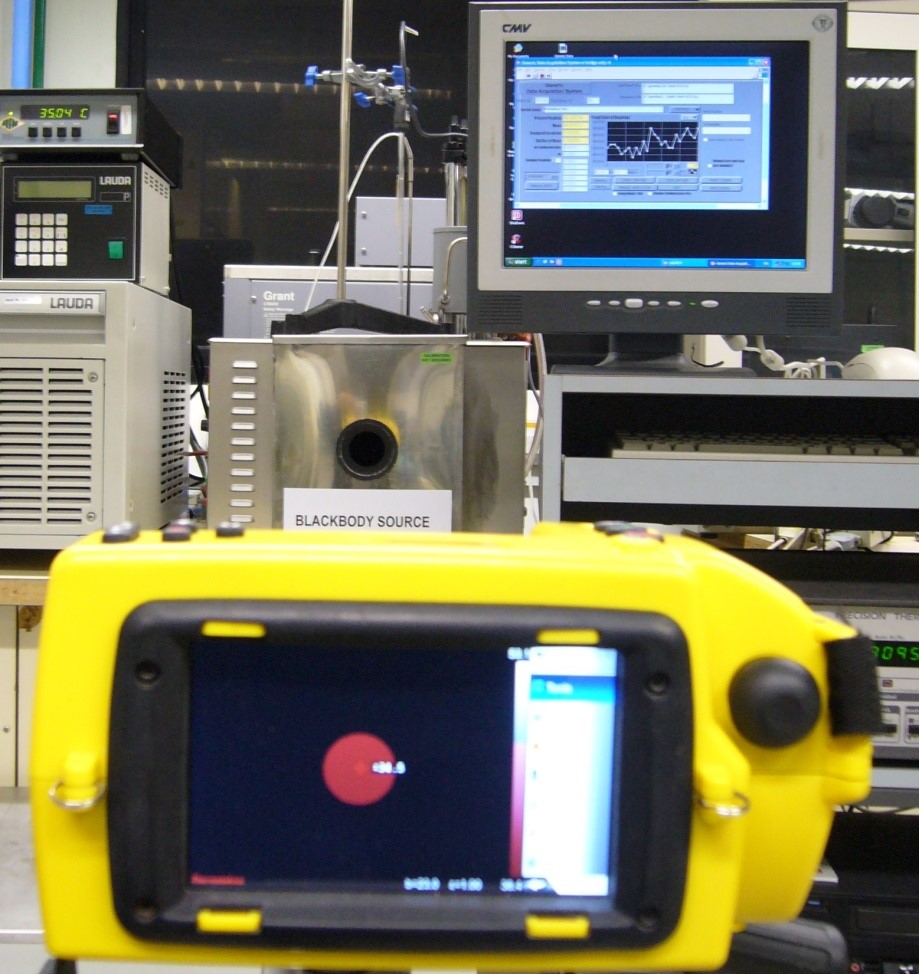
Figure 2: Evaluation of thermal imager using a blackbody source and a reference thermometer.
Difference in the Thermal Imager Readings between Self-correction
A thermal imager, like any other instrument, drifts over time. When it performs self-correction, the measurement should not deviate by more than 0.3 ºC as depicted in Figure 3.
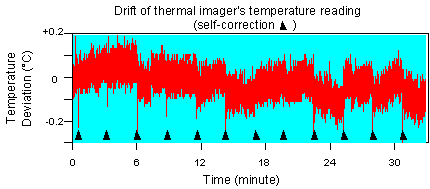
Figure 3: The thermal imager self-corrects before the temperature reading drifts by more than 0.3 ºC.
Minimum Detectable Temperature Difference
A body screening thermal imager should have the sensitivity to detect temperature difference of 0.4 ºC or smaller when the target area colour change from 5% to 95%, as shown in Figure 4.
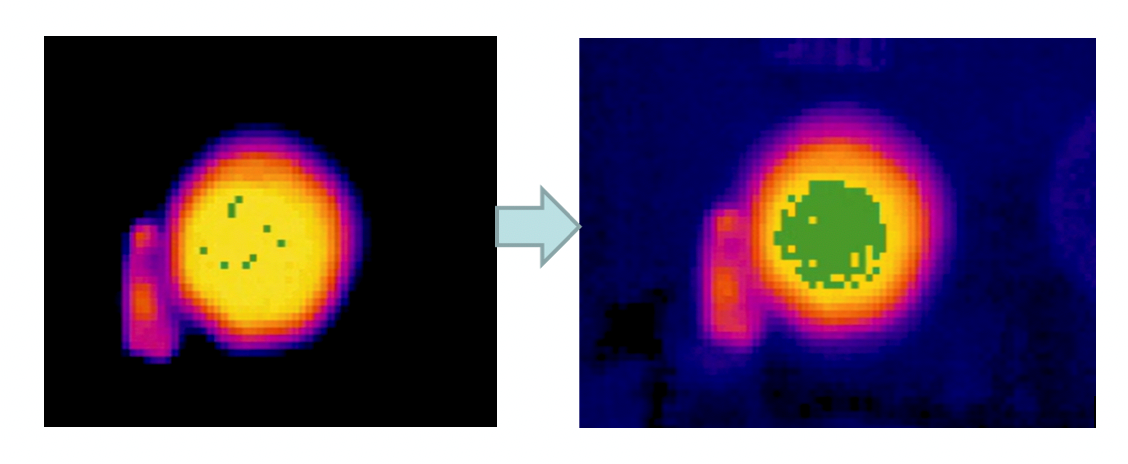
Figure 4: Target area colour (green pixels) changes from 5% (left) to 95% (right).
Uniformity
When tested against a reference blackbody source, the measured temperature inside the workable target plane of a thermal imager shown in Figure 5, should be within 0.3 ºC.
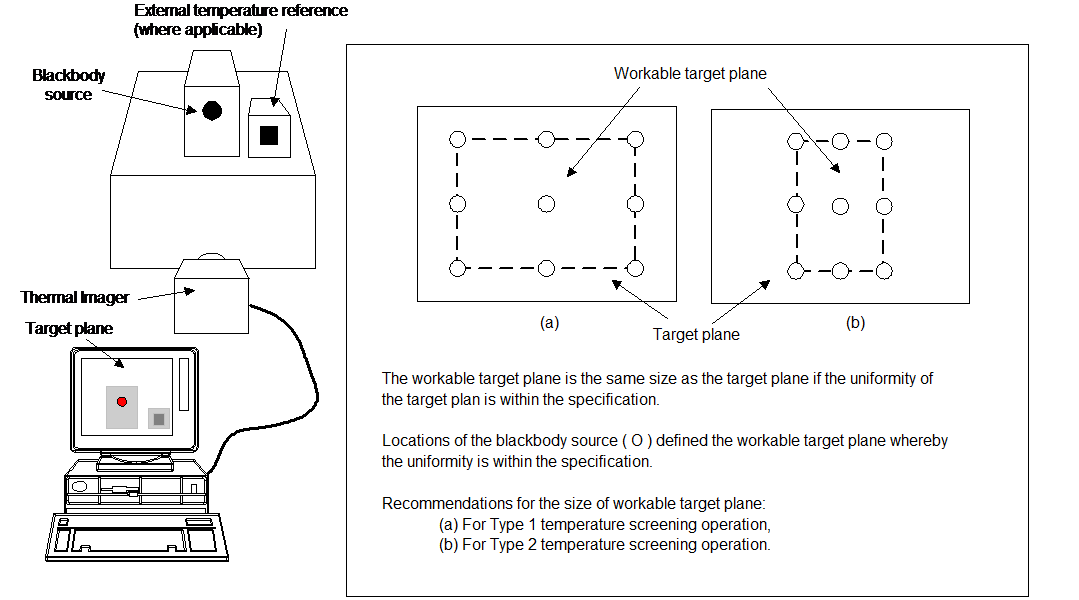
Figure 5: Testing the uniformity of a thermal imager inside its workable target plane.
Distance Effect
A thermal imager’s reading should not deviate by more than 0.3 ºC within + 0.5 m and - 0.5 m from the nominal target distance of the thermal imager.
Threshold Stability
A thermal imager should be capable of maintaining its threshold temperature within 0.3 ºC for at least 24 hours. For a thermal imager that uses an external reference source to set the threshold temperature, the stability of the external reference source should be 0.2 ºC. Figure 6 illustrates the stability of the threshold temperature.
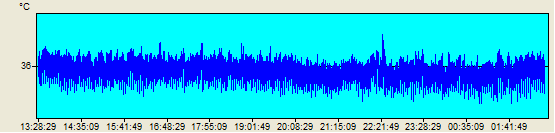
Figure 6: The threshold stability of a thermal imager with the threshold temperature reading.
For more enquiries, please contact NMC’s Temperature Lab, Dr Wang Li at Tel +65 6279 1959 or email to wang_li@nmc.a-star.edu.sg
Acknowledgement
Figures are reproduced from the Singapore Standard (SS 582). Information used with the permission from Enterprise Singapore.