Introduction
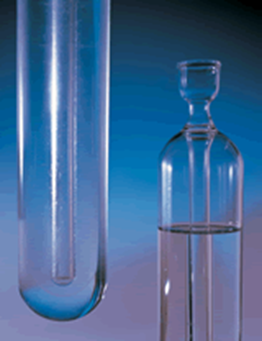
Temperature measurement may span a wide range, from ultra-low temperatures of –273 °C up to temperatures of several thousands of °C. A precise and accurate knowledge of temperature measurement is important in science, technology and industry where precision and pushed limits are targeted. Humidity measurement is established by temperature and pressure measurement, can be expressed using a few definitions; the most commonly one is "relative humidity". It has imperative impact in industries such as (gas industry, food and drug industry, corrosion,) and in measurements of climate changes.
Temperature and Humidity Laboratory is responsible for establishing, maintaining and disseminating national reference temperature and humidity standards to ensure all relevant measurements are traceable to SI units. Traceable and accurate measurement is vital for many applications in particular for manufacturing processes and quality control processes so that the products is consistent with international accepted standards. The dissemination can be achieved through calibration and verification of measuring instruments from industry directly and by providing traceability to calibration and testing laboratories and in turn to manufacturers, consumers and other stakeholders through them.
Primary thermometry, based on the well-understood physical systems, including a set of internationally recognised standards and defined international temperature scales and their realizations, represent an important basis for all applications, and for science and innovation.
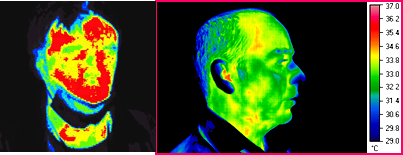
Secondary thermometry is involved with all kinds of instruments depending on the application: resistance thermometers, thermocouples, radiation thermometer, thermal cameras, thermometers containing alcohol or mercury (the latter successively abandoned for environmental reasons) and so on. The accuracy of these thermometers varies depending their applications and method of use.
Temperature and humidity measurements are involved in a large range of areas and applications in industry, such as metallurgy, chemistry and biochemistry, quantum computing, the health sector (e.g. medical ablation techniques in human tissue by thermal heating), environment monitoring and climate change (e.g. monitoring and prevision of climate and climate changes in up-air, soil and water).
Currently, the International Temperature Scale 1990 (ITS-90) provides the basis of traceability for these industry thermometers. While the humidity measurement equipment are evaluated against reference humidity generators.
LATEST NEWS
- Open cell fixed point standards have been established in NMC Temperature and Humidity Laboratory from Indium point to Aluminium point since 2018.
- NMC has expanded its dew point measurement capability down to -100 °C frost point and up to 95°C dew point by establishing two new reference dew point generators.
MEASUREMENT STANDARDS AND DISSEMINATION
Temperature and Humidity Laboratory is responsible for establishing, maintaining and disseminating national reference temperature and humidity standards to ensure all relevant measurements are traceable to SI units in Singapore. Beyond measurement traceability dissemination, these measurement standards open up opportunities for local and overseas sensing instrument developers and manufacturers to understand their device performance through comprehensive characterization. The temperature and humidity metrology at NMC involves various areas namely Temperature Fixed Point standard, Standard Platinum Resistance Thermometer, Mini Temperature Fixed Point Standards, Noble Metal Standard Thermocouple, Primary Standard Radiation Thermometer, Transfer Standard Radiation Thermometer, Standard Humidity Generator, Climatic Chamber and Reference Dew Point Meters, with various Temperature and Humidity Calibration Services.