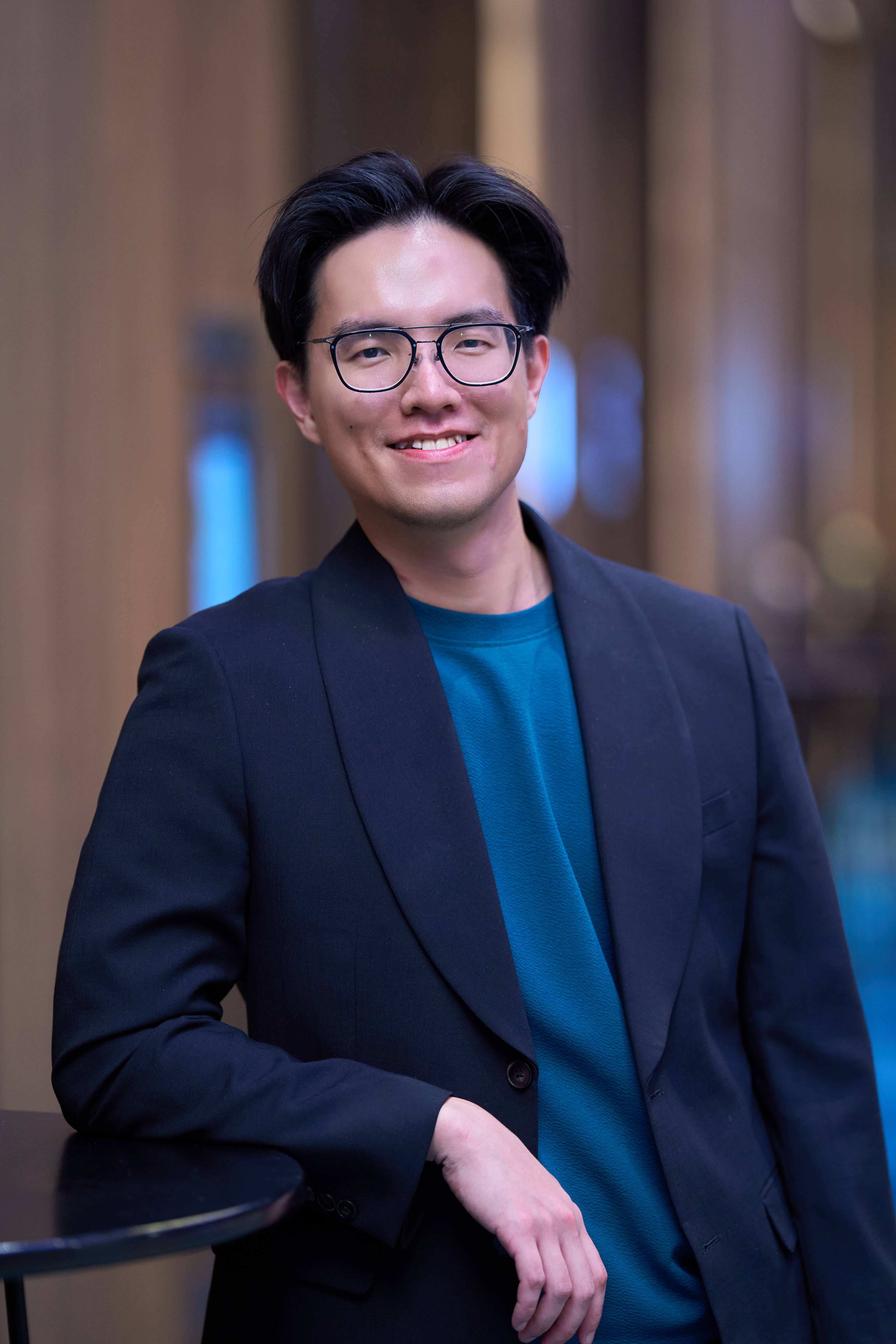
Shi Yong NEO
Biography
Dr Neo Shi Yong attained his Ph.D. at the department of Oncology-Pathology, Karolinska Institute in 2021, followed by 4 years of postdoctoral training in the Singapore Immunology Network. His research is amongst the first to uncover how tumour cells can hijack NK cells to acquire an immunoregulatory “NK-reg” phenotype within the microenvironment. In terms of teaching experience, he has conducted guest lectures for undergraduate immunology courses and served as a supervisor for research students (3 Ph.D. students, 2 master’s/postgrad and 6 final-year undergrad students). At present, his group (The Natural Immunity Lab) is interested in studying innate immune responses across chronic diseases, particularly focusing on Natural Killer cells (NK cells) and cancer.
Main Appointments
- Group Leader, Singapore Immunology Network (SIgN, A*STAR, Singapore)
- Adjunct Assistant Professor, School of Biological Sciences, Nanyang Technological University
Research Focus
Research work packages of the natural immunity lab:
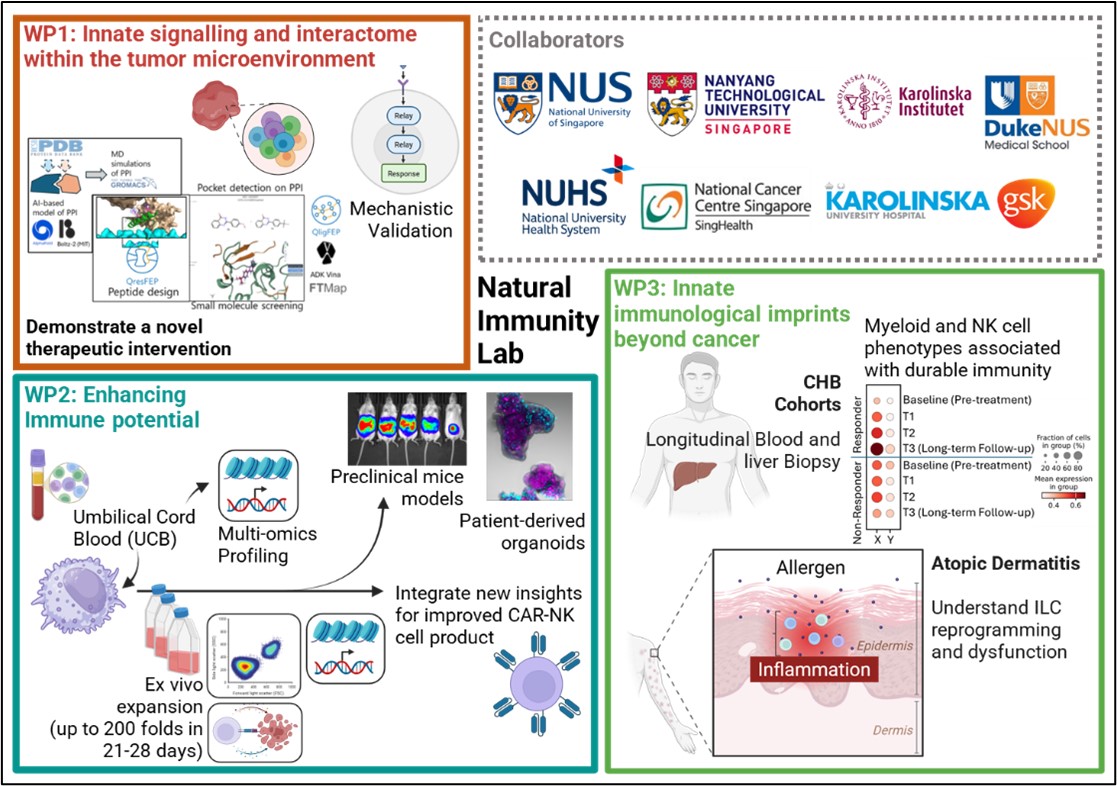
The current landscape for immunotherapeutics is largely built on harnessing the adaptive immunity – both T cell activation and humoral responses against pathogens and cancer. However, it is broadly evident from the existing literature that the innate immune system has a profound influence on regulating systemic responses and shaping of the tissue microenvironment across most inflammatory conditions. While multiple classes of clinically approved drugs are already known to alter innate immunity, there remains several unaddressed complexities in its underlying biology. With a human-centric approach, our lab explores the broad impact of innate immune-regulation across various pathologies including ovarian cancers, breast cancers, liver cancers and chronic Hepatitis B. Our overall aim is to uncover novel insights into innate cell activation that potentially leads to “trained immunity”. We seek to apply this new knowledge to develop better immunotherapies (e.g. cell therapies, multi-specific antibodies) or establish clinically relevant biomarkers that are prognostic for cure-permissive states, particularly for the treatment of solid tumours.
The team has several ongoing studies to tackle different questions from differing perspectives:
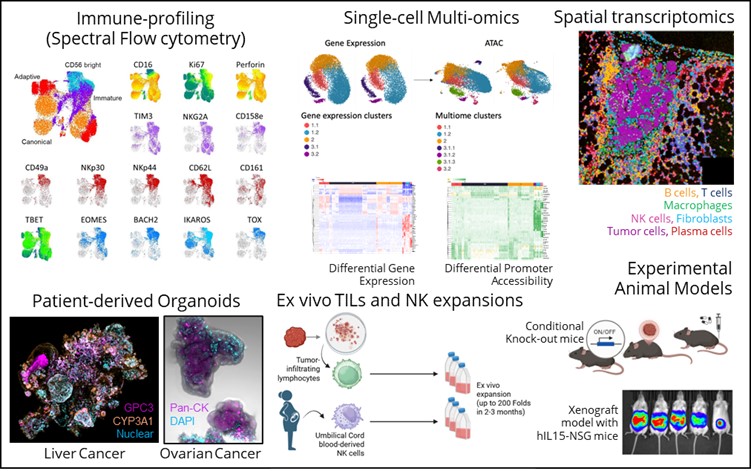
- To understand the role of innate cells (NK cells and myeloid cells) within the tumour microenvironment using high dimensional analyses (e.g. spectral flow cytometry, CITE-seq, spatial transcriptomics) in both immunocompetent mouse models and clinical samples.
- To enhance the immune potential of NK cells for adoptive cell therapy by conferring intrinsic resistance to immunosuppressive factors (e.g. metabolic and oxidative stress, IL-10, TGF-B), in combination with other emerging treatment modalities such as TriKEs (Tri-specific killer engagers) to target solid tumours.
- To elucidate the trajectories of broad innate cell activation and long-term immunological imprints using longitudinal analysis of chronic hepatitis B patients receiving various immunomodulatory treatments (e.g. IFNa, TLR agonist, anti-sense oligonucleotides).
Current Research Capabilities:
Key publications:
- Neo SY, Tong L, Chong J, Liu Y, Jing X, Oliveira MMS, et al. Tumor-associated NK cells drive MDSC-mediated tumor immune tolerance through the IL-6/STAT3 axis. Sci Transl Med. 2024 May 15;16(747)
- Neo SY, Yang Y, Record J, Ma R, Chen X, Chen Z, et al. CD73 immune checkpoint defines regulatory NK cells within the tumor microenvironment. J Clin Invest. 2020;130(3):1185-98
- Yang Y, Neo SY, Chen Z, Cui W, Chen Y, Guo M, et al. Thioredoxin activity confers resistance against oxidative stress in tumor-infiltrating NK cells. J Clin Invest. 2020;130(10):5508-22
- Neo SY, Jing X, Tong L, Tong D, Gao J, Chen Z, et al. Tumor MHC class I expression alters cancer-associated myelopoiesis driven by host NK cells. J Immunother Cancer. 2022;10(10)
- Neo SY, Oliveira MMS, Tong L, Chen Y, Chen Z, Cismas S, et al. Natural killer cells drive 4-1BBL positive uveal melanoma towards EMT and metastatic disease. J Exp Clin Cancer Res. 2024;43(1):13
Lab Members
| Lead Research Officer | PhD Student |
|---|---|
| Choy Yue Joni CHONG | Vera Danklmaier |
Publications
Publications_Neo Shi Yong (last updated on 23 July 2026)