Weapons to fight tuberculosis
SINGAPORE – A study led by the Agency for Science, Technology and Research’s (A*STAR) Genome Institute of Singapore (GIS) and Infectious Diseases Labs (ID Labs) has identified a gene, KCNJ15, that is associated with helping our immune system fight tuberculosis (TB), and potentially other infectious diseases. The research was published in Nature Microbiology on 31 January 2022.
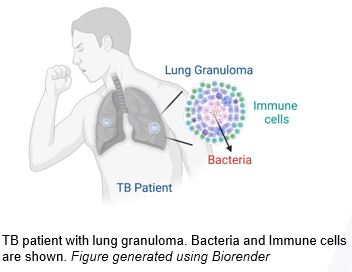
The team used high-throughput genomic technologies to learn how the DNA packaging in blood cells changes when a person has active TB, a bacterial disease that killed one and a half million people globally in 2020. They discovered that TB patients had altered acetylation (a type of chemical modification within the cells) levels at thousands of DNA regions. Their goal was to identify which of these alterations will help to fight TB, and which will help the bacteria to grow.
They discovered that a gene, KCNJ15, which regulates intracellular potassium, was one of the weapons employed by the immune system to fight TB. It increases the level of potassium in the cell, which then causes the cell to self-destruct through a process called apoptosis. This reduces the ability of the bacteria to reproduce inside the cell. Further research could potentially lead to drug development targeting these potassium modulators, to add to the antibiotics currently used against infectious diseases, and may help in building the arsenal against antibiotic-resistant bacteria.
Dr Shyam Prabhakar, Associate Director of the Spatial and Single-Cell Systems, and Principal Investigator of the Laboratory of Systems Biology & Data Analytics at GIS, as well as corresponding author of the study, said, “Histone acetylation has been implicated by multiple studies in our immune response to TB and other infectious diseases. However, those studies did not examine the genome in detail to determine which specific parts were affected and to what extent. This is the first study to examine infection-associated histone acetylation changes genome-wide.”
Dr Amit Singhal, Principal Investigator at ID Labs, and co-corresponding author of the study, said, “Our study highlights how respiratory infections can affect the chromatin structure and transcriptional programme of host cells. These epigenetic alterations might play an essential role in the onset of various respiratory diseases including COVID-19 and can be exploited to develop therapeutic and prophylactic interventions.”
Prof Patrick Tan, Executive Director of GIS, said, “Proteins such as KCNJ15 could potentially play a role in protecting us from multiple infectious diseases. The success of this study should encourage researchers to perform similar analyses in other infectious diseases, and expand to inflammatory and autoimmune conditions such as type 1 diabetes and rheumatoid arthritis, among others. In addition, results indicate that the role of potassium channels in modulating infection may have been under-appreciated. This is a promising area for future molecular studies and potential drug development.”
Prof Lisa Ng, Executive Director of ID Labs, said, “TB is a global disease and with growing resistance to available antibiotics, the disease is becoming more deadly and difficult to treat. Since potassium channels are druggable, this study opens up a new avenue for research into host-directed therapies for TB and other respiratory diseases.”.
For media queries and clarifications, please contact:
Lyn LaiOfficer, Office of Corporate Communications
Genome Institute of Singapore, A*STAR
Tel: +65 6808 8258
HP: +65 8755 8759
Email: laiy@gis.a-star.edu.sg
About A*STAR’s Genome Institute of Singapore (GIS)
The Genome Institute of Singapore (GIS) is an institute of the Agency for Science, Technology and Research (A*STAR). It has a global vision that seeks to use genomic sciences to achieve extraordinary improvements in human health and public prosperity. Established in 2000 as a centre for genomic discovery, the GIS pursues the integration of technology, genetics and biology towards academic, economic and societal impact, with a mission to "read, reveal and write DNA for a better Singapore and world".Key research areas at the GIS include Precision Medicine & Population Genomics, Genome Informatics, Spatial & Single Cell Systems, Epigenetic & Epitranscriptomic Regulation, Genome Architecture & Design, and Sequencing Platforms. The genomics infrastructure at the GIS is also utilised to train new scientific talent, to function as a bridge for academic and industrial research, and to explore scientific questions of high impact.
For more information about GIS, please visit www.a-star.edu.sg/gis.
About A*STAR’s Infectious Diseases Labs (ID Labs)
A*STAR Infectious Diseases (ID) Labs was established in April 2021 with a mission to be a leading center of infectious diseases research excellence in antimicrobial resistance, respiratory and vector-borne diseases. ID labs brings together infectious diseases expertise from across multiple disciplines to drive cutting edge translational infectious diseases research to contribute to Singapore’s national preparedness and defence against the threat of emerging infections.The key research areas in ID labs include vector-borne infections, respiratory diseases, anti-microbial resistance and epidemic preparedness. Leveraging strong partnerships locally and internationally, ID labs plays an important role in training and recruiting scientific talents to be future leaders in infectious diseases research.
For more information about ID Labs, please visit https://www.a-star.edu.sg/idlabs
About the Agency for Science, Technology and Research (A*STAR)
A*STAR is Singapore's lead public sector R&D agency. Through open innovation, we collaborate with our partners in both the public and private sectors to benefit the economy and society. As a Science and Technology Organisation, A*STAR bridges the gap between academia and industry. Our research creates economic growth and jobs for Singapore, and enhances lives by improving societal outcomes in healthcare, urban living, and sustainability. A*STAR plays a key role in nurturing scientific talent and leaders for the wider research community and industry. A*STAR’s R&D activities span biomedical sciences to physical sciences and engineering, with research entities primarily located in Biopolis and Fusionopolis. For ongoing news, visit www.a-star.edu.sg.
Follow us on
Facebook | LinkedIn | Instagram | YouTube
Paper published in Nature Microbiology.
Histone acetylome-wide associations in immune cells from individuals with active Mycobacterium tuberculosis infection Ricardo C H Del Rosario # 1 2 3, Jeremie Poschmann # 1 4, Carey Lim # 5 6, Catherine Y Cheng # 5, Pavanish Kumar 5, Catherine Riou 7 8 9, Seow Theng Ong 10, Sherif Gerges 2 3 11, Hajira Shreen Hajan 1, Dilip Kumar 4, Mardiana Marzuki 5 6, Xiaohua Lu 5, Andrea Lee 5 6, Giovani Claresta Wijaya 1, Nirmala Arul Rayan 1, Zhong Zhuang 10, Elsa Du Bruyn 7 8, Cynthia Bin Eng Chee 12, Bernett Lee 5, Josephine Lum 5, Francesca Zolezzi 5, Michael Poidinger 5, Olaf Rotzschke 5, Chiea Chuen Khor 1, Robert J Wilkinson 7 8 13 14, Yee T Wang 12, George K Chandy 10, Gennaro De Libero 5 15, Amit Singhal 16 17 18, Shyam Prabhakar 19- Genome Institute of Singapore, Agency for Science, Technology and Research (A*STAR), Singapore, Singapore.
- Stanley Center for Psychiatric Research, Broad Institute of MIT and Harvard, Cambridge, MA, USA.
- Department of Genetics, Harvard Medical School, Boston, MA, USA.
- Inserm, Université de Nantes, Centre de Recherche en Transplantation et Immunologie, ITUN, Nantes, France.
- Singapore Immunology Network, A*STAR, Singapore, Singapore.
- A*STAR Infectious Diseases Labs, A*STAR, Singapore, Singapore.
- Wellcome Centre for Infectious Diseases Research in Africa, University of Cape Town, Cape Town, South Africa.
- Institute of Infectious Disease and Molecular Medicine, University of Cape Town, Cape Town, South Africa.
- Division of Medical Virology, Department of Pathology, University of Cape Town, Cape Town, South Africa.
- Lee Kong Chian School of Medicine, Nanyang Technological University, Singapore, Singapore.
- Analytic and Translational Genetics Unit, Department of Medicine, Massachusetts General Hospital, Boston, MA, USA.
- Tuberculosis Control Unit, Tan Tock Seng Hospital, Singapore, Singapore.
- Department of Infectious Disease, Imperial College, London, UK.
- The Francis Crick Institute, London, UK.
- Department of Biomedicine, University of Basel, Basel, Switzerland.
- Singapore Immunology Network, A*STAR, Singapore.
- A*STAR Infectious Diseases Labs, A*STAR, Singapore, Singapore.
- Lee Kong Chian School of Medicine, Nanyang Technological University, Singapore, Singapore.
- Genome Institute of Singapore, Agency for Science, Technology and Research (A*STAR), Singapore, Singapore.
Correspondence to: Shyam Prabhakar, Amit Singhal.