CAN-Scan: New Machine Learning (ML) Tool Predicts Drug Response in Colorectal Cancer, Opening Doors to Personalised Treatment
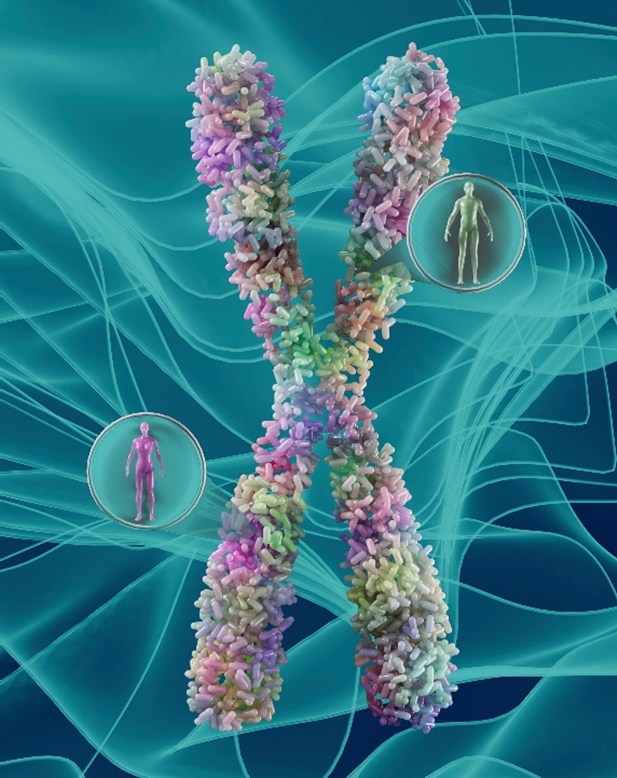
Image: An illustration of a chromosome, which contains the genetic information that guides the development and function of our bodies.
A local research team has developed CAN-Scan (short for Cancer Scan), a next-generation precision oncology platform designed to “scan” the molecular features of each patient’s cancer. Published in Cell Reports Medicine, CAN-Scan integrates patient-derived tumour models, multi-omics profiling, and machine learning to predict disease progression and therapeutic response, with the potential to personalise treatment for colorectal cancer (CRC) patients in the future.
Led by Drs. Ramanuj DasGupta, Shumei Chia and Niranjan Nagarajan from the A*STAR Genome Institute of Singapore (A*STAR GIS), and Professor Iain Tan from the National Cancer Centre Singapore (NCCS), together with an international research team, the study addresses a critical gap in cancer care by improving the ability to provide smarter, individualised therapies for patients who do not respond to standard chemotherapy.
Tackling a Longstanding Challenge in Cancer Treatment
Colorectal cancer (CRC) is the third most commonly diagnosed cancer and the second leading cause of cancer-related deaths worldwide. In Singapore, it is among the most prevalent cancers, with 12,704 new cases reported between 2018 and 2022, according to the Singapore Cancer Registry Annual Report (2022).
Despite advances in oncology, many CRC patients still receive the standard 5-fluorouracil (FU)-based chemotherapy treatments, which remain a mainstay of care. However, these generalised approaches often do not account for genetic differences in tumours, leading to poor treatment responses and unnecessary side effects, including toxicity, in some patients. This research seeks to overcome those limitations by enabling treatment decisions to be based on the biology of the patient’s cancer cell, an approach aimed at improving treatment outcomes and minimising toxicity.
How CAN-Scan Works
CAN-Scan was built using a library of “live” tumour samples called patient-derived cell lines (PDCs), taken directly from CRC patients at NCSS. These PDCs were cultured outside the body and treated with 84 different clinically approved drugs, using doses similar to those given in patients.
Leveraging machine learning, CAN-Scan analyses the genetic profile of PDCs and compares its molecular signature with empirically established drug response data. This enables the identification of biomarkers that can predict how tumours would respond to specific treatments.
A key finding was that some CRC tumours had extra copies of DNA in Chromosome 7 — a part of our DNA that contains the cancer-linked gene BRAF. These tumours were resistant to standard chemotherapy. CAN-Scan was able to identify alternative treatments, such as targeted drugs like regorafenib or vemurafenib, offering more effective and personalised options for patients whose tumours carry this genetic feature.
“Cancer cells from different patients can behave very differently, even within the same cancer type,” said Dr. Ramanuj DasGupta, Senior Principal Scientist at A*STAR GIS and senior author of the study. “CAN-Scan helps us understand these differences and uncover the genetic features that influence how each tumour responds to treatment.”
Key Benefits of CAN-Scan to Patients and Clinicians:
- Improved Treatment Outcomes: Helps avoid ineffective therapies and reduces side effects by identifying patients unlikely to benefit from standard chemotherapy.
- Faster and Smarter Decisions: Enables proactive, data-driven treatment planning rather than trial-and-error approaches.
- Better Patient Stratification: Identifies new biomarkers, like extra copies of Chromosome 7q, to group patients more accurately.
A Route towards Precision Oncology
Unlike other personalised cancer tools, CAN-Scan brings together multi-omics data, functional drug testing, and AI/ML-powered analysis into one integrated platform. Its predictions were validated across four independent CRC cohorts, including patients from Belgium, Korea and Thailand, highlighting its potential for real-world clinical use.
More importantly, CAN-Scan can enable clinicians to tailor treatments before therapy begins, rather than adjusting only after failure. This marks a shift towards smarter, more precise cancer care.
“This work illustrates the potential of functional precision oncology,” said Professor Iain Tan, corresponding author and Deputy Chairman of the Division of Medical Oncology at NCCS. “It combines biological relevance with computational power to deliver insights that may inform patient care.”
The research team is now building on these findings to bring CAN-Scan closer to clinical use. They are planning observational studies to test the platform in real-time patient care and working with cancer centres and diagnostic partners to integrate CAN-Scan into existing clinical workflows. Beyond colorectal cancer, they are also exploring how the platform could be applied to other solid tumours, expanding its potential impact across oncology.
“This is a major step forward in functional precision oncology,” said Dr Wan Yue, Executive Director at A*STAR GIS. “CAN-Scan reflects A*STAR GIS’ deep expertise in cancer biology, genomics, and data science, and how we bring these together to enable smarter, more personalised cancer care. It underscores our commitment to translational research that delivers real impact for patients.
###
About A*STAR Genome Institute of Singapore (A*STAR GIS)
The A*STAR Genome Institute of Singapore (GIS) is an institute of the Agency for Science, Technology and Research (A*STAR). It has a global vision that seeks to use genomic sciences to achieve extraordinary improvements in human health and public prosperity. Established in 2000 as a centre for genomic discovery, A*STAR GIS pursues the integration of technology, genetics, and biology towards academic, economic and societal impact, with a mission to harness genomic technologies for a better Singapore and world.
Key research areas at the GIS include RNA & DNA Technologies, Single Cell & Spatial Technologies), Precision Medicine, Population Genomics, and AI & Compute. The genomics infrastructure at the GIS is also utilised to train new scientific talent, to function as a bridge for academic and industrial research, and to explore scientific questions of high impact.
For more information about GIS, please visit www.a-star.edu.sg/gis.
Follow us on
LinkedIn | BlueSky | X | YouTube
About the Agency for Science, Technology and Research (A*STAR)
The Agency for Science, Technology and Research (A*STAR) is Singapore's lead public sector R&D agency. Through open innovation, we collaborate with our partners in both the public and private sectors to benefit the economy and society. As a Science and Technology Organisation, A*STAR bridges the gap between academia and industry. Our research creates economic growth and jobs for Singapore, and enhances lives by improving societal outcomes in healthcare, urban living, and sustainability. A*STAR plays a key role in nurturing scientific talent and leaders for the wider research community and industry. A*STAR’s R&D activities span biomedical sciences to physical sciences and engineering, with research entities primarily located in Biopolis and Fusionopolis. For ongoing news, visit www.a-star.edu.sg.
Follow us on
Facebook | LinkedIn | Instagram | YouTube | TikTok