Gene Mutations Behind Acute Liver Disease In Kids
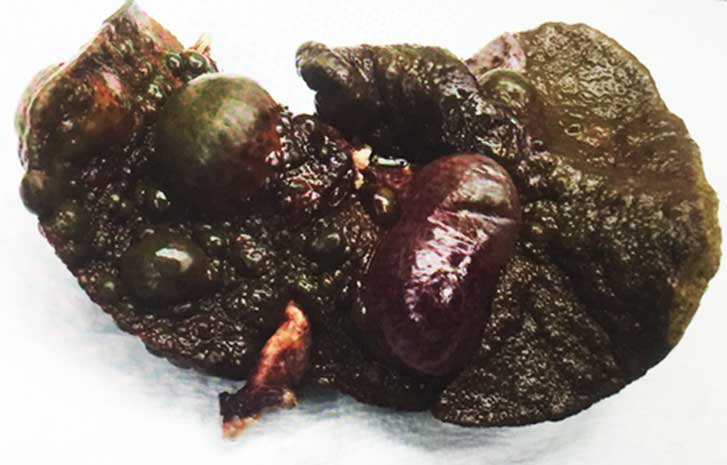
Image of the resected liver from a child with mutations in the FOCAD gene showing striking signs of cirrhosis, requiring liver transplant. (Copyright: A*STAR’s Genome Institute of Singapore)
SINGAPORE – New findings have uncovered how essential the FOCAD gene is for maintaining a healthy liver, especially in children. In a research study published in Nature Genetics, scientists have found that children carrying loss-of-function mutations in FOCAD are presented with an early onset, paediatric form of liver cirrhosis that can be life-threatening. The study was carried out by scientists from A*STAR’s Genome Institute of Singapore (GIS), in collaboration with hospitals and institutes across seven countries (India, USA, Saudi Arabia, Pakistan, Portugal, Brazil, and France).
Liver disease is becoming a major health concern and is estimated to be the fifth most common cause of death worldwide1. A systematic review from the Global Burden of Disease Study identified 1.32 million deaths due to liver cirrhosis in 2017, accounting for more than two percent of the total global deaths. Liver cirrhosis is usually diagnosed late in life, and is traditionally believed to be caused by environmental factors such as poor diet, viral hepatitis or alcohol abuse.
In collaboration with clinicians worldwide, the team combined classical tools such as Mendelian genetics and animal models2 with modern technology, such as deep sequencing and state-of-the-art gene editing tools to identify that the FOCAD gene is indispensable for maintaining liver health in humans. Mutations in this gene cause an early onset form of liver cirrhosis not documented before. The findings of a single gene, or monogenic, disorder that leads to cirrhosis in childhood establish a strong genetic component for liver disease, which was previously unknown.
In further analysis, they discovered that FOCAD functions as part of a molecular quality control mechanism that assists in translation, a fundamental cellular process by which proteins are made. The main cells of the liver, hepatocytes, were found to rely heavily on this mechanism compared to other cell types. This is the first time that this translation-dependent quality control machinery has been implicated in liver health.
The team also discovered a cytokine3, CCL2, that is overproduced in FOCAD deficient patients and may play a key role in the progression of liver cirrhosis. Dr Ricardo Moreno Traspas, a postdoctoral fellow from the Laboratory of Human Genetics and Therapeutics at GIS, and first author of the study, explained, “FOCAD mutations lead to an overproduction of a number of proteins that may be key drivers in the progression of the disease. One example is the signalling mediator, CCL2, that attracts immune cells and promotes liver inflammation. Drugs that target this, or similar candidates, are potential therapeutic intervention points for cirrhotic patients.”
Prof Bruno Reversade, Senior Group Leader at GIS and corresponding author of the study, commented, “We report the clinical impact of recessive loss-of-function variants in the FOCAD gene, and provide evidence for the importance of the SKI mRNA surveillance pathway for liver homeostasis. The research also brings forth the first animal model of the human disease, as well as in vitro biological systems that are now being used as platforms to identify and validate new anti-fibrotic therapeutic targets.”
Prof Patrick Tan, Executive Director of GIS, said, “The knowledge and tools generated in this study have the potential to aid in the development of innovative therapies for more common forms of liver diseases such as fatty liver disease and liver cancer. Our clinical data will also help clinicians to identify new patients with this syndrome, better understand the cellular and molecular mechanisms of the disease, and hence, provide a more accurate diagnosis, prognosis, and treatment.”
1Williams, R. (2006). Global challenges in liver disease. Hepatology, 44(3), 521–526. https://doi.org/10.1002/hep.21347
2Mendel’s experiments of crossing peas to determine whether certain traits are inherited as single genes are so fundamental that they are taught in high school. The enduring power of these principles lies in the fact that they allow us to tie mutations in one specific gene to an important human disease.
3A type of protein that is made by certain immune and non-immune cells and has an effect on the immune system.
For media queries and clarifications, please contact: Genome Institute of Singapore, A*STAR
Lyn Lai
Senior Officer, Office of Corporate Communications
Genome Institute of Singapore, A*STAR
Tel: +65 6808 8258
HP: +65 8755 8759
Email: laiy@gis.a-star.edu.sg
About A*STAR’s Genome Institute of Singapore (GIS)
The Genome Institute of Singapore (GIS) is an institute of the Agency for Science, Technology and Research (A*STAR). It has a global vision that seeks to use genomic sciences to achieve extraordinary improvements in human health and public prosperity. Established in 2000 as a centre for genomic discovery, the GIS pursues the integration of technology, genetics and biology towards academic, economic and societal impact, with a mission to "read, reveal and write DNA for a better Singapore and world".
Key research areas at the GIS include Precision Medicine & Population Genomics, Genome Informatics, Spatial & Single Cell Systems, Epigenetic & Epitranscriptomic Regulation, Genome Architecture & Design, and Sequencing Platforms. The genomics infrastructure at the GIS is also utilised to train new scientific talent, to function as a bridge for academic and industrial research, and to explore scientific questions of high impact.
For more information about GIS, please visit www.a-star.edu.sg/gis.
About the Agency for Science, Technology and Research (A*STAR)
A*STAR is Singapore's lead public sector R&D agency. Through open innovation, we collaborate with our partners in both the public and private sectors to benefit the economy and society. As a Science and Technology Organisation, A*STAR bridges the gap between academia and industry. Our research creates economic growth and jobs for Singapore, and enhances lives by improving societal outcomes in healthcare, urban living, and sustainability. A*STAR plays a key role in nurturing scientific talent and leaders for the wider research community and industry. A*STAR’s R&D activities span biomedical sciences to physical sciences and engineering, with research entities primarily located in Biopolis and Fusionopolis. For ongoing news, visit www.a-star.edu.sg.
Follow us on
Facebook | LinkedIn | Instagram | YouTube